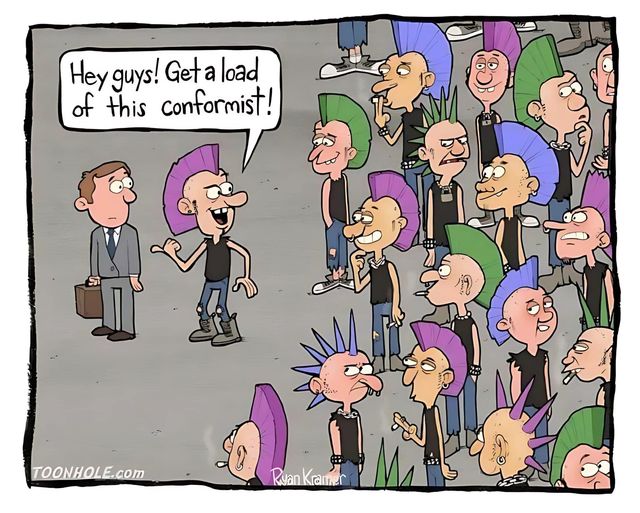
The growth of technology has revolutionized the way we live, work, and communicate. However, as we dive deeper into the digital age, we are confronted with the alarming consequences of our reliance on these technologies. The links shed light on the issue of “digital” waste and its detrimental impact on the environment.
Gerry McGovern’s article “World Wide Waste” delves into the staggering amount of energy consumed by digital technologies, from data centres to our personal devices. He emphasizes the urgent need to address this issue and advocates for more sustainable practices. https://gerrymcgovern.com/world-wide-waste/
Similarly, the research conducted by Loughborough University’s Volume project highlights the environmental consequences of digital waste in terms of energy consumption and carbon emissions. The article underscores the importance of adopting eco-friendly approaches to digital design and usage. https://volume.lboro.ac.uk/digital-waste-polluting-the-planet/
Furthermore, the conversation around “dark data” and its contribution to environmental degradation further underscores the need for digital decarbonization. The Guardian’s report on the hidden costs of Ireland’s data centre boom shows the environmental toll of data storage and processing facilities, urging for greater accountability and regulation in the industry. https://theconversation.com/dark-data-is-killing-the-planet-we-need-digital-decarbonisation-190423
In response to these concerns, initiatives like Digital Decarb are a #NGO path to promote sustainable practices in the digital sphere, advocating for reduced energy consumption and carbon emissions. https://digitaldecarb.org/
Let’s look at a real alternative path
In contrast to the prevailing trend of digital overconsumption and waste, the #OMN (Open Media Networking) project presents a refreshing approach to digital technology. Unlike platforms driven by personalization and distraction, #OMN prioritizes community engagement and meaningful interaction. Its core mission revolves around building tools for communal use rather than individual gratification.
This ethos stands in contrast to the #mainstreaming of social tech, which at its core prioritizes personalization and profit over community well-being. By focusing on politics as inherently human rather than as a commodity, #OMN empowers people to reclaim control over their (digital) lives and take a path of genuine connections within their communities and wider society.
However, effectively communicating this message to #mainstreaming audiences is a challenge. The prevailing narrative around digital technology overlooks its environmental and social impact, instead emphasizing convenience and innovation. Breaking through this requires not just words, but tangible actions and demonstrations of the #OMN’s principles in practice.
In essence, #OMN, along with initiatives like #4opens and #OGB, serve as tools for social change, enabling communities to shape their digital environments according to “native” #openweb values and needs. Through collaborative efforts and grassroots activism, we can and need to challenge the status quo. Ultimately, the journey towards digital sustainability requires a collective commitment to reimagining the role of technology in our lives and prioritizing the well-being and communities above all else. The #OMN project invites people to join this endeavour, not just through words, but through meaningful action and collaboration. Together, we can harness the power of technology for the good.
#NGO Internet funding organizations often use #closedweb tools despite their stated commitment to openness and the Digital Commons. Some of these reasons highlight the contradictions:
* Familiarity and Convenience: Funding organizations and their staff are accustomed to using closed tools due to their prevalence in the industry. This is a non “native” aproch that seems natural to them.
* Security Concerns: Closed tools are perceived as more secure, especially when dealing with sensitive information and financial transactions. Funding organizations prioritize security over openness.
* Vendor Lock-In: Closed tools come bundled with proprietary services and platforms, leading to vendor lock-in. Once an organization becomes reliant on a particular closed tool, switching to open alternatives can be challenging and costly.
* Perceived Reliability: Closed tools are associated with established companies or brands who focues on a story of reliability and stability. Funding organizations feel more confident entrusting their operations to these tools, especially if they lack experience with open alternatives.
* Lack of Awareness: Despite their commitment to openness, funding organizations may not be aware of the availability or benefits of open tools. They may simply default to using closed tools out of habit or lack of knowledge about alternative options.
However, advocating for the use of open tools, such as #FOSS video streaming solutions and open collaboration platforms, aligns with the principles of openness and transparency promoted by funding organizations like #NGI. By encouraging the adoption of open tools at events and in everyday operations, organizations can demonstrate their commitment to fostering a more inclusive, accessible, and equitable #openweb.
We need to advocate for a more open-web native approach within the EU and beyond, ensuring that the internet remains a digital common that empowers people and promotes trust, collaboration, and innovation.
There will be lots of VERY bad behaver from the every side in this #openweb reboot, let’s try and keep diversity of voices in place with #4opens process. Please don’t become a prat, as it’s easy to start, and it’s hard to stop, mess and more mess.
Prat ish behaver comes in waves, that matches the waves of #mainstreaming and the Alt reaction to them, this flotsam can make things messy so good to shovel and compost.
Our main #blocking in alts is from our blinded #postmodernists and the culture they have spread for the last ten years… this is very messy and will do damage. As this is a form of “common sense” it’s hard to compost.
We need fresh thinking on this mess.
On the #openweb us and them is simple, we have to define things then collectively fight as hard as we can to keep that definition #4opens#KISS
#openweb spaces, a lot of social suicidal behaver – people strive to destroy the #openweb by pushing non “native” #NGO structures and paths. It’s a hard thing to pushback on, it’s #mainstreaming “common sense” bad behaver and a VERY bad outcome, please try not to be this problem.
What #mastodon is doing now is going to lead to a lot of mess, duo to people squabbling. This might or might not be a level of mess that negates the vertical move to “simplicity” of a single codebase and a single instance. That would be a waste… and it was the king and his https://en.wikipedia.org/wiki/Favourite that are pushing this mess, good not to get confused about this part.
This is actually the same as the #NGO mess we see in #XR at the same time
As the righwing is failing, the mess is growing in the left…
Title: The Spiky Fluffy Debate: Reflections on the Extinction Rebellion Event
Opening shot of London streets bustling with cars and people.
Narrator: In 2019, the Extinction Rebellion movement took the world by storm with its call for urgent action on climate change. Thousands of people took to the streets, demanding that governments take concrete steps to mitigate the effects of the climate crisis. But did the movement live up to its promise?
Cut to an interview with a protester.
Protester: I went to the #XR event thinking that they might have learned from the history of activism about how not to be pointless.
Narrator: Our protagonist went to the event with high hopes, hoping for a clever and spiky fluffy debate that would challenge the status quo. But what did they find?
Cut to footage of the Extinction Rebellion event.
Narrator: Our protagonist found a diversity of #fluffy “education” spaces being pushed over by cars and tourists. The dominant outreach was all dogmatic and fluffy, with NGOs asking the government to act. There was no consensus for direct action, and the police moved the protesters back into narrow “permitted” penned-in spaces.
Protester: The only feeling of empowerment was when people overflowed onto the roads and blocked the traffic for a time. But there was no consciousness for this.
Narrator: The second day was the same, with a very slow A to B march and middle-class protesters in animal costumes. The demands went into the government, and a few days later, they were ignored.
Protester: Hundreds of millions of people are going to die, and billions will be displaced over the next few decades, and this was it?
Narrator: Our protagonist met with the original core UK Indymedia crew, who gave him some background on how the event was organized. The outcome of the NGO meetings was a diversity of strategies, starting with four days of fluffy asking for action, followed by a week of #spicy traditional non-violent direct action led by the “just stop oil” group. But this plan was nowhere to be seen during the event.
Cut to footage of the tiny “just stop oil” tent at the event.
Narrator: Our protagonist searched everywhere for announcements and people making this good plan happen but found nothing. The diversity of tactics was becoming an obvious fig leaf for the NGO crew to push their pointless agenda.
Protester: If any spicy actions came after the government ignored the fluffy demo, then it was not going to get supported.
Narrator: In the end, the event was a disappointment, with no concrete action or plans for the future.
Closing shot of the London streets.
Narrator: The Extinction Rebellion movement may have brought attention to the climate crisis, but without concrete action and a plan for the future, will it make any difference? The spiky fluffy debate may have sparked hope, but it remains to be seen if it will lead to real change.
My text:
I went to the #XR event thinking that they might have learned from the history of activism how not to be pointless. Our online media is very broken so from the information I received I got the impression the might be a clever spiky fluffy debate at the “bigone demo” I was hearing different views with no “facts” in the weeks up to the event I was wondering if I should bring a tents as the was a vibe (hope) that it might be something more than a A to B march. People had said that the were going to take the space around parliament and then refuse to move in till the government excepted the need to do something real about climatechaos. I tried reaching out and searching online to see if something affective like this was planned, but could not find any “facts” or real information.
The dominant outreach was all dogmatic fluffy #NGO path of asking the “government” to act, which was so obviously not going to work that I kept my belief that people could not be this stupid and self-defeating agen. So I keep looking for information that something useful is being planned, I did not find any. So gave up the idea of joining an occupation and instead of a tent and supply’s I packed a small bag full of camera gear and headed to London.
On all the media I use and subscribe to I could not find any info on the event, turning up on the first day people started to arrive, it was a diversity of #fluffy “education” spaces being pushed over by cars and the tourists, the only feeling of empowerment was when people overflowed onto the roads and blocked the traffic for a time, this provided a blessed moment of peace and brought focus free from the car noise, but the was no conciseness for this and the stewards and police moved the people back into narrow “permitted” penned in spaces and the noise and repression of car culture was back to take away our small sense of empowerment.
This was the first day.
The second day more people came, the same #fluffy “education” spaces and a very slow A to B march. It was nice to see the middle classes in their animal costumes, people had gathered, a good thing. But that was it, we were given a bit more space by the police. Our “demands” went into the government, and a few days latter they were ignored.
The were a few more days, I did not go, but from the little I found on my media it was the same.
Earlier at the event I met 3 or the original core UK indymedia crew, they gave me some background on the process of how we ended up repeating such an obviously pointless event in such a time of need for action. It turns out the had been months of #NGO meetings to move the event away from confrontation to being one of “asking for action”, the outcome from the #NGO side was a diversity of stratageys – there would be 4 days of fluffy – the ask – then if (well obviously when) this was ignored there would be a week of #spicy (a new term for #spiky) traditional non-violent direct action #XR protests led by the “just stop oil group”. This was not a bad plan, I was kinda of impressed, a good working example of the spiky fluffy debate, I thought in a moment of hope.
So during the event, I looked everywhere for announcements and people making this good plan happen. I found nothing, what I did find was a tiny “just stop oil” tent, with some teenagers shadowed between the big pushy NGO tents. Agen I was disappointed this “diversity of tactics” was becoming an obvious a fig leaf for the #NGO crew to push there pointless agenda, if any spicy actions came after the government ignored the fluffy demo then it was not going to get supported.
Agen I looked on my media and could not find anything about these actions on Monday or Tuesdays in till my partner who is on Instagram said they were posting a video of a handful of people slow marching round London, this was it. I looked on my media agen but could not find anything about this, looked on XR website, nothing, looked on “just stop oil”, only a email list, telegram channel no information.
At this point I shrugged and though about making this video…
Hundreds of millions of people are going to die and billions will be displaced over the next few decades and this was it… this was it… really this was it?
Asked him, “Have you taken a moment or two to think this might be seen, on balance, as damage rather than helping the #openweb culture of the communers who built the spaces you are going to be pushing at? It’s important not to be doing blinded Imperialism – Wikipedia coming into a “commons” space.”
Issues on this here Activism can we try and address these issues, to mediate the balance of damage/good before you push the project out, thanks.
#openweb culture comes from the principles and values of the early internet, where open standards and decentralized systems were prioritized over closed, proprietary ones. This culture is based on the idea of a free and open internet, where anyone can participate and create without the need for gatekeepers.
#Slacktivism is a term used to describe online activism that requires minimal effort or engagement, such as signing an online petition or changing your social media profile picture. While these actions can raise awareness about an issue, they are criticized for being insincere and ineffective in creating real change.
#NGOs, or non-governmental organizations, are involved in social activism and advocacy work. However, they are criticized for promoting their own agendas rather than empowering the communities they claim to serve. This can create a power imbalance, where the voices and needs of the community are not heard or prioritized.
We need to think about the #mainstreaming of these issues’ due to the increasing visibility and attention they are pushing in the wider public, move back to the #openweb.
With this shift in attention comes the risk of co-optation or watering down of the original values and principles. It is important to be on guard and maintain a healthy balance, ensuring that the voices and needs of communities are prioritized and that efforts are not insincere or ineffective.
The new #spreadmastodon project needs to balance the damage with the good it does with its outreach project.
The wider #Fediverse relying heavily on a single platform, mastodon or instance https://mastodon.social, can have negative consequences. Leading to a concentration of power and influence in the hands of a few individuals and entities. This can result in issues such as censorship, lack of innovation, and a loss of privacy for users.
Additionally, if a single server or platform is responsible for hosting a significant portion of user data or activity, it could become a target for cyberattacks or data breaches.
A. It had better #UX and @Gargron running it was an effective communicator at #KISS and built it out as a #4opens project alongside a healthy (white) lie about security and privacy.
The rest of the projects lacked these things – #Pleroma the obverse compaine was ripped apart by the #geekproblem then embraced by the right-wing. #Peertube was stuck in a good but closed development for years. #Pixelfed is a little brother project to #mastodon. Then there are a whole flood of #NGO funded projects that have no community.
Might be useful to see it as we’re having a “KING” problem, then the rest are #feudalism all the way down. This should be easy to fix as its #4opens and all #openweb, but it’s not. Just about everyone is hard #BLOCKING the obvuse need for “democracy” as a path out of the mess #OGB
There is an unspoken negative effect of traditional foundation funding agendas on grassroots #openweb projects. These grassroots projects have different priorities and goals than traditional organizations, and the formal processes used by existing #NGO projects, such as decidim.org and loomio.org, may not be well-suited for them.
#The#OMN team is on a mission to address this by focusing on empowering communities through decentralized decision-making processes. Their experience and track record make them well-suited to carry out this mission.
If successful, the #OGB project can have a significant impact on the way communities make decisions in the future. By empowering grassroots movements and organizations, it helps to ensure that their voices are heard and that their needs are addressed.
The mess we make, people often destroy things they love, not from hate, more from possession. Let’s look at a few projects on this path to critique the short fall of potential due to a lack of connectivity and maturity
The distributed cooperative organisation project on https://anagora.org while it aims to provide organizational tools for cooperative, commons-oriented, and feminist economic forms, it lacks the necessary links and connections to be in any way truly effective.
http://disco.coop/manifesto/ the same mess, this is the #fashionista view of the 20-year-old #OMN project, it is full of teenage focus and might be interesting if it LINKED, but it does not, flight and scatter to the wind, more to compost.
The #DisCO (Distributed Cooperative Organisations) manifesto at disco.coop is the same project run by #fashionistas
https://two.compost.digital/ This is the #NGO # fashionista view of the 20-year-old #OMN project, it is full of teenage focus and might be interesting if it LINKED, but it does not, flight and scatter to the wind, more to compost.
The COMPOST digital magazine (two.compost.digital) is also in similar terms, #NGO and #fashernista path, with no affective linking.
These projects are all #blocking by occupying space. In this #fashernista path, we do need to see how possessiveness leads to unintended destruction of things we cherish. This reflects a common path of human nature, where love and possession become intertwined, with negative consequences.
“Flight and scatter to the wind, more to compost” these projects, despite their intentions, ultimately dissipate or break down without achieving any goals. The use of “compost” as a metaphor that suggests that in their failure, these projects might contribute to future growth or development in unexpected ways. The hashtag “#blocking” is a way too express this ineffective approaches.
Our “common sense” paths are often bad:
This path of possession can easily lead to bad paths in alt organising. Abuse of power, when leadership positions within a cooperative become possessive of their authority, this then lead to corrupt practices and mismanagement, misappropriation of resources, even fraud. The desire to maintain control and cover up misdeeds leads to the destruction of records and falsification of information. Erosion of cooperative principles grow when peoples interests overshadow collective goals, this then destroys the ethos of cooperation. Then trying to fix this becomes much harder with resistance to transparency, and over control of information. This all leads naturally to conflict and retaliation, destructive actions against those who challenge them.
How possessiveness in different forms undermines the collaborative nature of cooperatives, leading to the destruction of trust, resources, and the organisation’s integrity.
#NGIzero#NGI#EU It’s important to remember in #openweb tech that most funding is poured directly down the drain, all value comes from #DIY culture which is always underfunded. Would be a good idea to try to rebalance this mess. And yes, we are not talking about the #dotcons mess, that’s another subject 😉
The value we are all talking about, the #openweb#fediverse based on #activertypub is a very good example of this issue. The group that pushed through the speck only goes through the formal consensuses process because the #dotcons were not interested in owning the outcome as it had no “value” to them. The speck was done as unpaid, unfunded #DIY labour, this is where almost all value actually comes from when you lift the lid on the current mess.
The importance of #DIY culture and the underfunding of #openweb technologies. It is true that much of the value in openweb technologies comes from the grassroots efforts of individuals and communities who are passionate about creating and maintaining these tools. This can be seen in the case of the #fediverse, which was developed by a group of volunteers who were committed to creating a decentralized and open social networking platform.
At the same time, it is also important to recognize the role that funding can play in supporting the development of openweb technologies. While it is true that much of the value comes from DIY culture, funding can help to support and sustain this culture, providing resources and support to help communities. One initiative that is working to address this issue is #NGIZero, which is a program funded by the European Commission to support the development of #openweb technologies. Through this program, funding is provided to support projects that are focused on creating often #NGO focused decentralized and #geekproblem projects.
Overall, it is important to recognize the importance of DIY culture and grassroots efforts in the development of openweb culture and technologies. At the same time, we should also work to support these efforts through funding and other forms of support, in order to help ensure that these grassroots cultures and the technologies they build continue to thrive and evolve in the years to come.
We need an effective way of communicating that all value on the #fedivers is cultural, the tech itself is a product of this #openweb culture. The #activertypub speck is an accident of this culture not being swamped become the #mainstreaming was not interested at the time
We have an increasing number of funders pouring money down the drain in #fedivers tech, when the source of the value #openweb culture that created this new “commons” is swamped by the #mainstreaming agenda.
This #fediforum thing is going to be a hardcore invisible clash of cultures, all the #fashernista who stood back from the #ActivertyPub push for the last 5 years are now flooding in, as are refugees from the encryptions mess. The language might be #fedvers BUT most of the people will not be. Let’s try and create focus, small steps.
#Mozfest Is on if you want to see posers, #fashernista and general #NGO pointless. I did sign up but when the time came to log in I could not be bothered. I do use the browser, though.
We do need to express contempt for what a lot of the assumptions and agenda (often unspoken) our #NGO and #fashernista crew push. Yes, it’s crap and pointless, so please say this, in most cases the “emperor’s” are not wearing any clothes. Express yourself, it’s needed.
The is going to be an increasing mix of #mainstreming people moving back to the #openweb we need much better tools and process to deal with the mess they bring with them as well as our own mess we have here. The is going to be a lot of prat’ish behaviour from both inside our #openweb movement and outside from the #dotcons we need a way to mediate this… as it’s obviously damage dressed up in #NGO clothing.
The problem with this negative circle is that it is self reinforcing, the prats, don’t like being pointed at as prats, and in reaction they dig deeper into prat’ish behaver. This damage is not helpful, we need fresh thinking, what do we do when “our” people act as prats. Ideas please?
While the commercial web is dominated by large corporations, the #dotcons are what most people are familiar with, there is another side to the internet – the #openweb. In this article, we will explore what the #openweb is and why it matters.
The #openweb refers to the part of the internet that is not owned by corporations. Unlike the commercial web, where large tech companies like #Google, #Facebook, and #Amazon dominate the landscape, the #openweb is a decentralized space where people can create, share, and access content without restrictions.
The openweb is built on #4opens standards and protocols, which means that everyone can develop software or services that work seamlessly with existing tools and platforms. One of the primary benefits of the openweb is that it fosters humane creativity. Because we can all contribute to the open web, it encourages a diverse, liberal, range of voices and perspectives. Openweb technologies like blogs, wikis, and federated social networks have enabled people to connect and collaborate, leading to the emergence of new norms and social movements.
Another important aspect of the openweb is its commitment to transparency, it is a critical tool for promoting #freespeech and #democracy. Because it is not owned by any single entity or government, the openweb is a place where people can express themselves without fear of censorship or repression.
In recent years, the openweb has come under threat from the rise of the dominating #dotcons of the commercial web and the growing power of big tech companies. The commercial web is dominated by a few large corporations that control vast amounts of user data and use it to extract profit. This has led to concerns about, social control, and the concentration of power in the hands of a few tech giants and their agenders.
Despite these challenges, there are many organizations and individuals working to preserve the #openweb. From #grassroots groups such as #OMN to #NGO’s like the World Wide Web Consortium (W3C) an international community that develops open standards for the web, while #mainstreaming organizations like the Electronic Frontier Foundation (EFF) and the Google funded #Mozilla Foundation are dedicated to promoting a liberal #mainstreaming open and accessible internet.
In conclusion, the openweb is a critical part of the internet that promotes, creativity and free society. It is a space where anyone can contribute and participate without restrictions, and it has played a vital role in social movements and democracy. While the openweb faces many challenges in the face of the commercial web and big tech, it is essential to work together to ensure that the internet remains an open and accessible space.