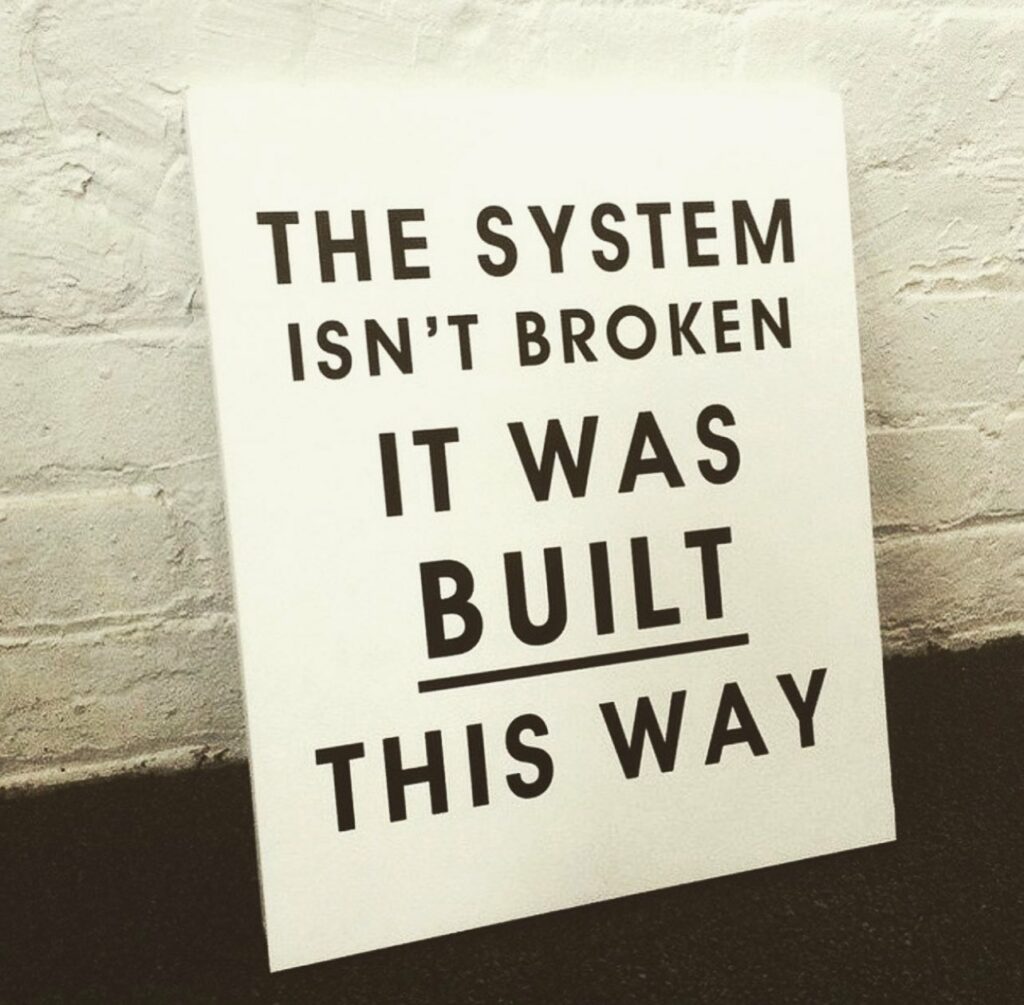
Why so many manure piles online?

Who does your code actually empower? (#FOSS reality check for #openweb builders). In web application development there are broadly three groups you can empower. Every architectural decision – whether you acknowledge it or not – shifts power toward one of these groups.

Understanding which group your system empowers is probably the single most important design question in social technology. In the “fluffy thinking” the three power centres:

1) Users, people who consume, participate, and live inside the system. They care about usability, safety, autonomy, continuity and real-world outcomes. Users are rarely technical, but they are the reason the system exists. If users lack agency, your project is a toy or a control mechanism – not infrastructure.

2) Producers are people who create content, knowledge and value. Examples: writers, organisers, artists, moderators and community builders. These are the people who make platforms meaningful. Without empowered producers networks stagnate, communities collapse and content becomes algorithmic sludge.

3) Geeks (developers/admins). The builders, maintainers, infrastructure operators who care about architecture, performance, elegance, security and scalability. This group is essential – but historically, especially in #FOSS and federated spaces, it becomes the dominant power holder.

This is the #geekproblem. Most #openweb projects “accidentally” empower the third group above all others. Why? Because developers build tools primarily for themselves, #UX is treated as secondary, social dynamics are assumed to be solvable through technical controls and complexity becomes a gatekeeping mechanism.

The result is systems that might be technically impressive, but socially brittle, unusable by normal humans. The tiny group of unthinking “elitists” end up deciding what is good for everyone else, not because they are evil – but because the system structurally centres their perspective. Good #UX in social technology is extremely hard precisely because it requires humility about what engineers don’t know.

The #dotcons model works much “better”, as corporate platforms take a different path. They empower capital which then hires geeks to serve producers, extract from users and optimise engagement and surveillance.

Power structure is: Capital → Developers → Producers → Users. The users become the product, producers become dependent and developers become instruments of extraction. It’s an efficient machine – and a socially destructive one.

The missing model is basic democracy of user empowerment, an uncomfortable truth in practically all the current mess is that users are rarely genuinely empowered. Some partial attempts that worked in the past are early #Indymedia (open publishing + collective moderation. Wikipedia (community governance + editable commons), email protocols (user portability, decentralised identity) and RSS/blogosphere era (subscription over algorithm). None are perfect – but they shift power closer to participants.

What we need more of is non-extractive incentives, as good #openweb projects try to do, real grassroots projects empower users AND producers together. Not by removing structure, but by #4opens distributing power through federation, open standards, collective moderation and visible process.

These are still rare because they are harder to build. They require solving social problems, not just technical ones. It’s why we keep repeating the same failure, oscillate between two broken patterns of #geekproblem systems → technically elegant, socially inaccessible and #dotcons systems → socially addictive, structurally extractive. The problem we now need to compost is that both have produced piles of stinking manure across the tech landscape of the last 20 years.

The #OMN approach is not perfection, it is #KISS shifting the default power alignment to infrastructure that empowers users to participate without needing technical expertise. Producers retain agency over their work and context and most importantly developers build frameworks that decentralise their own authority over time.

In short, build systems where developers are gardeners, not rulers. Questions for #FOSS developers are, before writing code, ask:

  • Who can say “no” inside this system? Who owns the data?
  • Who can leave without losing their social graph?
  • Who defines moderation rules? Who can fork socially, not just technically?
  • Questions like these help reveal where power really sits.

You have a shovel, we really don’t need more abstract debate. We need people willing to compost the failures and build differently. That means accepting messiness, designing for humans, not idealised users, building structures where power flows outward rather than upward. That’s the path #OMN is trying to walk.

Think the soil is a little dry past time for some compost, get your spades out.

Thinking on the modern UX for the #indymedia reboot. Tabs are a line at the top of the page – metaphor is not buttons. You are switching sheets of paper. The page is the paper. The top banner is the desk under the paper. It’s an interesting challenge to think through metaphors.
Using buttons you are outside the desk/paper metaphor so it’s a whole different thing, to mix them is not KISS and confusing. You are into early computer metaphors with the buttons – think mainframes. We are a “newspaper” so the tabs and table and paper sheets make a feeling for the project. Always echo back if you can for a project that is based on a solid past.
For new stuff “invention” is good and there will be lots of space and growth for this when the #OMN is up and running…
One thing the fediverse taught us is that copying existing successfully projects is a root out of the #geekproblem that #fashernistas embrace. So this up to a point is the right thing to do for social change. We for the first time put a spin on it by rebooting a radical grassroots social tech project. But behind this is something much more radical. The #OMN lets see if we can plant and nurture a seed. Think the soil is a little dry pastime for some compost, get your spades out.

DRAFT – contemporary look and feel

The “newswire” used to be open publishing we now add a switch trust/moderate to this wire. The UK indymedia site did something similar latter in its life. Its up to the “editorial collective” to flip this switch for site/accounts/tags etc

The central “fetures column” is newswire articals promoted to a feature. These are written by the “editorial collective” from text and media resources from newswire posts.

Both are news flows.

In journalistic terms the newswire is “breaking news” that flows past fast. It might or might not be true/accreat in real time but will be relatively accreat over time. Its “citizen journalism” in that horrible liberal term. Grassroots reporting maybe better term.

The “feature column” is more like tredtional journalism. Facts are checked, spelling correct, sound in audio good, videos stable etc its the best of the newswire collected and put into context by a group of “citizen journalists” this moves slowly so articals stick around for days/weeks.

The moderation stream is not visible to non “editorial collective” people.

The value in the OMN idea is a social feedback loop to push federation to a lowest level, grassroots. The 5 functions: link/trust/moderate switch is key to this social outcome.

The OMN use of these 5 functions as a strong political/social protection against political infighting/tribalism and mediating the #geekproblem by removeing the levers of control from the programmers/admins and giving them to the producers.

From my long experience in the delight and mess of grassroots media/tech, with out the last two “social tech” paragraphs the project has zero chance of working.

How should the hyper local indymedia rollout

A sideways look at the death of UK indymedia and things to learn for its reboot.
With federation, we don’t have to go down the path of a “virtual silo” this issue was one of the reasons indymedia was ripped apart. The desire for security, privacy and control of having it all on one server controlled by the “elite” geeks compared to having lots of different servers controlled by different groups. The final rip that killed UK was this very issue.
The fediverse is the reboot of the loose network based on trust and clearly against the centralized silo based on control 🙂
Not sure if the is a good history on this, most indymedia history is crap so best to go back to the original source. Think a lot is on archive.org
Q. Should IMC self-hosting be based on something like freedombone – easy to install, maintain, etc
A. Yes… though to seed it as a testing roll out we can host a few before passing um onto the community’s. But the idea is the same as freedombone which is a fab project. BUT as a outreach tool has real imitations due to ISP’s and crap routers in peoples homes, me and me brother tom (who is proper geeky) spent 3 days trying and failing to get it running, a little to do with freedombone and a lot to do with his rooter refusing to do port forwarding reliably.
As with everything OMN we take all paths, for the hyperlocal:
* Home install fab (but likely complex)
Bashrc is likely to add the indymedia server to freedombone so that’s the home install covered
* Community local install, good but could fall for the #geekproblem
Is for the geeks, so they can sought it out for themselves from the sourcecode.
* Easy VPS script – good anufe likely it will work
This one we have to make easy, but this is not a priority till after the test rollout.
* us hosting it on a central server bad but probably the right thing to do for the test rollout.
Is actually the second one just done badly 😉
Todo for the test rollout
* Get the peertube (@RCS currently AWOL) and searx (@jolek78) with @sanders making it happen back online and updated.
* Get a test instill of hyperlocal code to give feedback (@bashrc)
* find small community’s for test rollout, have lifeboats IMC, and a few others in mind (Hamish)
Give us a shout if you have ideas or connections on these.

A look at the internal mess of the uk indymedia project

The project i like to point to as an example. The indymedia project, an early alt-media network that spread the use of open source software and #4opens organizing around the world at the turn of the century. In the UK the was a #geekproblem vs #openweb fight that became nasty over what we would now understand as “activertypub” the #Fediverse vs more centralized silo approach. In the UK you can see this stress point fought as a proxy war over #RSS

The #openweb aggregation side were sold a dud by the #fashernistas being swayed by the #geekproblem It was obvious that the project had to change and move away from central servers to a more aggregation model. BUT the movement was torpedoed by an obviously pointless open-source project instead of implementing an existing standards based RSS they created their BETTER, BRIGHTER flavour which was of course incomparable with everyone else.

This is an example of a “better” but obviously pointless open source project and also destructive behaver. The #indymedia project in the UK was ripped apart internally from this same divide in the end. A bad “open source” outcome. You can find similar behaver today in the fediverse if you look.

It’s a interesting thing to look at. Actually you can see 3 active sides in the internal uk #indymedia mess and important to see the outcome that they ALL LOST in the end.

1) #encryptionists (being pushed by the #geekproblem)

2) #fashernistas (being influenced by the #geekproblem)

3) #openweb being sidelined by the rest

1) The first resisted and blocked aggregation and #RSS from privacy and “security” issues.

2) The second is a obviously failed compromise by keeping control of “their” own better, non-comparable RSS format.

3) The last, the one the whole project was based on, were ignored and sidelined.

The #IMC project soon became irrelevant and died.

Fig leafs are dangerous in tech

The #geekproblem fight between open/closed is a dangerous game of #figleaf. Media is always done in the open, so trying to secure and close this is completely self-defeating. In social networks it’s more complex, privacy in open is sudo anonymous at best. In closed in theory you can have secure p2p connections, but for 99.9% of people running on standard corporate hardware the is no way to trust this so agen sudo anonymous. So technology could be “secure” for .001% of people, maybe.

Please make this clear when talking about these issues, as fig leafs are dangerous.

For the social change we need

For the social change we need to survive as a society and flourish as a species for this to happen we need to take some time to go back to basics

All economic systems are based an unspoken idea of what it is to be human. To be clear, if you do not have an understanding of this you have little understanding of anything that matters in this era.

Let’s look back to early Christianity to highlight this idea.

* The Old Testament is based on a negative view of humanity, greed, selfishness and gluttony are the motivations that god is controlling by forcing us to bow down to his authority.

* The New Testament is based on love and common humane society.

* Capitalism is based on greed and the worst parts of human nature

* Socialism is based on altruism and the best parts of human nature

As you can see, the divide between these different ideology’s goes back a long way and likely to the dawn of human history.

These simple groupings live within supposedly sister ideology’s, think for example of how the horizontal’ists and the vertical’ists in progressive movements represent the different views.

When we start to understand this, you can use this clear difference to make judgments on what has value and what is destructive in our current society.

#deathcult

#geekproblem

#encryptionists 

#stupidindividualism

#openweb

#OMN

The only question that matters is the balance between trust and fear is a useful way of looking at this.

If you are interested in technology and society

Open/closed, a look at the issues in tech

The idea of total control manifested in the master/slave relationship of computers and programmers is a core of geek culture.

  • Open is about attempting to share power in society.
  • Closed is about attempting to block social power.

The #geekproblem at root in our society is about liberalism excepting the division of the state and the citizen, it’s about the liberal ideal of individualism “the is no such thing as society only individuals and there family” though in the case of the #geekproblem it’s just the individual and not so much the family. Our current #geekproblem is a child of Thatcher and Reagan and the #neoliberalism they embedded into our social minds.

It’s interesting to see that the #dotcons (the right) have overcome this #geekproblem and enslaved code, programmers and the network to the control of the capital (and the state) and it’s sad that the left are children in this game.

A way out of this mess is to clearly reject the “closed” ideas in tech and instead re-embrace “open”. Thus unblocking the social flow, what we do with this flow (dangerous stuff) is up to us. We can recognise the danger yes, but to balance that we MUST recognise the disaster we are in now.

“Closed” feeds and re-enforce disaster and in NO WAY helps society to move from this mess #XR

We need flow, not blocking.

It’s simple.

What is the OMN

The #OMN its a anything in and anything out – mediated by trust database/network.

It’s up to “commernerty” what they do with this and up to the individuals what commerty they choose or if a bit geeky can be an individual. it’s just soup (data soup) of course my project is to build a media/news network out of this other people can build other things #OMN

The data soup is fed by folsonmeny flows of tagged data objects mediated by trust. The consumption is based on the same. All with a nice UI

Lossy, redundancy, trust are features, the #geekproblem seeing these as problems needs to be overcome.

Being based on the #4opens am looking at Odata as the rest API core https://www.progress.com/blogs/odata-faqs-why-should-rest-api-developers-use-odata as this is an outgrouth of #atompub and #RSS and comes from a long process of open development #indymedia What do you think?

The exciting bits are the “flows of trust” bulding commertys, the tech and code are just tools.

* Nothing new

* All #4opens

* Good UI


All code is ideology manifested

Q. Some interesting things, mostly the collaborative pad. As I said some time back, this is how I would (obviously) try running this effort – pads not threads.

In terms of general direction, the activitypub etc doesn’t inspire me in terms of rethinking media. I will continue my #postmedia project, which has quite different axioms, and release when ready.

In general I don’t see the linked info neither as theoretically(specs) nor practically(code) strong

A. Diversity of strategy is a good thing but the #geekproblem of everyone doing there own thing is a bad thing – riding the contradictions 🙂

* What’s your argument against activertypub exactly?

* What do you think of rebooting the indymedia project?

One thing I can say the desire to be king is pointless when it fails and dangerous when it rarely succeeds. If this is a main motivation then no good humain outcome is possible. Basic st

A. What is a #postmedia project? it sounds like a alt-right libatrean, which is simply incompatible with social #4opens?

linked info? is being done without coding – it’s a folksonomy. A trust based social project not a technological project. It’s not there on purpose, which is obviously why you cannot find it 🙂

The social nature of the project. Because there is no code as we are simply in every case repurposing existing codebases, existing social relations and existing processes.

it’s an interesting subject.

I am trying to get coders to stop doing pointless/dangerous things with their skills and time. This sums up why i talk a lot about the #geekproblem

* pointless, that’s just about everything they do have always done.

* dangurus, that’s when they push #dotcons and make it work.

Of course this is more complex than it looks, how do you define “useful” we can wank ideology at this point.

A message for my #dotcons frends

When people deny the history of reposabilerty then they deny reality and join the “post truth world” of Trump and Boris.

The majority of my #failbook friends are both sad and bad on this subject as they don’t remember the times they argued that the #dotcons were not evil and cat memes were the right thing to do as the world heated up and is now catching fire.

A lot of the more tech minded run workshops on campining on #dotcons as our ones healthy #openweb tools were ripped apart by our home grown #geekproblem

You guys need to get busy with spades to compost the shit you spread around in the digital world. And spreading more shit just makes the alt more smelly and uninviteing.

I put up with years of trolling on this subject. it’s a good time to balance this and for the first time in a while do something useful. At some point you have to support a real grassroots media project.

https://unite.openworlds.info/indymedia

Hope you understand that this is not a #geekproblem project and not pushing #fashernistas agenders and a clear move away from #failbook and the #dotcons in general #OMN