
Why so many manure piles online?

Who does your code actually empower? (#FOSS reality check for #openweb builders). In web application development there are broadly three groups you can empower. Every architectural decision – whether you acknowledge it or not – shifts power toward one of these groups.

Understanding which group your system empowers is probably the single most important design question in social technology. In the “fluffy thinking” the three power centres:

1) Users, people who consume, participate, and live inside the system. They care about usability, safety, autonomy, continuity and real-world outcomes. Users are rarely technical, but they are the reason the system exists. If users lack agency, your project is a toy or a control mechanism – not infrastructure.

2) Producers are people who create content, knowledge and value. Examples: writers, organisers, artists, moderators and community builders. These are the people who make platforms meaningful. Without empowered producers networks stagnate, communities collapse and content becomes algorithmic sludge.

3) Geeks (developers/admins). The builders, maintainers, infrastructure operators who care about architecture, performance, elegance, security and scalability. This group is essential – but historically, especially in #FOSS and federated spaces, it becomes the dominant power holder.

This is the #geekproblem. Most #openweb projects “accidentally” empower the third group above all others. Why? Because developers build tools primarily for themselves, #UX is treated as secondary, social dynamics are assumed to be solvable through technical controls and complexity becomes a gatekeeping mechanism.

The result is systems that might be technically impressive, but socially brittle, unusable by normal humans. The tiny group of unthinking “elitists” end up deciding what is good for everyone else, not because they are evil – but because the system structurally centres their perspective. Good #UX in social technology is extremely hard precisely because it requires humility about what engineers don’t know.

The #dotcons model works much “better”, as corporate platforms take a different path. They empower capital which then hires geeks to serve producers, extract from users and optimise engagement and surveillance.

Power structure is: Capital → Developers → Producers → Users. The users become the product, producers become dependent and developers become instruments of extraction. It’s an efficient machine – and a socially destructive one.

The missing model is basic democracy of user empowerment, an uncomfortable truth in practically all the current mess is that users are rarely genuinely empowered. Some partial attempts that worked in the past are early #Indymedia (open publishing + collective moderation. Wikipedia (community governance + editable commons), email protocols (user portability, decentralised identity) and RSS/blogosphere era (subscription over algorithm). None are perfect – but they shift power closer to participants.

What we need more of is non-extractive incentives, as good #openweb projects try to do, real grassroots projects empower users AND producers together. Not by removing structure, but by #4opens distributing power through federation, open standards, collective moderation and visible process.

These are still rare because they are harder to build. They require solving social problems, not just technical ones. It’s why we keep repeating the same failure, oscillate between two broken patterns of #geekproblem systems → technically elegant, socially inaccessible and #dotcons systems → socially addictive, structurally extractive. The problem we now need to compost is that both have produced piles of stinking manure across the tech landscape of the last 20 years.

The #OMN approach is not perfection, it is #KISS shifting the default power alignment to infrastructure that empowers users to participate without needing technical expertise. Producers retain agency over their work and context and most importantly developers build frameworks that decentralise their own authority over time.

In short, build systems where developers are gardeners, not rulers. Questions for #FOSS developers are, before writing code, ask:

  • Who can say “no” inside this system? Who owns the data?
  • Who can leave without losing their social graph?
  • Who defines moderation rules? Who can fork socially, not just technically?
  • Questions like these help reveal where power really sits.

You have a shovel, we really don’t need more abstract debate. We need people willing to compost the failures and build differently. That means accepting messiness, designing for humans, not idealised users, building structures where power flows outward rather than upward. That’s the path #OMN is trying to walk.
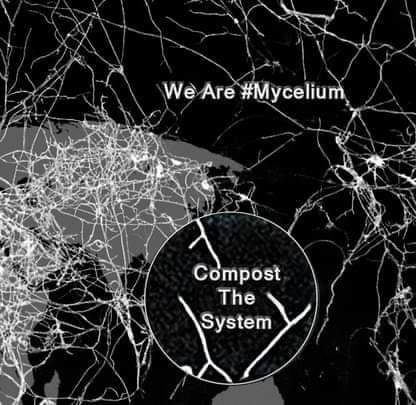
Why openweb projects fail

I have been developing and using #opensource and #openweb projects for nearly 40 years. For the last 20 years at the coalface of development, this is my experience.

Most #openweb projects are more than 99.9% unusable this is normal. A few come up to 5% usability; these are the “successful” ones. It’s very rare for a project like mastodon to be 50% useable – but more than 90% of the people I push in that direction still bounce – though this is more likely because of digital drug habits of the #dotcons than the UX of the project which is good itself.

Let’s be generous our #indymedia reboot project is currently 90% unusable; this is normal for openweb projects. It’s hard to build something with limited resources and training.

Our plan is to make it as simple and #KISS looking as possible to roll out to small groups of testers to develop it into being 20% useable by their feedback. While doing this we can roll out the idea of the project to bring more energy and resources into this shift from 10% to 20% usability.

We only open outreach when we are beyond that 20% level, because it would obviously be self-defeating otherwise. Then inch up the usability while shifting the social expectations of good #UX to a social harmony.

UPDATE:

If you would like to help with this process please set up a account here  https://unite.openworlds.info/indymedia/epicyon/issues and give us feedback on this test site https://indymedia.openworlds.info and this test look and feel template https://indymediadev.openworlds.info/test-css/ two versions of the UX then add an issue to the unite site with your feedback for the developers.

Rich compost in technology

Think of the fedivers as a flowerbed in a big (#openweb) garden surrounded by concrete. We are interested in the garden and bracking up the concrete (#dotcons) to make room for more flower beds and wild forest.


#Activertypub is a part of the flow, as is #RSS and maybe #Odata etc. The apps are the pipes. The human community produces and mediates the flow, in a metaphorical sense is the flow.

The fedivers is lovely healthy’ish flower bed, a small part of the #openweb garden that we are caring/nourishing in our work. When we are down and dirty working in tech it is important to remember this. In the end the garden is the human community’s living as part of a wider natural ecosystem.

The current priority is to get the flow working in a small and sustainable way – thus the hyperlocal test rollout and #epicyon.

This is why i use “mess” “shit” “compost” and “spades” as communication metaphors. The stinking mess we are in is a fertile time for change. For the last 10 years the #encryptionists agender and the #dotcons have been a sterile time, in this shit is a good thing, to live in stinking times 🙂

We have to keep focus on nurturing the seedlings with nutrition rich flows otherwise they wither and die. “Priority is to get the flow working in a small and sustainable way – thus the hyperlocal test rollout and epicyon.”

Looking at wordpress (WP) as a option, would like to try this out on my blog (http://hamishcampbell.com) thus the desire to get it working better. We have already mastodon and peertube. With out a bigger crew we should concentrate on creating a flow with epicyon as this is work anufe. If we can join WP to this flow a bonus.

Remember we are ONLY planting the seeds in the cracks and nurturing them. The roots of the plants (community) bracks the concrete. If we spend time trying to break the concrete we will soon be exorsted and achieve little.

So our mission is to find cracks and plant seeds. Of courses gathering the seeds (crews/code) is a first step – thus outreach and the messiness this brings – we do live in stinky times.

Then think of #searx (http://openworlds.info) as the map to the garden and as a way for people to find out of the concrete paths to the fresh #openweb grass fields. It can all grow up slowly if we keep a nourishing flow going. If we forget, it dries up and dies as it has done meany times in the last 20 years.

You would be surprised how fast nature reclaims concrete given a chance 🙂

Why move away from both the #dotcons and the #encryptionists now?

Lets look at trust/community building as this is what the OMN is about after 20 years of failed tech “solutions”.


* Link – am interested in there content flow for my community.

* Trust – i have a relationship with them, no questions.

* Moderate – we are building a relationship.

* Whoops – rollback

* Unlink – am annoyed, this is shit, waist of time.

* Bolyon logic hashtag flows – a conversation on what is important between the two groups to fine tune flows.

So for flows from a single source that dominate the instance flow. First stage moderation, more work for site crew. Second agree on a hashtag group based flow with the fast source and put them back on trust. Rinse and repeat

If it messes up rollback, if communication bracks down unlink.

An example of this would be the canary news site. Lots of low quality clickbate with acational good posts. Talk to them and get them to use a hashtag for quality post and subjects and only bring that in as flow. If they abuse this talk to them if you can’t come to an agreement then unlink or moderate. The is advantages for everyone to get an agreement and this will not affect the SEO games they play with the #dotcons

The outcome is the up quality of there SEO games getting grassroots content into the #dotcons And our communities we don’t have to see there SPAM. Grassroots news is spread wider, the communities that produce it are empowered. (And sadly likely co-opted, but that another problem for a different step)


Were is security?

Yes to security, people have to be who they say they are and content has to come from a place and its path has to be recorded.

Am going to joke and say we need a blockchain 😉

Trust has to have a foundation.

Stuff can’t just be made up at any level, this would brake trust.

Down the road the is a place for strong p2p identities and personal/group data stores. But not in the ” balancing” roll out of the OMN its good to plug in this stuff as the network grows. The growth stage is as #KISS as possible.

We are strongly refocusing on groups and flows and away from individuals and silos. We are not fundementism on this instead are balancing if that dose not sound to hippy… The #deathcult world is all #stupidindividualism and controlling #dotcons our mission is to rebalance this. Were the balence ends is up to the groups involved. I like the DIY anachronism of party and protest, some people like gardening, other are content with other things.. what ever rocks your boat the is space for meany paths – but the current #deathcult is not a nice one at all.

The is no securaty in tech, ecology or just about anywhere. Its very inhuman world we live in says the man sailing away in a lifeboat – as i keep saying that’s not a metaphor.

On the subject of people being who they say they are – this can be sudo anonymous if they feel like it but that “anonymous” person still has to fit into the trust web

Thus the sudo bit.

End thought

If data is the new currency, then opendata is the new communism, jumps to mind, lets see were #4opens leads.

The encryptionsists – the last 10 years.


Security theater you should ask who we are hiding from. The sad and bad outcome of just about everything is only our friends – our enemies, the state and the #dotcons can almost always look behind the curtain. The rare exception of this is p2p encryption, never client server. Though the issue that makes most of security into a thin layer of cloth is the hardware and firmware our ”secure” apps run on. So many holes in these that it’s all academic, what we do next with social technology #4opens

On outreach of OMN and indymedia reboot

Q. I’m not interested in doing that, as I don’t know what it is you are actually proposing. Apart from using hashtags and talking about #deathcult I don’t actually understand your plan?

What I haven’t heard is a practical way of hosting and distributing alt media.

Visionontv turned into a mess, just as Indymedia did. So what has changed?

A. What happened is a good question. The answer is simple the #Fediverse maybe start here https://en.m.wikipedia.org/wiki/Fediverse

Where we are now https://the-federation.info/ or https://fediverse.network/

From an activist tech prospective. The real opening we have is this was built outside activism outside #encryptionist amenders and for the #openweb and is thus #4opens

Our own tech in activism was ripped apart by the open/closed war, indymedia dies because of this, visionontv never went anywhere because of this. Outside activism this war has also been fought, the closed/encryptionists have been dominant for the last 10 years.

Around 5 years ago a handful of people said fuck this crap we need a spade. They created #openweb tools, and it has exploded from there to be a real UI friendly alternative. This is exactly the same outcome of the World Wide Web did to the silos of the early internet.

Am simply bring this explosion of affective DIY creativity into the ossified and dead depression of activism tech. Obviously, meany nay sayers are going to piss and shit all over this move. Activist tech died for very good ressions. This does not have to be a block, as I say this makes good compost so get your shovel ready and let’s plant some seeds. I hope that not to metaphorical

A simple video on the tech https://www.youtube.com/watch?v=S57uhCQBEk0 from this it’s clear this #openweb tech works and scales and people like it

What is also clear is that is people are getting seriously unhappy on the #dotcons

YES its going to be a mess of shit and piss and fuckups, that’s activism, and the #encryptionsists pushed “closed” ideas deep into our #fashernistas so it’s a uphill battle.

BUT we do not have a choice to stay in the #dotcons it’s poison and our ecosystem and social syteams are dyeing.

A realistic timeline, a year of dev and small scale roll-outs. During which there will be lots and lots of shit shovelling to stop it becoming a stinking mess that people will not go, nowhere near.

The tech is “easy”ish, it’s the shovelling shit that’s hard, non techs can help with this bit.

Help OMN indymedia reboot
* It easy to keep crossing wires with “media” vs. personal. Media should be open, with clear sources, except when protecting them. Whereas personal data should default to private
* #OMN is not about tech – all code is ideology – the OMN is a social solution to a social problem
* teach people the #4opens and review tools/projects they use/want to use by them.
* on the dev/organising site you can help by asking simple basic questions

What did you do in the #dotcons during the climatechoas breakdown

Q. So are you gonna say what you’ve done? I don’t think posting on fb has any affect on the dotcons? The opposite in fact

A. Yep it dose, am doing a stepaway project, a group of us run 5 #openweb servers with a search engine, social network, video hosting, and tools development site/openweb organizing.  You can find links if you look back on me #failbook feed or search the web for OMN might find them.

A. Agen if you look back you will find a very long list of posts inside and outside the #dotcons with information, motivation about the #openweb projects as well as the current mess we face here .

A. If people use the #hashtags as seeds for communitys we could have the start of real radical revolt. If they don’t, more likely, we will have some liberal wank, no meaningful action and the death of billions of people due to this crap behavior and current mess as made clear by the #XR crew. Its a simple message and strategy.

What is the Open Media Network (OMN)

The project is to decisively shift power from the geeks and admins to the producers and consumers of media. In this its about good UI and simple empowering #KISS tools to move content by categorising it with a bootum up folksonermy. This simple approach is balanced by shared site level higher languages for the complex crew.

“This is the Internet”

GET

PUT

POST

DELETE

–MERGE–

This Odata is the #4opens #OMN project.

People can get involved at a level they feel they can add to the project to reshape there world.

Consuming content

* simply on a portal/app (aggregation top site/app)

* on there own site as a sidebar or page.

* as a part of an admin team on a middle/bootem site

*

Producing content

* from a feed from there own site or #dotcons account

* writing linking articals as a part of a top/middle/bootm site

*

Aggravating content

* as a embed on there own site

* on a bootem/middle/top site

*

For the geeks the project is based on #4opens protocols

1) For bringing legacy content in – RSS

2) For talking to the fedivers – Activertypub

3) And for internal working – OData

Lets look at the last:

OData fundamentals (from https://blogs.sap.com/2018/08/20/monday-morning-thoughts-odata)

OData is a protocol and a set of formats. It is strongly resource oriented, as opposed to service oriented. There are a small fixed number of verbs (OData operations) and an infinite set of nouns (resources) upon which the verbs operate. These OData operations map quite cleanly onto the HTTP methods

OData operation HTTP method
C – Create POST
R – Read GET
U – Update PUT
D – Delete DELETE
Q – Query GET


If something is important enough it should be addressable in that elements should have addresses, not hidden behind opaque web services endpoint. In the case of an HTTP protocol like OData, these addresses are URLs. And the shape of the data can be seen in the way those URL addresses are made up.

OData goes back further than you might think, its a grassroots project.

TThe protohistory of OData

OData’s origins go back to 1995, with the advent of the Meta Content Framework (MCF). This was a format that was created by Ramanthan V Guha while working in Apple’s Advanced Technology Group, and its application was in providing structured metadata about websites and other web-based data, providing a machine-readable version of information that humans dealt with.

A few years later in 1999 Dan Libby worked with Guha at Netscape to produce the first version of a format that many of us still remember and perhaps a good portion of us still use, directly or indirectly – RSS. This first version of RSS built on the ideas of MCF and was specifically designed to be able to describe websites and in particular weblog style content – entries that were published over time, entries that had generally had a timestamp, a title, and some content. RSS was originally written to work with Netscape’s “My Netscape Network” – to allow the combination of content from different sources (see Spec: RSS 0.9 (Netscape) for some background). RSS stood then for RDF Site Summary, as it used the Resource Description Framework (RDF) to provide the metadata language itself.

Atom. Like RSS, the key to Atom was the structure with which weblog content was described, and actually the structure was very close indeed to what RSS.

An Atom feed, just like an RSS feed, was made up of some header information describing the weblog in general, and then a series of items representing the weblog posts themselves:

header
  item
  item
  ...

A few years later, in 2005, the Atom format became an Internet Engineering Task Force (IETF) standard, specifically RFC 4287, and became known as the Atom Syndication Format:

“Atom is an XML-based document format that describes lists of related information known as “feeds”. Feeds are composed of a number of items, known as “entries”, each with an extensible set of attached metadata. For example, each entry has a title.”

What was magic, though, was that in addition to this format, there was a fledgling protocol that was used to manipulate data described in this format. It was first created to enable remote authoring and maintenance of weblog posts – back in the day some people liked to draft and publish posts in dedicated weblog clients, which then needed to interact with the server that stored and served the weblogs themselves. This protocol was the Atom Publishing Protocol, “AtomPub” or APP for short, and a couple of years later in 2007 this also became an IETF standard, RFC 5023:

“The Atom Publishing Protocol is an application-level protocol for publishing and editing Web Resources using HTTP [RFC2616] and XML 1.0 [REC-xml]. The protocol supports the creation of Web Resources and provides facilities for:

  • Collections: Sets of Resources, which can be retrieved in whole or
    in part.
  • Services: Discovery and description of Collections.
  • Editing: Creating, editing, and deleting Resources.”

Is this starting to sound familiar – OData is exactly this – sets of resources, service discovery, and manipulation of individual entries.

AtomPub and the Atom Syndication Format was adopted by Google in its Google Data (GData) APIs Protocol while this IETF formalisation was going on and the publish/subscribe protocol known as PubSubHubbub (now called WebSub) originally used Atom as a basis. And as we know, Microsoft embraced AtomPub in the year it became an IETF standard and OData was born.

Microsoft released the first three major versions of OData under the Open Specification Promise, and then OData was transferred to the guardianship of the Organization for the Advancement of Structured Information Standards (OASIS) and the rest is history.

Something that humans could understand, as well as machines. The resource orientation approach has a combination of simplicity, power, utility and beauty that is reflected in (or by) the web as a whole. One could argue that the World Wide Web is the best example of a hugely distributed web service.

OData has constraints that make for consistent and predictable service designs – if you’ve seen one OData service you’ve seen them all. And it passes the tyre-kicking test, in that the tyres are there for you to kick – to explore an OData service using read and query operations all you need is your browser.

Have a quick look at an OData service. The Northwind service maintained by OASIS will do nicely. Have a look at the service document and, say, the Products collection.

Excerpts from the service document and from the Products collection

Notice how rich and present Atom’s ancestry is in OData today. In the service document, entity sets are described as collections, and the Atom standard is referenced directly in the “atom” XML namespace prefix. In the Products entity set, notice that the root XML element is “feed”, an Atom construct (we refer to weblog Atom and RSS “feeds”) and the product entities are “entry” elements, also a direct Atom construct.

Today’s business API interoperability and open standards are built upon a long history of collaboration and invention.

Food for thought #OMN

Nourishment for action