For 40 years we’ve been told there is no alternative. The neoliberal #deathcult has made a religion of markets, competition, individualism and profit. We’ve been told to keep our heads down, accept the consequences and leave everything to the market. Now look at where this has taken us. People work hard but cannot afford housing, food, energy or the basics of a dignified life. Economic insecurity grows while wealth and power concentrate in fewer hands. Democracy becomes hollow when governments tell people that nothing can be done about the things that matter most in their lives.
This is fertile ground for fascism – when the existing system becomes unbearable, we become open to #nastyfew fascists who promise blinded alternatives. On one hand the far right understands this, offering belonging, agency and a mythical better past, but builds that promise around exclusion, hierarchy and the dehumanization of others. On the other hand the progressive failure is that we have not built a convincing alternative.
We cannot simply defend the existing mess and expect people to keep believing in it, nor can we offer abstract utopias without practical paths for getting there. We need to start with the things people actually need:
- A floor under people’s lives, affordable housing, food, energy, transport and care.
- A ceiling on concentrated power, challenge monopolies and corporate capture.
- Shared public infrastructure, public options that put people’s needs before privatized profits.
- Democracy, participation and collective power in the decisions that shape everyday life.
- Ecological transition to change how we produce and distribute resources.
- International solidarity, stop treating the lives and livelihoods of people elsewhere as expendable collateral damage.
But there is another deeper layer we need to take seriously, the social/tech infrastructure that makes these alternatives possible. This is where the #OMN path is useful, we need to rebuild the grassroots networks, independent media, shared spaces and open processes that allow people to organize, communicate, disagree and cooperate. Not more centralized platforms, not more #NGO-shaped projects or another collection of isolated individuals competing for attention.
We need practical commons infrastructure that grows trust, participation and collective agency. The native #openweb is part of this path. Then the #4opens give us a practical starting tool: open data, open source, open standards and open processes. this can put more of us on paths were technology supports human relationships and collective organization, not replaces them.
The central lesson is simple – the hard right is offering people a sense of agency in a world that has taken their agency away. We cannot defeat that by simply shouting louder about how bad the far right is, we have to build something people can actually participate in, see working and believe in.
This is social composting – stop defending the rotting system, stop getting trapped in endless symbolic battles. Dig into the shit left by 40 years of #deathcult worship and turn it into the healthy ground for something better. We don’t need another saviour, we need to rebuild the collective ability to act so grab a shovel, build the compost heap, grow the alternative.
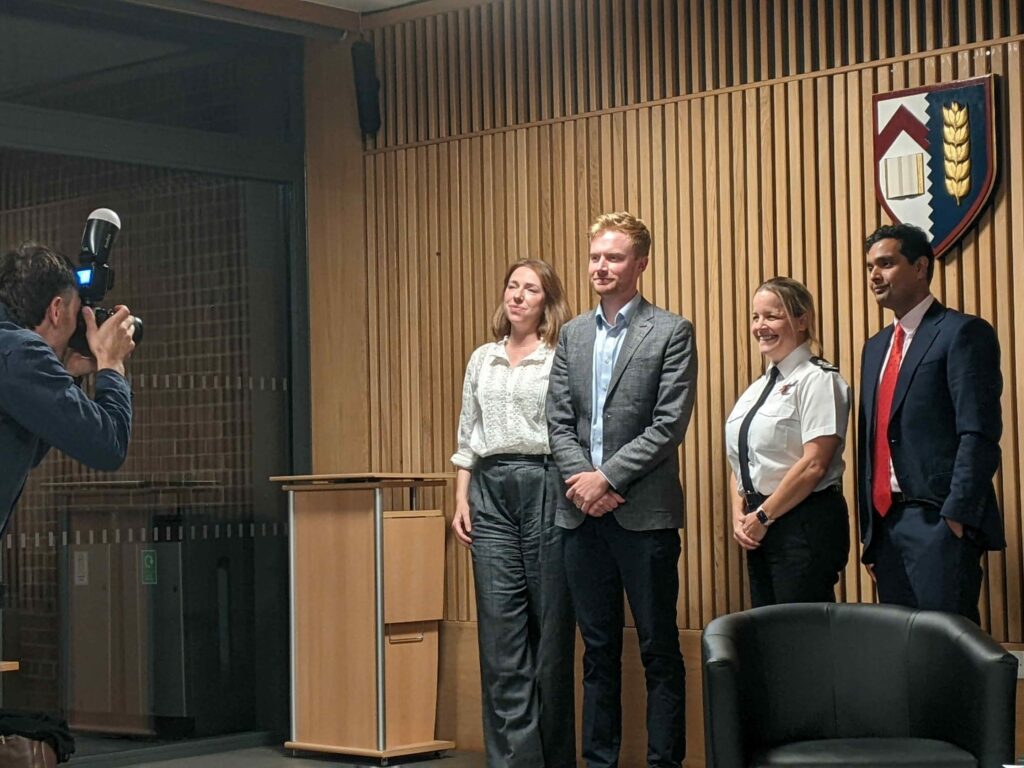
Leading in an age of disinformation: who gets to control the truth?
lets look at an example of this. I went to a Kellogg Conversation at Oxford on “Leading in an age of disinformation”. It brought together voices from the BBC, science, policing and business to discuss how leaders should respond when truth is contested and trust is fragile. What was interesting was not just what they said, but what each institution revealed about its own relationship with power.
- The BBC talked about information control: status games, motivation, fear, help and the growing influence of state actors. Its concern was how established media can retain trust when the old gatekeepers no longer control the flow of information.
- The police talked about social control. Their interest in social media and influencers was largely about outreach, reaching people through trusted voices and using influence to support policing agendas. There was a strong desire for information to be state sanctioned, controlled and not in any way alternative..
- Business talked about money control. Influencers, marketing and AI were discussed through the familiar language of reach, reputation and trust. The underlying question was how to make influence work for business.
- Science was the odd one out. There was more recognition that knowledge is uncertain, that information can be cherry-picked, and that attempts to automate the handling of information can create new problems. There was at least some willingness to question the assumptions behind the systems.
But there was a bigger problem with the whole conversation, nobody was really talking about freedom. Each institution was looking at the #dotcons mess through the lens of the power it already holds. The BBC wants to maintain authority over information. The police want reliable channels for social outreach. Business wants to turn influence into money. Science wants better ways to establish and communicate knowledge. These are not necessarily all bad aims, but they leave out the people and communities who actually create, share and make sense of information.
The problem is that we don’t know as much as these institutions often pretend, the information landscape has changed, but the institutions are still trying to manage it using old habits of authority and control. Influencer culture is a good example. People increasingly use peer-to-peer language and trust relationships to communicate, but that doesn’t make something trustworthy. We need to understand this difference rather than simply trying to recruit influencers into existing systems of control.
One question from the discussion stood out: what are you actually trying to achieve when you tell someone something? That is a much more useful starting point than simply asking whether information is correct. What relationship are you building? What action are you encouraging? Who benefits? Who gets to challenge it?
This is where the #openweb and #OMN paths matter. We need open information flows, visible sources, human context, shared moderation and the ability to challenge and correct what circulates. Not another layer of automated control pretending to solve a social problem. We need to make it easier for people to understand where information comes from, how it travels and why it is being promoted.
The danger is that the old gatekeepers respond to losing control by building new forms of control, while the #dotcons turn the resulting confusion into another market. We need an educational critique of how we are using information, not simply another professional conversation about how to manage it. Trust cannot be manufactured by institutions, bought by business or imposed by the police. It has to grow through open relationships and accountable practice.
Nobody on that panel seemed to be speaking from the starting point of freedom, that absence is the real story.
#OMN #4opens #openweb #disinformation #mainstreaming #dotcons