People are celebrating that Trump and the new right are tearing down the neoliberal #deathcult consensus. And to be fair, they’re right, Trump’s movement is smashing the status quo. But there is an easy to see problem, it’s not being replaced with anything better. It’s just more stinking shit, only now it’s wrapped in authoritarian aesthetics and crypto-gold-rush dreams. This is the “new” mess being pushed by the different #nastyfew.
Wannabe king, fascist
This regime change without a roadmap is the end of neoliberalism, and good riddances to that, but this change is not a “nice” step toward justice, but a corporate free-for-all masked in anti-elitist smoke and mirrors. Trump project isn’t building anything. It’s the looting of the ruins.
We have already suffered through the 40 years of neoliberal breaking government to sell it off. What many still don’t understand is that neoliberalism doesn’t just passively fail, it actively sabotaged. For people who pine for this vanishing mess, let’s remind you that if you elect neoliberals, they will work tirelessly to make your government services worse. Why? Because good public services threaten private profit. This is the history of the last 40 years:
Defund and sabotage public services, transit, healthcare, education.
Add layers of bureaucracy to make them inefficient and annoying to use.
Watch public trust erode as services collapse.
Claim privatization is the only solution, and sell it off to friends and donors.
The result? A hollowed-out state, where private companies profit off pain, and public goods are rebranded as luxuries. This is what we voted for with Starmer’s labour coup in the UK. This isn’t mismanagement, it’s strategy.
But Trump, and likely Farage, if we vote for him to replace Starmer, goes a step further. They’re not just running the neoliberal script, they are rewriting it with a real estate mogul’s pen, driven by a dystopian vision of climate opportunism. Want proof? Look at the growing obsession on the American right with Canada and Greenland. Yes, Greenland. It’s not simply a joke, it’s a climate gold rush. As the Arctic melts, they see land, water, and new frontiers. The kids we put in charge who dream of being kings are buying into collapse like its beachfront property.
Prince of nasty, fuckwittery
Trumpism is what happens when the neoliberal state collapses under its own mess and contradictions, and instead of building something new, it hands the keys to a cartel of extractive fantasists. They don’t deny climate change any more, they’re planning to capitalize on it.
The is currently no plan, no future on the current path. This new right-wing movement isn’t even pretending to govern. There’s no vision beyond seizing land, eroding rights, and cutting deals. They’re not here to fix the climate. They’re here to survive it better than you, and leave you and your kids dieing in the mess.
We need to be absolutely clear about this, government services don’t have to be slow and bureaucratic. That’s a choice, a bad one. We can build public systems that are efficient, trustworthy, and just, but to do this, we need to reject the current “common sense” neoliberal decay and right-wing collapse profiteering.
These men featured here are all #fuckwits, we simply can’t let the #nastyfew define the on rushing era of collapse. A first step away from this mess is in saying out load that the hard shift to the right isn’t the antidote to neoliberalism, it’s the final form, stripped of illusion and fully weaponized. And the answer to this isn’t hiding from the collapse, it’s composting the mess, we need a shovels #OMN
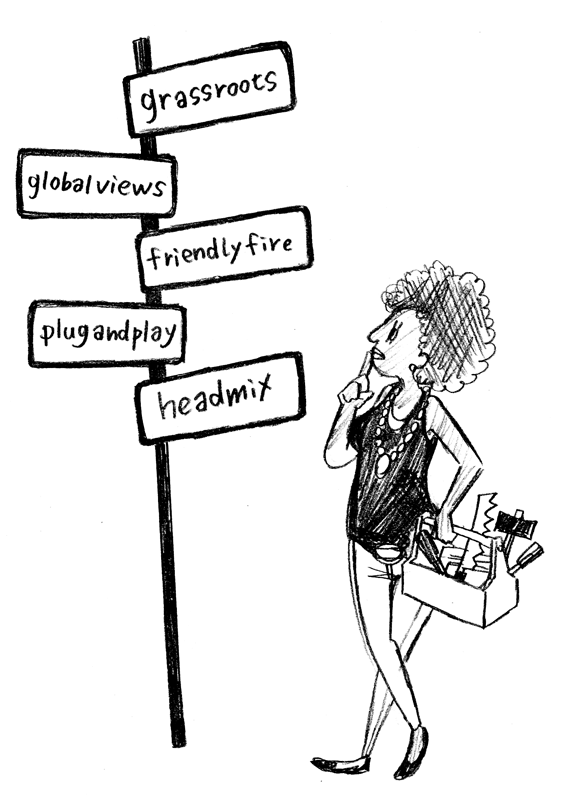
In activist spaces and grassroots communities, the tension between #fluffy and #spiky approaches is a well-worn. Fluffy represents a gentler, consensus-driven path, centred on kindness, inclusion, and collective care. Spiky, on the other hand, is sharp-edged, direct, and confrontational, willing to disrupt and break things to push for change. Both paths have their place, but the trouble arises when fluffy turns dogmatic, morphing into a hard passive-aggressive policing #blocking that silences dissent.
Dogmatic fluffy presents itself as kindness, but when it becomes rigid, it is just as destructive as unchecked aggression. People get shamed for stepping out of line, challenging dominant group norms, and advocating for more assertive tactics. This isn’t only a theoretical issue, it actively fractures movements, creating echo chambers where only approved, safe opinions are allowed to circulate. It’s activism dressed in softness but wielding the same #mainstreaming blunt force as actual systems we set out to dismantle.
The danger lies in the #blocking of paths to meaningful discussion. When conversations are shut down in the name of maintaining harmony, we lose the ability to take difficult paths. The fluffy-spiky debate needs to be dynamic, a living exploration of what tactics are effective in different contexts. Sometimes, gentle community building is the answer. Other times, the situation calls for confrontation and disruption. But when any side forcibly silences the other, we stop evolving.
It’s good to remember #KISS (Keep It Simple, Stupid). Complexity is necessary, but so is cutting through the noise. If our movements become bogged down in internal purity tests, we soon lose sight of the actual struggle. With, people stepping away from the #dotcons and looking for alternatives. We need to offer spaces where messy, honest, and sometimes uncomfortable conversations can happen, not sterilized bubbles where dissent is treated as betrayal. In this, people who push only the personal over the political are not helping.
Real movements thrive in the tension between fluffy and spiky. They feed off the flexibility, to let people navigate those paths without turning them into dead-ends. Fluffy doesn’t need to fear spiky, and spiky doesn’t need to dismiss fluffy. They’re both tools, both necessary. And if we can hold space for that complexity, we might just build movements resilient enough to withstand whatever the #deathcult throws our way.
What do you think? Should we lean into the discomfort and keep the debate alive?
UPDATE: it needs to be said that #blinded dogmatic #fluffy people to often become nasty #fuckwits without a clue, in this they are blinded #spiky, what do you think we can do with this mess?
To start to make things better this is a mess that we constantly need to compost, over the last ten years, it’s wild how people barrel into grassroots tech projects like #OMN behaving like blinded paranoid #fuckwits, wreaking havoc and then scampering off to nurse their self-inflicted wounds. This nasty pattern repeats so often it feels like a badly scripted tragedy. And yes, this is VERY crap behaviour. Please, try not to do this. Thanks.
The people who do this are often #fashionistas chasing the latest fad or the #NGO prats clinging to crumbling institutions, or the geeks blind to anything beyond their screen. What they have in common is that they are all unknowingly (or knowingly) kneeling at the altar of the #deathcult. They do this by dragging in their #mainstreaming assumptions, wielding ‘common sense’ like a cudgel, and are oblivious to how it shatters the delicate, horizontal culture the real #4opens we need grows from.
On the #fediverse, we’re witnessing a growing native/non-native culture clash. Which is not inherently bad, friction sparks growth. But when the horizontal crew, the ones refusing to play the #mainstreaming power games, consistently get trampled by this, then we have a problem. The commons reputedly collapses under the weight of imported hierarchy and fear-driven control.
This #mainstreaming pushing of mess and more mess, means we need shovels, lots of shovels, to dig deep and compost this wreckage back into fertile ground. The tech? It’s just scaffolding. The actual building is made of people, mythos, and tradition. It’s a historical flow, as is everything of value. But instead of embracing this flow, people, in the grip of #stupidindividualism, push hard for self-destruction and distraction. It’s almost like they want the #deathcult to win. And in this world, where the economic machine grinds everything to dust, this is a hard problem to shift.
We need to become the change and challenge to break this cycle, to remember our own history, back when we did things better, back when we built #indymedia, not just as a tool but as a living, breathing community. A space where the value was in the social fabric itself. The path to do this is in federating out to a non-(owned) branded networks. Building the flows, the undercurrents, the radical gardens of storytelling and truth. It’s time to stop licking the self-inflicted wounds and get our hands dirt to start digging again.
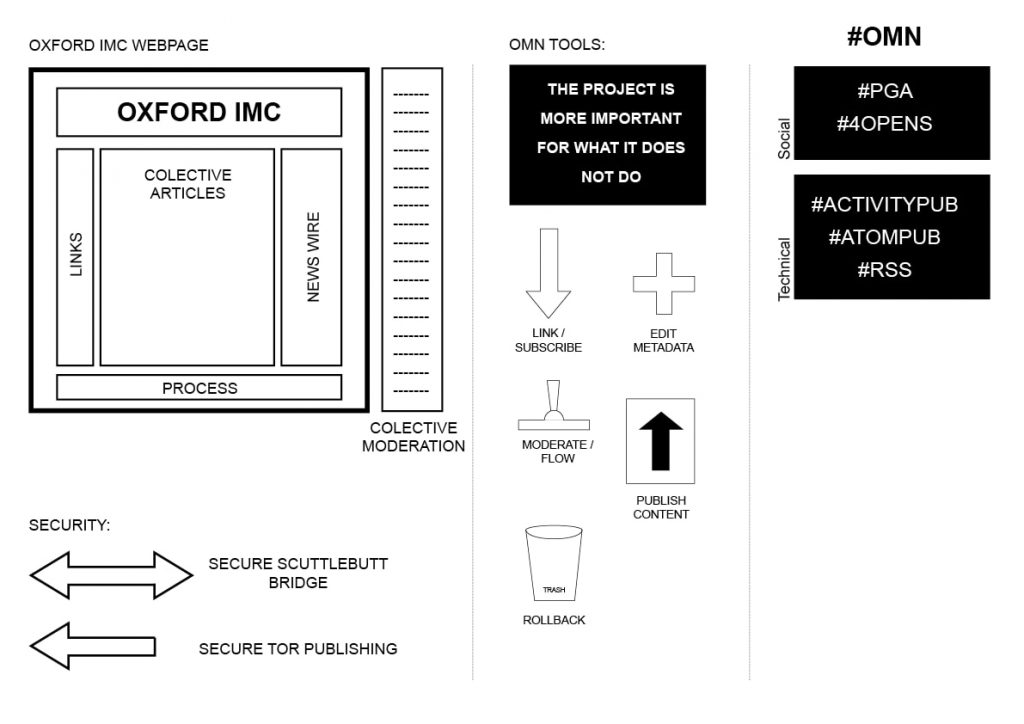
On this, the #OMN hashtag story is a shovel, we need to actively use to dig through the layers of decay in the tech mess. It’s a tool to help us compost the rot of the #deathcult and plant the seeds of a new, living, breathing #openweb.
We have had a working, growing plan for the last 20 years: to use #hashtags to seed affinity groups of action. This isn’t tech, it’s about creating the movement that actually make a difference. #Hashtags are more than metadata; they’re flags, rallying points, paths leading through the chaos. And in this #Fediverse based reboot of the #openweb, we finally have the space to take this path to push the needed change and challenge.
We’ve been exploring this path for years, you can dive the thinking here. But what we really need is a home for this practice, a network where these seeds can grow into something tangible. Because fighting back doesn’t need to be complicated. It’s how every “common sense” right and freedom we enjoy was won in the first place: by pushing, not just defending.
The commons won’t protect itself. We haven’t yet effectively used the openings we have to defend our digital commons. Over the last 5 years, we have pushed to expand this space, as history shows, the best defence is an active attack, not with weapons, but with action, storytelling, and a refusal to let the #mainstreaming mess suffocate this #KISS motivation.
A part of this plain talking, calling out the #nastyfew instead of talking vaguely about ‘elites.’ Let’s name the problem, plant the seeds, and grow the alternatives. The path we outline in the #OMN can be used to shape this living network, a flow where our history informs our present, and where collective action mediates the cycle of destruction. It’s time to remember our history, build the native #4opens path, and stop waiting for someone else to save us. We have the tools, let’s start digging.
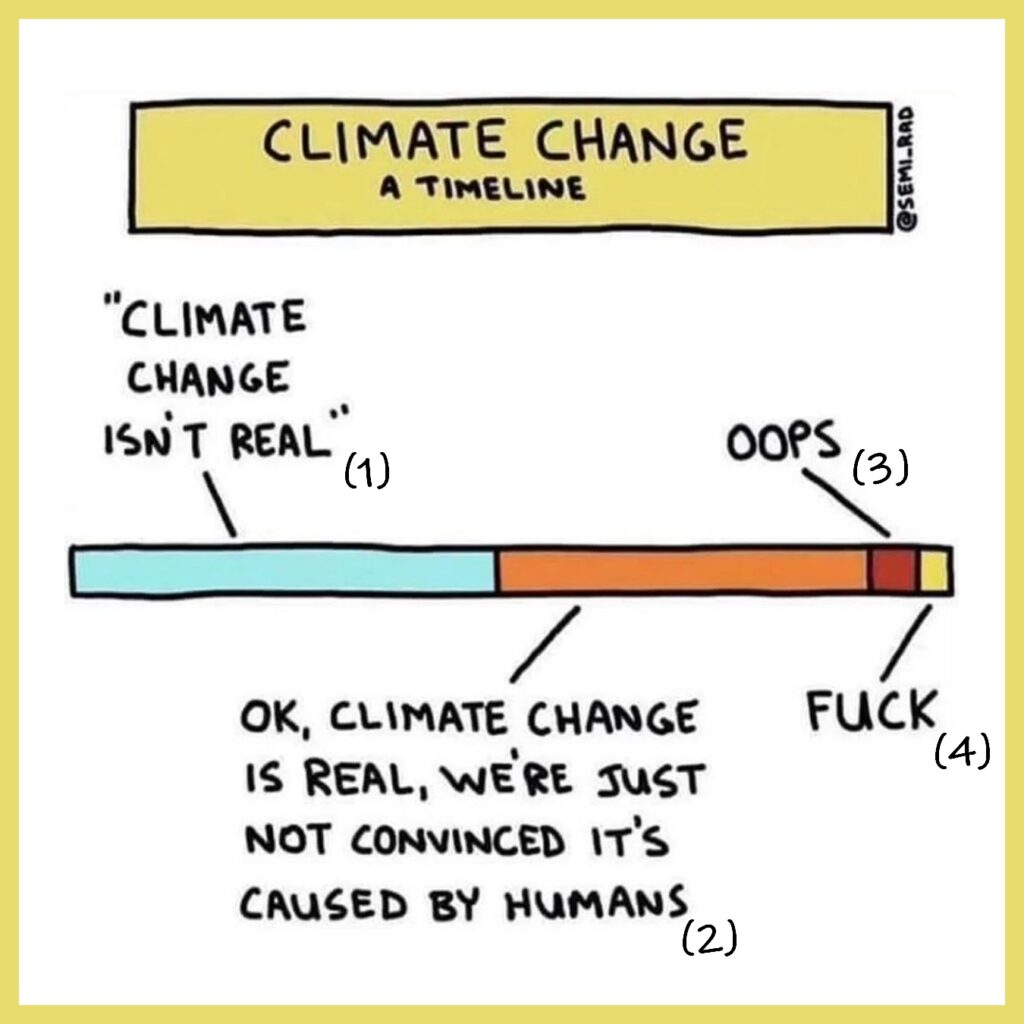
The current #mainstreaming paths are dependent on capitalist structures, when looking at this critically, it reveals itself as a #deathcult, with the embodiment of unrestrained growth and consumption that runs counter to meaningful solution to #climatechange. While billionaires and corporatens entertain the illusion of future-proofing their wealth and safety, the reality is more perilous. Their greed fed opulence and influence, but it can’t shield them indefinitely from a collapsing ecosystem that sustains all life, including their own.
Inherent to this contradiction in capitalism itself: it requires perpetual growth to survive. This expansion is incompatible with the measures needed to mediate or stop #climatechaos. But if growth halts, so does the economic machinery that upholds the current power structures, creating a destabilizing domino effect. While you might ask why those in power do not pivot to environmental preservation, it’s the same mess, the answer is the system’s relentless demand for expansion. Even if an individual capitalist – or a consortium – decides to scale back for the sake of long-term planetary health, the market will simply replace them with competitors who are more willing to pursue relentless profit, growth, and resource consumption.
The current path has a self-destructive logic, this paradox is why even billionaires who are conscious of the dire climate situation resort to insufficient and infective measures. They might fund green technologies and push for marginally lower carbon emissions, but the actions remain constrained by the underlying logic: protecting the continuity of capital. This capital-only world-view can’t embrace the radical systemic change we actually need to avert ecological collapse.
Let’s look at this, billionaires and the bunker illusion, the ultra-wealthy/greedy #fuckwits, plan to retreat to their fortified bunkers and private, insulated zones once climate-induced social and environmental chaos grows un medateable. While contingency plans do exist – high-tech shelters, land acquisitions in regions predicted to be less affected by climate change -these are temporary solutions. A world unravelling from the fabric, ecosystems will not sustain even the most fortified enclaves indefinitely. Even if technology advances to the point of enabling space colonization, the timelines required for such ventures far exceed the immediacy of the crisis we keep #blindly pushing.
This is an easy to understand systematic issue, and it should be obverse we need a collective rater tan the mask of individual solution. Capital, the motivation and power for action, is not about individual capitalists but capital as an entity, the dogmatic socio-economic phenomenon that exerts control over its arbiters. Capital has built in infinite growth, prioritizing profit over sustainability and long-term human survival. An individual or collective attempt to defy this logic and implement meaningful, planet-preserving strategies would be outpaced and outcompeted by others who align more closely with capital’s pushing of this #stupidindividualism, ruthless, greed is good.
This #KISS understanding underscores the distinction between idealist and materialist interpretations of the crisis. Idealists believe that with enough awareness and willpower, the system can change from within. Materialists, recognize that capital is a structure that acts beyond the control of individual or organization. It functions like biological evolution: it values reproduction and expansion above survival, when as we see now those traits are in the end destructive.
There is some room for corrective action within the existing system, but it’s inadequate. Policies to mitigate environmental impact, even when enacted, are slow and piecemeal. The issue isn’t that #mainstreaming decision-makers don’t understand the problem; rather, they don’t grasp the depth of systemic overhaul required to address it. The principles they consider immutable -the rules of modern economics and finance. The “common sense” is the problem.
The #deathcult of mainstreaming is propelling growth and consumption despite ecological warnings, it is locked in a dance with CAPITALS logic. While billionaires may fund clean energy startups and talk about sustainable practices, their wealth and the power structures uphold and are bound up in the unsustainable status quo. Change and challenge requires uprooting fundamental beliefs about how economies MUST operate, not just superficial adaptations. Until this realization is shared and spread, capital will continue on its path, indifferent to the ruins it leaves.
Best not to be a prat about this, thanks.
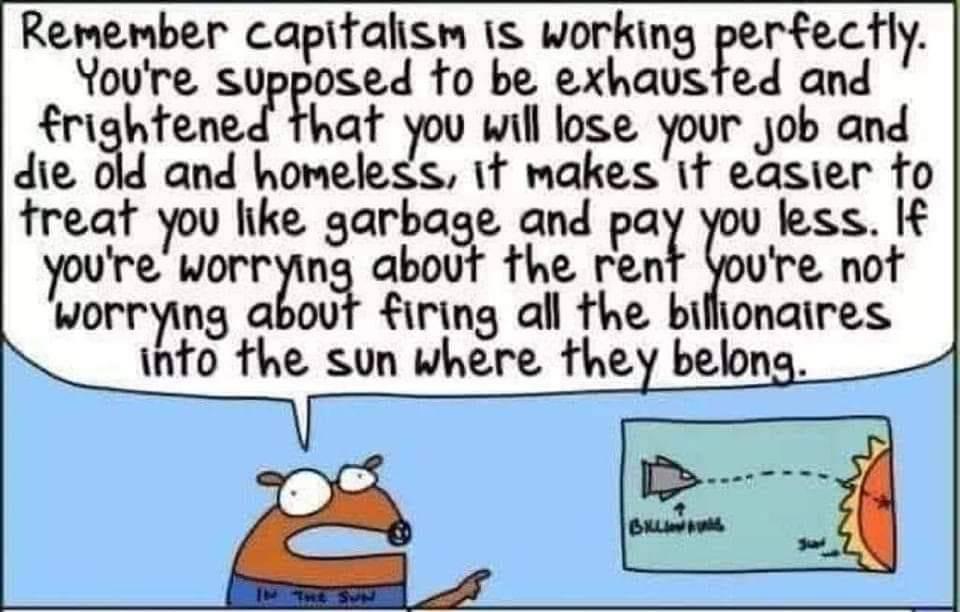
Why capitalism and climate change solutions are fundamentally incompatible. The urgent need to address climate change collides with an uncomfortable reality, as we outline capitalism’s foundational mechanics to make meaningful climate action impossible. This isn’t a case of individual negligence but a systemic flaw. As we say, capitalism, by design, prioritizes profit and growth, at the expense of long-term, collective concerns and environmental preservation.
Capitalism favours the #nastyfew who maximize profits in the shortest timeframe. It’s a path where the most ruthless and nasty competitor prevails, setting the standard that others must follow or face obsolescence. This constant pressure means that if an individual capitalist or company recognizes the existential threat of #climatechaos, they cannot afford to act on it meaningfully without losing their competitive edge. For example, a corporation that decides to limit emissions at the cost of profitability will quickly be outcompeted by one that does not.
The logic of capitalism ensures that any significant deviation from maximizing short-term profit results in failure within the market. Thus, while some companies engage in “green” initiatives to pay lip service to sustainability, these efforts are superficial. They exist to placate public concern and leverage marketing advantages, rather than drive the needed change. The myths are that capitalism, through innovation and competition, will solve climate change. However, capitalist solutions boil down to maintaining leverage and coercing others into action. For example, the race for green technologies like electric cars and renewable energy can be more about dominating a new market sector than reducing environmental harm. Elon Musk’s ventures into space and sustainable technology, was hailed as forward-thinking, illustrate this principle. Space colonization and technological fixes reflect an expansionist mindset, a search for new “territories” to exploit as resources on Earth dwindle.
Capitalism’s path needs to push costs onto external parties, the public and the environment. The system relies on government-funded infrastructure and socialized costs, as seen with subsidies for oil companies, highway construction for the automotive industry, or public bailouts for corporations in crisis. When it comes to addressing #climatechange, this reliance on externalized costs becomes a liability. The climate crisis is a global “cost” that capitalism, left unchecked, will not address willingly. It requires collective action that contradicts capitalism’s individualistic and profit-driven paths. This is why capitalist markets require regulation by state or more importantly collective paths to function at all or sustainably, and even then, such measures face fierce resistance.
We now live in the automation age, the question is how the #nastyfew plans to survive. Whether billionaires believe they can weather the storm of #climatecollapse is complex. Many of them, seeing the unsustainability of infinite growth, look for exit strategies. This explains the investments in space travel, underground bunkers, and gated communities. The implication is stark: they believe their wealth will shield them from the mass suffering climatechange will bring. Automation adds another layer to this story. With machines replacing human labour, the exploiters envision a future where their economic power persists without the masses of real people, that’s you and me. This very dystopian reality shows the detachment of capital from human and ecological concerns.
We currently face a failure of collective action to mediate, one of capitalism’s flaws ts inability to coordinate collective action without state intervention. While some countries have managed to decouple emissions from #GDP growth through, exportin emissions, advancements in service sectors and digital economies, this decoupling remains insufficient to meet the global targets needed for net-zero. The system’s piecemeal and reactive, cannot match the scale of planning required for real climate action. Without a fundamental restructuring that prioritizes the collective good over private profit, meaningful progress remains an illusion.