Looking at the tech and organising of UK alt grassroots media

How meany sites link to another alt/grassroots media sits. From this list of 38 UK sites, only 2 link to another site.

Many people find it hard to understand the underlining understandings that push projects based on flow and linking, such as #OMN and #openweb. Here is a short list of activism projects.

Silo

Is a place for holding/hoarding closed data – this is used by the #dotcons to extract funding from “free users” when mainstream/alt silo projects finish, as 99.9% do, the data varnishes and is lost, and in this the effectiveness of any alt building is diminished. Silos do not use open licensing for content re-use. Just about every alt/grassroots media project is a silo. It’s about capturing data. It’s obvious that this is a unthought through issue of “churning”

Portal

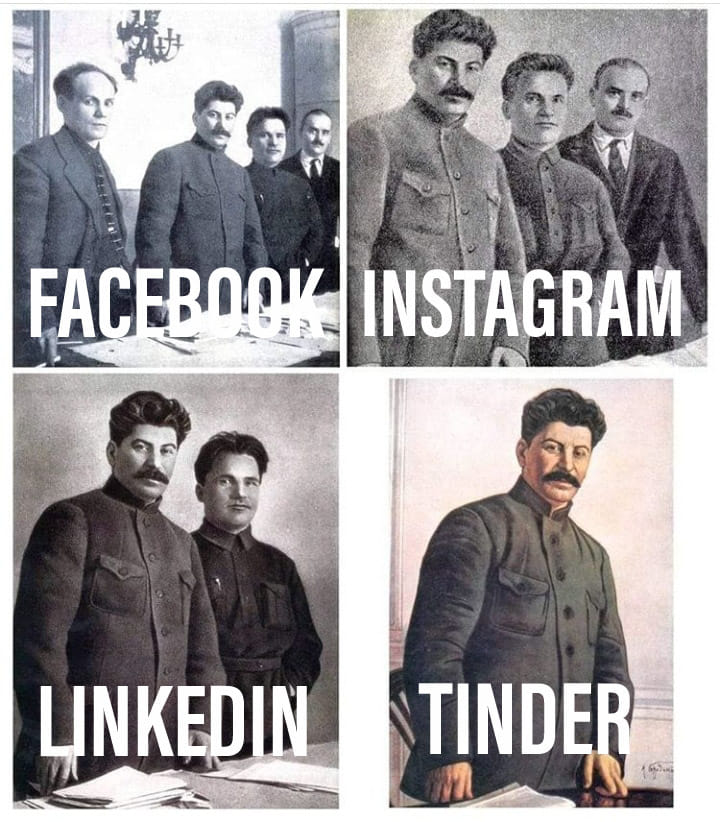
It is an idea that you can be the big one, all the small fashionista websites aspire to be the big one and by doing this they are working to the logic of the #dotcon and working against the logic of the openweb. They are building a project to lock their users into their project. Portal and silo are overlapping (but different) ideas for building web projects. In the mainstream, Apple is a prime example of this working. In the alt/grassroots, almost all alt/grassroots media projects are portals. It’s about capturing users, just as silos are about capturing data. For a left wing group this looks much like “recreating the Soviet Union” the one party to rule the state.

Dotcons

Are for-profit data silos in the old days working as portals, more recently they are building out siloed networks as a pseudo networked portal. It’s both sad and bad that many alt media projects unthinkingly aspire to be #dotcons

Link

It is where ALL the value is, on the open web. Without links, content has NO VALUE. This is an obvious statement, its hard to understand the lack of understanding around this simple thing.

RSS

Is a grassroots web standard that is still at the base of many of the #dotcons world but is being pushed into the background of the #openweb by building silos/portals in the grassroots/alt. RSS is like an open LINK with added data, thus adds value to the web. Its a powerful open tool that we still have. An API is like a geek control freak superpower of RSS – the problem is in the complexity/control freak bit…

Geek

A subculture that is control/obscurity and more recently technical solutions to trust (wraparound right) this has always been a closing force on open projects.  This helped to strangle the original successful alt/grassroots media projects and is pushing for the shrinking of the open web.

Fashionista

The unthinking desire for new/innovation/conformity. A wider subculture that churns the growth of alt/grassroots so little can grow beyond seedlings.

NGO

Are greedy dispoling of resources, both human and money. The liberals that use bureaucratic funding to push out the geek/fashernista agendas over alt/grassroots projects. These are uneasy friends and clear (invisible) enemies.

Network

It is both a technical thing of wires and frequency and  an understanding of mutual aid and of “diversity of strategy”. It’s native to the openweb and should be at the base of any alt/grassroots media project. In the closed #dotcons the widespread use of A/B testing is a pail controlled shadow of this.

4opens

Wikipedia is an example of this. It’s basic stuff, open source project stuff. LINK

Looking at the tech and organising of UK alt/grassroots media. Do sites link to other alt-media projects? Do they support/display openweb standards (RSS)

First DRAFT (please message me with corrections/info)

the canary

http://www.thecanary.co/

Has a RSS feed, regular updates, copyright group silo, it has no outside linking

Reelnews

http://reelnews.co.uk/

UPDATE: site back online, no visible RSS but can find a hidden one. It’s likely copyright and a silo.

(Their website is hacked/down, so posted the #failbook link used to have RSS and regular updates. Anyone know what’s happening? Update they hope the site is back online soon.)

Real Media

http://realmedia.press/

UPDATE: website back online copyright, no visible RSS feed, but you can find ones. It’s a bit of an aggregator but has been suffering from poor spam control. It’s pretty much a portal/silo – but could be more.

(They used to have an interesting website for the tec used, but it ended up being just a silo, they look like they are rebooting? Maybe a another silo? We shall see.)

Update they are rebooting as a linking site, let’s hope it’s not a silo.

Novaramedia

http://novaramedia.com/

Has regular good content, RSS, they are a product of the #dotcons social media wave and good at it. Copyright/CC is not stated. The site is a silo with no outside linking

Counterfire

http://www.counterfire.org/

No RSS feed, starting to look a bit “old left” regular updates, no copyright/CC notice. A silo with no external links

The Bristol Cable – Bristol

https://thebristolcable.org/

No visible RSS feed, it kinda probably tries to obey the #4opens, maybe. It’s a WP blog site, in this it’s a media silo with no external links.

Port Talbot Magnet

http://www.porttalbotmagnet.com/

No visible RSS feed, it mostly fails the #4opens due to copyright, data and organising. It’s a WP blog site, in this it’s a media silo with few if any external links.

New Internationalist – based in Oxford

https://newint.org/

Has RSS feeds, it kinda passes the #4opens using a CC licence for its content.  It links to the #visionOntv project.

The Ferret – Scotland, based in Edinburgh

https://theferret.scot/

Looks like the old media transitioning to the new media. No visible RSS feed or copyright/CC notice. Is trying to be “open process” looks like a WP site.

Strike! – based in London

http://strikemag.org/

Looks like an archive of a print mag? Has an RSS feed 🙂

Positive News – based in London

http://positive.news/

Dated looking site, hard to read, no RSS feed and a copyright notice. A silo.

Slaney Street – Birmingham

http://www.slaneystreet.com/

Did not load

Manchester Mule – Manchester

http://manchestermule.com/

Has RSS feed but last article end of 2015 so not an active site. Probably for fills the #4opens.

Co-operative News – based in Manchester

http://www.thenews.coop/

Nasty looking site and no RSS, copyrighted, it’s a silo

Ethical Consumer

http://www.ethicalconsumer.org/

No RSS, copy rightish, old looking site.

Marlborough News Online

http://www.marlboroughnewsonline.co.uk/

no RSS, copyright

West Highland Free Press

http://www.whfp.com/

No RSS, copyright, it’s a silo.

Star and Cresent – based in Portsmouth

http://www.starandcrescent.org.uk/

No RSS, no copyright notice? It’s a silo.

Morning Star – based in London

https://www.morningstaronline.co.uk/

Has an RSS feed but its empty, copyright, silo.

Cambria Publishing Co-operative

http://www.cambriapublishing.org.uk/

Publishes paper books?

Zed Books – London

https://www.zedbooks.net/

paper books and online reading lists, no RSS I can see.

Sheffield Live!

http://web.sheffieldlive.org/

Copyright, has an RSS feed, looks bureaucratic open.

Blake House – based in London

http://blake.house/

No RSS, fashionable calling card website without content, probably copyright?

Media Co-op

http://mediaco-op.net/

Calling card website without content, no RSS, likely copyright.

Ignite Creative – based in Oxford

http://ignitecreative.co.uk/

Calling card website without content, no RSS, copyright.

Shedlight Productions – based in Southampton

http://www.shedlightproductions.co.uk/

Calling card website without content, no RSS, copyright.

Steel City Film and Media Co-op – based in Sheffield

https://www.facebook.com/SteelCityFAM

it’s a #failbook page, maybe open?

Trafford Media & Communications – based in Manchester

(mostly a printer, but also do film production)

http://www.traffordmc.org.uk/

Calling card, no site.

The Community Channel

Community Channel

The granddaddy of NGO media, no RSS feed, likely copyright silo.

Jammu Kashmir TV

http://www.jammukashmir.tv/

It has content, silo?

Open Audio

http://openaudio.co.uk/

Has a working RSS feed

Inform My Opinion

https://audioboom.com/channel/informmyopinion

Has working RSS feed, but it fails in my pod catcher, it’s a page on a #dotcon?

Mydylarama

http://mydylarama.org.uk/

Has RSS feed, copyright, silo?

AMP Worcs

http://www.ampworcs.co.uk/

Calling card.

A Television

http://www.afro-media.org/

Half finished calling card site.

Salfordstar

http://salfordstar.com/

Hastings independent press

No RSS, no copyright/CC notice, a silo with no external links.

http://www.hastingsindependentpress.co.uk/

Copyright, no RSS feed, has some old school widgets which might show external links. Its a local news silo.

Corporatewatch

https://corporatewatch.org/

Has RSS feed and CC licence, no external links on front page, it’s a silo but better than most.

bellacaledonia

http://bellacaledonia.org.uk/

Has a RSS feed, it’s a silo but the is hope for it.

voxpoliticalonline

http://voxpoliticalonline.com/

it’s a blog in the old school sense, has RSS

evolvepolitics

http://evolvepolitics.com/

it’s a silo with no RSS and no external links

A lot of the original links came from https://www.facebook.com/jdaviescoates

Rebooting the openweb

Published Date 9/20/16 2:42 PM

The OMN is based on a simple understanding that the last 10 years have been wasted on #dotcons and #encryptionists delusions. In this time #NGO’s, activists and at-geeks have wasted the #openwebs potential to shift society to a more humane path.

To move beyond this decaying circle, we need to #reboot the basic infrastructure that has been allowed to decay. Early “#web02” was based on open features that crossed website boundary’s in a way unthinkable today. A partial list of has been complied here https://medium.com/@anildash/the-lost-infrastructure-of-social-media-d2b95662ccd3#.rcs7irbas

To take this needed path the #OMN project can be built out to overlap many of the projects listed, at its core it is aggregation, linking and metadata. This is one of the steps for the needed #reboot

Publishing – we have no problem with this though technically (though phones are becoming more of an isolation issue) there are lots of existing CMS and tools outside the #dotcons that can be used, many of them are kinda #4opens though most miss the #KISS part.

Search – this is lost and hard to regain, but the is space for a clever use of “adblocking” browser plug-ins replacing adverts with native #openweb content (like the #OMN flows) while obscuring the data mining that the #dotcons are cash powered by.

Comments – this is a hard one to solve, but the problem is meditated by linking back to the source of articles. To OMN this part could be done with a few open standards – but pushing this out would be hard. A back burner issue.

Responses – can use the existing “open standards” maybe choosing a KISS implementation to #reboot

Likes/Favourites – we build a back end version of this as core to the OMN, how to front end this is an interesting avant-garde project that we should implement in different “standard” ways after OMN boot up.

Updates – is core to what the OMN is.

Identity – try #rebooting a KISS implementation of the existing open standards to use this in the OMN roll out, use it, but don’t push it hard as It’s going to be hard to overcome the #dotcons on this one.

Friends list – half core to the OMN, can attempt to #reboot this as part of the #RSS “object” aggregation your identity is an object to be aggregated.

Following – is a core part of the RSS OMN project.

Syndication – this is the core of the project, using existing tools based on RSS

API – a #reboot of Atom pub is a likely useful part of the OMN for the synchronisation of content.

Metadata – in the OMN this is a KISS fockonermy that a more systematic labelling rules can be built on. A KISS roll-out of the semantic web is what the OMN is about. Creative commons will be at its core.

Discovery and tagging – is what the OMN is, and it allows easy uptake by alt-media producers, who wonts content to be seen by more people and traffic driven to their sites.

Analytics – can be built up as the project expands, the current #dotcons tools will work fine on roll-out as it’s just the #openweb.

Advertising – is up to the individual sites (with reference to the CC licensing of content) the tools of the OMN could be used to roll out a #4opens advertising network if someone was interested. The creative use of “adblockers” has a role here?

Aggregation – is what is core to the OMN the back end of this is no more than a “small number” of people. The output is as wide as the openweb allows and can be feed as links into the #dotcons

Time shifting & reading – can be added to the OMN tools using basic user RSS lists.

The Lessons – “there’s (almost) nothing new under the sun.” this is at its core a #reboot of existing projects/standards rolled out as KISS as possible with in the small existing network of alt/grassroots media. From there…

Is the OMN tech complex

Published Date 8/14/16 7:46 PM

There is a hard-to-understand idea that the technology behind the OMN (open media network) is complex. At a base level it is not, it’s the same tech that has been written 1000s of times in the past and uses nearly 20-year-old technology.

What is complex is the ideas and social understandings behind the ideas of using this “stupidly simple” technology in the OMN.

Firstly, it’s needed to understand that Alt-media and the open web in general is F**cked. Once past this point, it becomes easier. Secondly an understanding of the forces that F**cked is both on their side: the #dotcons, Facebook, uber, Amazon etc and on our-side, our encryptionist geeks, NGO social media gurus, process vampires etc.

We don’t currently have power to affect their side, so let’s look at our side, in the sense of understanding the OMN. It’s based on the #4opens and none of our guys like this combination for different reasons. It’s based on KISS – our geeks don’t like building on the old and our politicos are pushing the #fashionista of the vapours avant-garde, so both reject the “old” foundation ideas/tech of the #OMN.

The idea is very simple – that we get alt-media groups and sites to be part of a network so they become bigger than their parts. And a very basic issue is solved, they link to each other, which currently the isolated silos do not consistently do. The link is the currency of the web, in this we all become richer and have wider outreach on the “#openweb”.

The “innovation” of the OMN is the use of RSS articles as a database exchange format. We thus create a redundant, distributed network of databases holding and displaying (linking) to our collective history. Why RSS? Without it, we have to get agreement and write custom code for every site that wants to join. With RSS, it’s copy/paste and go on 98% of existing sites on the open web. The first is self limiting and impossible to grow, the second just works. There is no complexity at all at this basic level and no need for site agreements etc.

Troubleshooting this rollout there are issues, but nothing that can’t be solved by tweaking and bodging. The next stage is a little more complex, synchronising these databases and keeping articles up-to-date and exchanging tagged metadata so that the “curating of the flows works”. This will need thinking and programming for real, but nothing that throwing some bandwidth and processing power can’t solve in an “inefficient way” – again, #KISS.

Build it first, scale it second. We are running this out in the small world of alt-media, so geeks keep it KISS. There is a philosophical and design issue that will cause bottlenecks, the CMS’s we will be using are designed as portals/silos not data rivers/media flow sites. Some creative thought can help here. And there is the opening for innovation and new CMS’s at a later time.

To conclude, the blocks on building out the OMN are within our own geeks and politicos and have to be overcome. That is the tech is relatively easy, the social side is complex, Ideas for this? My idea is to form a wide;y skilled affinity group and go for it, lead by example. Other paths, ideas, welcome.

Looking back looking forward Village Hall or Church Hall

Published Date 2/1/16 6:52 PM

I’m writing this for people who are actively stepping away from the mainstream 9–5 world and moving into disreputable subcultures to live their lives differently.

One issue that comes up again and again in these spaces is group organisation. It usually comes up at moments of stress, and it is usually handled badly. The result is familiar: drained energy, burnt-out people, accumulated bad will, and long trails of failed groups.

For most people passing through these subcultures, this isn’t a pressing concern. Many dip in and out of the shifting social soup. The mainstream remains an easy fallback. They don’t stay long enough to notice the deeper patterns of growth and decay – and by the time they do, they’re often ready to retreat back to the (dulling) safety of “normal life”.

Rinse and repeat.

Each short generation leaves behind another layer of wreckage, and the result is predictable: alternative culture acquires a bad reputation in the mainstream, which then feeds back into the next cycle of failure.

Over the next few posts, I want to look at several groups I’m involved in that are currently at different stages of what might politely be called “crisis”. Before doing that, it’s useful to look at two organising models that emerged in the 19th and 20th centuries and still quietly shape how we think about shared space today.

Village Hall

Small, less-radical groups have traditionally organised around structures like the village hall.

A village hall is a non-commercial space for community events – an open space for the social, political, and cultural activities a community holds in common. It’s a neutral space, designed to support cohesion rather than impose values. Typically, it’s run by an elected committee drawn from an active and open local membership.

The strength of the village hall model is its openness: it assumes that difference exists and that the role of the space is to hold that difference together rather than filter it.

Church Hall

A church hall often looks similar on the surface and shares many practical uses, but the underlying logic is different.

Church halls tend to be more narrowly focused, shaped by the moral and ideological positions of the institution that owns them. A Catholic church is unlikely to host meetings supporting abortion rights. More conservative churches won’t host young socialists, anarchist legal support groups, or black-flag collectives. Other religions may also be excluded.

In short, access is conditional.

While there may be a local management committee, the final authority usually rests with the church hierarchy, often mediated through the vicar or equivalent figure. The space highlights some parts of the community while marginalising others.

Why We Had Both

The reason villages often had both village halls and church halls should now be obvious. They served different social functions and embodied different values. One aimed for neutrality and shared ownership; the other for moral guidance and ideological boundaries.

In the mid-20th century, a third model emerged, particularly in urban areas: the community centre.

Community centres grew out of ideas about social justice, public culture, and collective empowerment. They expanded the role of the village hall while explicitly moving away from church-centred moral authority.

This wiki page is worth reading, it’s the most developed of the three.

Decline and Degradation

By the late 20th century, community centres were steadily degraded.

Commercialisation hollowed them out: “community empowerment” became “must pay your way”. At the same time, bureaucratisation suffocated them – a legacy of mid-20th-century managerial thinking that prioritised control, reporting, and risk avoidance over living social use.

So today, we’re left with three traditional, mainstream approaches to “space for the community”, all carrying the assumptions and limits of their time.

Rebooting for the 21st Century

There’s a current romantic tendency to look backwards – to reboot village halls, and in more conservative circles, to revive church halls. This instinct isn’t wrong, but it’s incomplete.

These institutions were products of their historical moment. They worked because they matched the social realities of their time. If we want spaces that actually support 21st-century subcultures, post-mainstream lives, and horizontal organising, then we need to reboot the underlying ideas, not just recreate the forms.

The question isn’t which old model we choose. The question is: what kind of shared space fits the society we’re actually living in now?

UPDATE: That’s where things get interesting. With online spaces, the #OMN if you want, next we can:

  • map these models directly onto #OMN / #indymediaback spaces, or
  • talk about where horizontal projects rot and how to slow that rot, or
  • sketch what a post-village-hall model might actually look like in practice.

The Stupidly Simple Open Media Network

A common database of media metadata exchanged by RSS in and out, using open industrial standards and neutral unbranded widgets.

Is anyone doing something like this now, and how is your project different?

There are many aggregators of news (eg http://daveriver.scripting.com/, or http://ignoregon.com) but they aggregate with whole #RSS feeds not tags, and new tag feeds cannot be created out of them. Closed-source project #vodpod works by tag only as a premium feature.

Describe the network with which you intend to build or work.

visionOntv (a project for distributing social change video) already smart-aggregates 18,000 videos by RSS. Working with this already curated database, we can build an exemplar node with de facto open standards. The project is a distributed database of the human-moderated metadata of user-generated subject areas, making the choice of this exemplar database appropriate.

Why will it work?

  • Aims to build a big network, but starts small.
  • Has multiple redundancy by sharing data via RSS in/out.

Incentives for users

  • They can publish once on their own site, and the content appears on a range of other appropriate subject sites.
  • No single hub, no single owner, but rather a horizontal network of nodes. Every node can be a hub (an aggregator). This social/psychological understanding of the need to give people ownership means the project can spread easily.
  • Spam is user-policed out of networks.

Open industrial standards

  • RSS and atom are used as the database exchange format, as it is almost universally implemented. The leveraging of existing open standards means that 3/4 of the web can already talk to it. Thus, we can build a scalable, common, decentralised database.
  • We implement both of the real-time RSS standards PubSubHubbub and RSSCloud
  • End-users view videos through auto-updating video player widgets driven by boolean logic.
  • In the future, it would be possible to radically decentralise where the content is itself hosted, using p2p media-serving in parallel with traditional corporate streaming.

Who is working on it?

What part of the project have you already built?

We already have the content and much of the metadata for exemplar node visionOntv. There is a database of 18,000 curated and tagged films. Beginning with this node which we control, we can test solutions to UI / security / spam etc issues. And have a practical outcome with embedded media players. We already have one on every page of UK based New Internationalist magazine’s site, http://newinternationalist.org

How would you sustain the project after the funding expires?

#Flattr is implemented on every page. As a distributed project, it has very low running costs. It would be up to the individual nodes to solve this for themselves. We have a test micro-(hyperlocal) advertising model for funding the visionOntv node.

UPDATE: This project is the seed for the current #OMN project

Diaz Don’t clean up this blood

The Genoa G8 Summit protests, held from July 18 to 22, 2001, were a turning point in the global justice movement. More than 200,000 people converged on the medieval port city to block the summit and challenge the concentrated power of the world’s richest nations. A gathering of the priests of the #deathcult, grinding the planet into dust for profit.

For many of us, the G8 represented everything wrong with the world: an unelected body shaping economic and social policy for billions without legitimacy, accountability, or consent. We traveled to Genoa not as isolated activists but as a flowing living ecosystem of movements, anarchists, trade unionists, farmers, climate campaigners, media collectives, migrants’ rights groups, students, pacifists, the lot. We were there to resist and to build alternatives in the cracks protest pushes wider.

Arriving in a besieged city, Genoa a few days before the demonstrations to help set up the Media Center, for grassroots reporting. Genoa, though, felt nothing like a holiday town. Police were everywhere. Riot vans on street corners. Helicopters thudding overhead. The protest convergence center was being built on the beach; just 100 yards away from the stadium, where police forces were massing in their thousands. Walking around felt like moving inside a tightening fist.

We slept in the camper van that first night, tucked beside a half-built marquee. At dawn, we joined the organisers at the Diaz school, the building that housed both the Genoa Social Forum and the Media Centre.

We requisition two PCs from other rooms, installed video editing softwer, and turned them into the only two shared editing stations in the building. One was upgraded with a new hard drive and FireWire card for DV footage, not that it mattered, because it broke on day two and never recovered. The analogue capture system we had brought did most of the work that went online.

On one of our first reporting trips, filming outside the police barracks beside the convergence centre, we were detained by undercover cops. More arrived. Then more. Ten or twelve by the end. They demanded our tapes. I refused. They checked our documents, questioned us for hours, and released us without charge. I secretly filmed some of them; two would resurface later outside the IMC on the night of the raid.

Driving around the city to document the expanding “red zone” – the militarised area blocking off the summit – we were detained twice more. Civil rights meant nothing here. The police behaved like a sovereign power unto themselves. That Orwellian twinge – the sense that you are inside a lawless machine – grew stronger every day.

When the city turned red, one protester, Carlo Giuliani, was shot dead by police. Fear rippled across the city. The #IMC became a space threaded with arguments about what to do. People drifted away, hour by hour, some deciding the risks were too great. By midnight the centre had half emptied.

Then the screams came: “THE POLICE ARE COMING!”

Looking out the window, I saw nothing at first. Panic surged anyway, people barricading doors, grabbing bags, racing up staircases. Marion moved the archive tapes to the hiding place I’d scouted earlier: the water tower on the roof.

From the rooftop I filmed carabinieri smashing into the building next door, the Diaz Pertini school, with vans and sledgehammers. Chairs were used to break windows. Tables became battering rams. It was happening fast, shockingly fast. Then I saw them entering our stairwell.

The Diaz Raid: Running for our lives. I headed downstairs to check if the Media Center itself was being stormed. Turning the stairwell corner, I came face-to-face with a fully armoured carabiniere charging upward, truncheon raised, panting with adrenaline. I spun and bolted. Two flights up, shouting, “They’re in the building!” I sprinted to the roof and slipped into the tower.

Inside the darkness, I whispered for Marion. No answer. I crept through the corridor of water tanks, lit only by the IR beam from my camera. Finally, a small, terrified voice: “Turn the light off.” She had hidden behind the last tank, clutching tapes and equipment.

For hours, three, maybe four, we lay silent as the helicopter’s spotlight swept the windows. Police boots thudded across the roof. Below us, the city echoed with screams, crashes, and the chanted word “ASSASSINI.”

When the helicopter finally left, we emerged. The rooftop was scattered with stunned survivors. Downstairs, the destruction was total. Computers smashed. Hard drives ripped out. Doors hanging loose. The walls of the Diaz school across the street were painted with blood. Skin and hair stuck to corners. Piles of clothing soaked red. People moving like ghosts.

The Carabinieri had left their calling card.

What happened inside that school, was not policing. It was torture, humiliation, and fascist ritual. Ninety-three sleeping demonstrators were beaten so badly that the floors resembled a slaughterhouse. People hiding under tables or sleeping in bags were clubbed unconscious. A 65-year-old woman’s arm was broken. One student needed surgery for brain bleeding. Others had their teeth kicked out. One officer cut clumps of hair from victims as trophies.

Those who survived were taken to Bolzaneto detention centre, where the abuse continued: beatings, stress positions, pepper spray, threats of rape, and forced chants of “Viva il Duce!” and “Viva Pinochet!” A systematic, organised brutality. This wasn’t loss of control, it was ideology.

Aftermath: Truth in the Ruins. The Italian state tried to bury it all. But survivors, lawyers, journalists, and prosecutors fought for years. The European Court of Human Rights eventually ruled that Italy had committed grave human rights violations. But almost none of the officers served jail time. Politicians escaped entirely.

The police weren’t out of control. They were following a logic, the logic of protecting elitists power against democratic dissent. The logic of the #deathcult. The logic that treats people as obstacles, not citizens. Genoa showed the world what happens when movements gain too much momentum: the mask drops.

And still, in that chaos, seeds were planted – #indymedia, #OMN, the global justice movement, the early #openweb – messy, hopeful, compost for future uprisings.

Technology and Social Change Working with the Facebook Generation

This generation is a complete mess, no surprise after 20 years of submission to the #deathcult:

  • #Neoliberalism hollowing out economies, replacing solidarity with consumerism.
  • #Postmodernism fragmenting identity politics into a battlefield of individualism over collective action.
  • #Dotcons centralizing control, turning the internet into a corporate surveillance machine.

Stepping away from the mess, the real question is: How do we break free?

Our #fashernistas still dodge this conversation, stuck in cycles of performative activism, corporate co-option, and distraction. Instead of chasing the next trendy tech or ideological bandwagon, we need to refocus a #KISS path:

  • #OMN (Open Media Network) – Building grassroots, independent media outside corporate control.
  • #4opens – Prioritizing transparency, collaboration, and openness in our tools and governance.
  • Reclaiming #DIY activism – Moving beyond digital spectacle to real-world action and organizing.

The path isn’t more #geekproblem tech fixes or empty branding exercises, it’s a radical grassroots step to collective agency. Time to move.