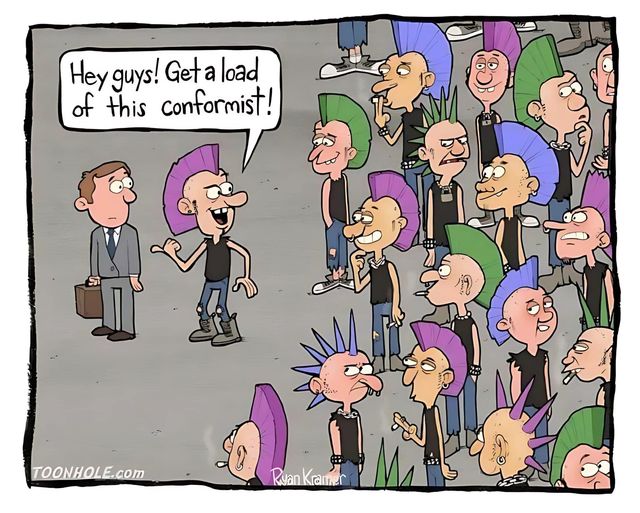
Looking back from the mid-2020s, the arc of #web03, #NFTs, and blockchain culture is very clear. What once promised (lied about) decentralisation, liberation, and a break from corporate capture now looks like the same, mess, #techcurn pattern repeating itself, yes it had new language, new branding, but it was easy to see it had the same underlying mess making dynamics.
As these #geekproblem projects hollowed out, the signs became hard to ignore. The technical optimism faded, the user bases thinned, and the economic logic exposed itself. What followed was totally predictable: spin. Makeup and perfume slapped onto decaying projects to hide the smell of rot and exploitation. Rebrands. New narratives. New demographics. Same extraction. This was the outcome of building “liberation tech” on foundations that still centred virtical money, speculation, and power concentration.
With these projects we are now in the zombie phase, projects kept moving, kept talking, kept selling – long after the animating ideas had died. Influencers and promoters continued to perform belief, even as any substance drained away.
This is a few years when #fashionista culture met #encryptionist ideology – aesthetics and technical absolutism snogging the undead remnants of a failed #deatcult vision. The result wasn’t in any way decentralisation; it was a simply a new enclosure. People weren’t being freed, they were being financialised, the money problem #KISS
At the core was a simple structural truth: #dotcons feed on money. Put money in, influence comes out. That logic doesn’t disappear just because you wrap it in cryptography or decentralised rhetoric. “Bad actors” weren’t anomalies – they were following the incentives as designed. Aany social good becomes just collateral damage. This is why the lie collapsed in te end.
The deeper harm and problem with #techcurn is each wave claims to have fixed the problems of the last. But each wave reproduces them, because this is what works when worshiping a #deathcult. This isn’t just a failed tech trend, the #techcurn disparity, driven by extraction systems cause enormous human harm, displacing livelihoods, concentrating power, and amplifying inequality at planetary scale.
These systems don’t fail harmlessly, they fail onto people. That’s why the call isn’t just to “be critical,” but to step away – and help others step away too. Not through purity exits or individual moralising, but through collective paths back to technologies built for people rather than profit, life over zombies
There has always been another path: the #openweb. Messy, imperfect, slower, less glamorous, but grounded in shared infrastructure, social trust, and human-scale governance. The #OMN approach doesn’t promise salvation. It offers compost instead of speculation. Process instead of hype. People over tokens.
A note on hashtags: And yes, the hashtags matter. Click them., search for them. They cut sideways through algorithms – small back doors into less mediated, less controlled ways of seeing. Not a solution, but a crack in the wall.
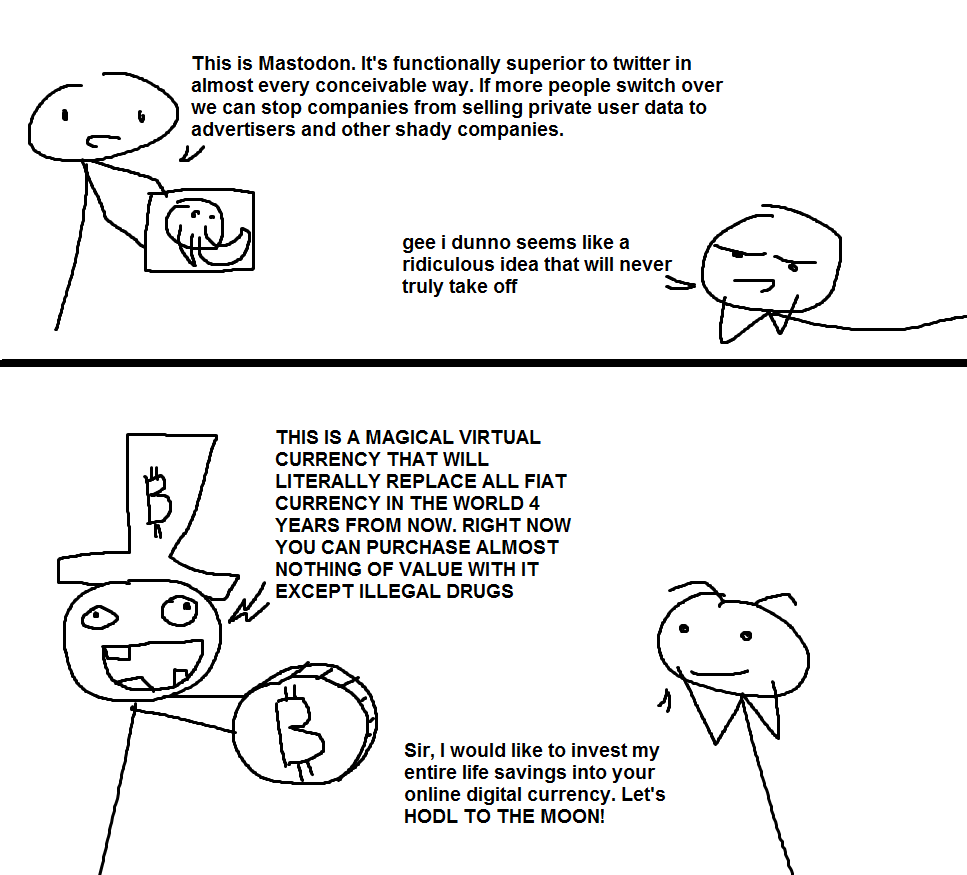
The current #Ai hype bubble is repeating this mess with a little more useful #LLM functionality, but on top of this is a huge mess of #techchurn, which will need composting.
Observation: some people go into news to speak truth from power – using institutions to legitimise the status quo and defend the worship of the #deathcult.
Others speak truth to power – using journalism to expose, question, and challenge unequal power and its consequences.
Only one of those serves the public interest #KISS