Revisiting the ActivityPub foundation idea

There are a few views on this issue, the “common sense” #NGO path, an example Presenting Fedi Foundation: Empowerment for SocialHub community 1

And the more “nativist” openweb path What would a fediverse “governance” body look like?

And then we have the #geekproblem path, which has been pushing the fep process the last 2 years, but I think they are avoiding the politics of actually touching this issue. Fair enough.

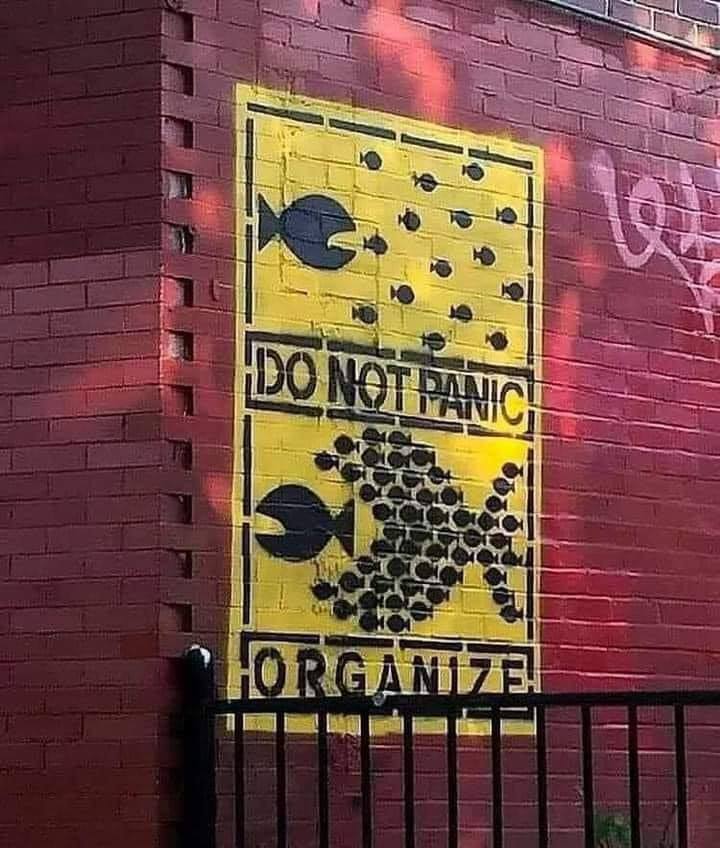
If the “native” openweb crew don’t move past their “left” mess issues then I think in the end the #NGO path will be imposed, It’s simply what happens, there is a long history of this outcome

The argument between structure and lack of structure is often a strawman. For example, the ogb project, that came out of the #EU outreach has a lot of structure Open-Media-Network/openwebgovernancebody: ON STANDBY due to waiting for funding – (OGB) This is a space for working through Governance of horizontal projects – using #KISS online tools. – openwebgovernancebody – Open Media Network BUT it is SOFT “nativist” rather than the HARD structure of the #NGO “foundation” people think of as structure, it’s interesting when people can’t see this, it’s a kind of blindness, and a hard subject to talk about.

Obviously anything that works has lots of structure, the more important question is about the visibility and “native” democracy of this structure. This is a hard argument/talk to have, and we do keep failing on this, what to do? Ideas please.


It’s interesting that formal coops almost never work in reality, and when/if they do work they tend to become shadows of the #deathcult

In contrast, activist aganising works, often badly. But over all, activist organising is more successful at being an Alt than formal coops, there is a long unspoken history to back this up.

BUT our #mainstreaming always talks about formal coops, if they talk about alts at all, because they can ONLY see this shadow of the #deathcult

Activist organising is always fighting the #deathcult, so it rarely functions as this shadow. The #NGO world is always this shadow.

OK I admit with the right/left mess, this is more of a mess to be composted, ideas please 🙂

————————————–

Current examples in the UK would be the coop supermarket, which got Tesco people in to make it profitable and has soviet design sense and staffing. And the coop bank, which is so bureaucratic as to be pretty much unusable. We have banked with them a number of times. On the positive side you had the co-op wholefood shops in the 1970’s which metamorphosed into the much more #deathcult health shops in the 1990’s. Just to touch on a few. Housing coops have an interesting history, quite a few stories to tell on these.

Don’t take me wrong, I like coops, but I don’t like #fahernistas pushing them over things where we have other forms of organising which likely work better. Diversity is good, just don’t dogmatically push crap that then needs to be composted, we have enough shit to shovel without this thanks.

As ever, “don’t be a prat” is the watch word.

Time to Ground Public Funding: Why We Should Invest in Energy, Not Billionaire Space Races

In the last year, the typical taxpayer spent more on #SpaceX — a company owned by one of the richest men in history — than on programs for energy efficiency and renewable energy. It’s time to reverse this. The way governments allocate public funds says everything about their priorities — and right now, those priorities are dangerously skewed.

Let’s look at the subsidies with SpaceX vs. Renewable Energy: A distorted allocation of public wealth. SpaceX, owned by Elon Musk, one of the wealthiest people ever to live, has received billions in public funding. While innovation in space technology might be exciting, it’s worth asking: Why are taxpayers subsidizing a billionaire’s rocket dreams while the planet burns?

Meanwhile, energy efficiency and renewable energy programs, critical for addressing the climate emergency, are underfunded and deprioritized. These programs offer immediate, tangible benefits for emissions reduction, energy security, and public health, yet they receive a fraction of the financial support funnelled into private space ventures.

Wealth disparity & public investment is now about funding the nasty few while communities struggle. The fact that public funds prop up Musk’s space empire reflects a deep structural rot: wealth inequality baked into public policy. Why should a man with more wealth than some nations receive massive state support while local renewable projects, energy transition initiatives, and community-based sustainability efforts scramble for scraps? Public money should serve the public good, not inflate the wealth of billionaires chasing sci-fi fantasies while entire regions face climate-driven collapse.

Energy transition, is a basic funding shift for survival. Redirecting funding from private space exploration to energy efficiency and renewable energy is a moral and practical necessity. The #climatecrisis is here and accelerating, and every dollar spent propping up a vanity space race is a dollar stolen from the fight for a liveable planet. Investing in solar, wind, community microgrids, and conservation programs. Lower emissions to build resilient local economies, reduced energy poverty by job creation in sustainable industries. The payoff is immediate and lasting. A rocket launch might inspire wonder for a day, but a robust renewable grid can sustain generations.

Government spending & climate accountability, this is a political choice, not an inevitability. Governments choose to fund SpaceX over solar panels, rockets over wind farms, the nasty few over marginalized communities. To balance this mess, we need to demand better transparency in public funding decisions, people-first policy prioritizing climate justice, accountability for politicians who choose corporate welfare over planetary survival.

The path forward is in reclaiming public funds for public good. We don’t need more billionaire space escapism, we urgently need a grounded, radical shift in spending that reflects the urgent needs of humanity and the planet. That means, massive public investment in renewable infrastructure, decentralized energy solutions owned by communities, not corporations, research and development in climate tech, not just space tech, global cooperation on sustainability, not competition for interplanetary dominance.

The future isn’t in the stars, it’s right here, on Earth. And if we don’t fight for it, no amount of rocket launches will save us. Let’s defund billionaire fantasies and invest in life. #KISS a liveable planet is worth infinitely more than footprints on Mars.

#OMN #4opens #climatechaos #deathcult #NothingNew #EnergyTransition #PublicFunding #TaxTheRich

The Rise and Fall of Grassroots #openweb Activism in the UK

Grassroots activism has undergone significant ups and downs over the past four decades, particularly within digital communication and organizing. This post provides an overview of the challenges and successes experienced by grassroots activists during this time period, focusing on the evolution of the #openweb and its eventual decline. It explores the ideological underpinnings of internet projects, the impact of funding and #mainstreaming efforts, and the shifting dynamics between open and closed systems. By examining these trends, we can better understand the complex interplay between technology, ideology, and activism.

The rise of the open internet, was a surge of enthusiasm for #4opens and decentralized communication paths. Projects like early #indymedia, blogging platforms, wikis, and peer-to-peer networks flourished, driven by an ethos of democratization and empowerment. These offered people and grassroots movements opportunities to connect, collaborate, and mobilize on a global scale. The ideology of the #openweb, rooted in #4opens principles, captured the imaginations of many activists seeking to challenge established power structures.

Why did the #openweb flower and die over the last 30 years

However, alongside the growth of #openweb projects, there were also significant challenges and tensions. The influx of funding from state, foundation, and #NGO sources brought both opportunities and risks. While funding provided vital resources for development and expansion, it also introduced pressures to conform to #mainstreaming norms and intrenched #geekproblem agendas. Additionally, as open internet projects gained popularity, they became susceptible to co-option and manipulation by corporate interests seeking to capitalize on the growing community interest.

The fall of the openweb, despite early successes, the internet eventually faced a decline, marked by the erosion of its ideological foundations and the resurgence of closed, centralized platforms, the #dotcons. One factor in this decline was the failure of many openweb projects to align with the dominant ideology of the web itself. The pushing of non-native common sense. While some projects embraced trust-based anarchism and decentralized governance, others veered towards more hierarchical and exclusionary paths.

The rise of a new generation of technologists and entrepreneurs, shaped by #neoliberal ideologies of individualism and competition, led to a merging of open and closed paths. This shift towards closed platforms, controlled by a handful of corporate giants, undermined the diversity and resilience of the “native” openweb. The very chaos that once protected the openweb from vertical integration and monopolization was replaced by a homogenized landscape dominated by a few #dotcons.

Challenges and opportunities, in the face of these challenges, grassroots activists grapple with the complexities of a landscape that is hostile to their values and principles. The siloed nature of many media projects are a barrier to collective action and solidarity, limiting their impact and longevity. However, there are also opportunities for resistance and resilience, through the cultivation of networks based on mutual aid and cooperation like the #OMN

Conclusion, the trajectory of grassroots activism in the UK over the past four decades reflects the broader shifts and tensions within the #mainstreaming path. The rise and fall of the openweb mirrors the struggles of activists to carve out spaces for dissent and resistance in corporatized and surveilled environments. By using the #4opens to examining the ideological underpinnings of internet projects and exploring alternative paths in organizing, activists work towards reclaiming the path of a more open and decentralized future.

#KISS

Building trust in the #openweb

The #openweb is a framework for human-centric, decentralized technologies built on transparency and collaboration. Its success hinges on trust, and as a slogan suggests, “Technology’s job is to hold the trust in place.” This concept is woven into the #OMN and #OGB initiatives, which emphasize community-driven decision-making and adherence to the #4opens principles.

#OGB and consensus, decisions are valid when a wide group of engaged participants achieves consensus. This safeguards against the normal invisible authoritarian control, single individual find it hard to dominate because the collective create and validate the decisions. Trust groups, not individuals, are the seat of power, ensuring better decision-making and accountability.

The role of #4opens, open process, open data, open licences, and open standards—acts as “gatekeepers” for technological decisions. #Openprocess ensures inclusivity and transparency, blocking decisions that don’t involve public participation. #Opendata guarantees that shared information is accessible, reducing the potential for siloed control. #Openlicenses prevent restrictive ownership that could undermine collaboration. #Openstandards resist fragmentation and force adherence to balance collaborative practices and individual paths. This “soft, swishy” approach avoids rigid authoritarian structures while maintaining #KISS robust, “enforceable” values.

let’s look at challenges and strategies for #OMN combatting #mainstreaming “common sense” practices that erode grassroots values. By build strong defaults into projects and hardcode the #4opens principles to keep them central. To make this happen, let’s try and stay polite and inclusive during outreach, avoiding burnout and adding mess through conflict.

Dealing with #fahernistas and trust issues, a significant challenge arises from people and groups who appear trustworthy due to their #mainstreaming tactics but ultimately undermine the values of the #openweb. Coders and contributors need to align with #KISS social change goals, ensuring a grassroots and horizontal approach to development, this is basic.

To do this, we need to work on sustainability efforts by avoid overloading projects with unnecessary features, “How does this fit into the #4opens?”. One path is to balance “friction” as a positive filter for misguided additions, while maintaining a welcoming environment for constructive collaboration.

Building a future beyond the #geekproblem, the “problem” originates from early open-source projects that #block the social dimensions of their technologies. By integrating the #4opens and prioritizing trust networks, the #openweb can (re)evolve into a human value network rather than a technological dead-end.

The #deathcult feeding off the decay of the #openweb perpetuates centralized and exploitative systems. All our activism is about, focusing on planting seeds for a grassroots rebirth, #nothingnew is a starting point, returning focus on modernist principles—clear goals, collective action, and systemic solutions—provides a foundation to grow #somethingnew.

The #openweb vs. #closedweb debate is not new, but it remains a critical narrative. By holding technology accountable to trust and community values, we create tools that empower rather than exploit. The #OMN and #OGB projects embody this path.

For those interested in coding for change, visit the OMN wiki and join the effort to make this vision a reality, please. Or you can donate some funding here if you don’t feel confident with tech path.

All code is ideology solidified into action

All code is ideology solidified into action – most contemporary code is capitalism, this is hardly a surprise if you think about this for a moment. Yes you can try and act on any ideology on top of this code, but the outcome and assumptions are preprogrammed… cant find any good links on this…

The statement is a perspective on the interweaving of politics and technology, and that too often both suffer from their own shortcomings when it comes to addressing any real complex social issues.

  1. Political Arrogance and Ignorance: This is about political actors exhibiting overconfidence and a lack of understanding when it comes to technological matters. Politicians and policymakers make decisions about technology without comprehending its implications and limitations, leading to ineffective and often harmful or simply dysfunctional policies. Arrogance in this context manifest as an assumption of authority without expertise or consideration of diverse perspectives.
  2. Geek Naivety and Over-Complexity: On the other hand, this is about the tendency of technologists and developers (“geeks”) to approach problems with a narrow focus on technical solutions. The term “naivety” is about the lack of awareness or understanding of broader social, political, and ethical implications of their work. Additionally, the emphasis on over-complexity refers to the unnecessarily intricate or convoluted technological systems, which hinder accessibility and usability for non-technical users.
  3. Code as Ideology: This concept posits that all code, as the foundation of technological systems, embodies underlying ideological assumptions and values. In contemporary society, where capitalism is the dominant economic system, the code produced serves capitalist interests and reinforces capitalist structures. Thus, technological solutions are not neutral, they reflect and perpetuate the ideologies of the society in which they are created.
  4. Preprogrammed Outcomes and Assumptions: The assertion here is that the ideological underpinnings of code shape its outcomes and assumptions, predisposing technological solutions to align with certain interests and agendas. While it is possible to layer additional ideologies on top of existing code, the fundamental framework and biases of the code itself remain unchanged, shaping and influencing the range of possible outcomes.

Overall, the statement is about the need for a more nuanced and critical approach to the balancing of politics and technology, that recognizes the inherent ideological nature of code and works on the hard to shift biases embedded within technological systems. The problem we face, need to compost, is the endemic #geekproblem prat’ish behaviour that blocks this #KISS needed balancing.

Building trust in the openweb and Fediverse

Trust matters in our shared landscape of the #openweb and the emerging #Fediverse, trust is the currency that binds meaningful interactions and collaborations. Yet, amidst the #fashionista cacophony of voices and divergent perspectives, building trust can feel like navigating a minefield. In this post, we’ll explore the importance of trust, examine the challenges to building trust, and propose strategies to grow a culture of trust within these communities.

Trust is the soil upon which communities thrive, enabling people to engage in meaningful exchanges, share resources, and collaborate on common goals. In the decentralized ecosystem of diverse voices, converging and interacting, trust becomes more essential. Unlike centralized #dotcons platforms, where trust is bestowed upon a single authority, the “native” openweb relies on distributed networks of trust between people and communities.

However, despite the inherent value of this trust, the native path is fraught with challenges that hinder any lasting cultivation. One of the obstacles is the prevalence of #blocking and resistance to new ideas and approaches, this hinders. While blocking may be necessary in certain circumstances, to protect against harmful actors and preserve the integrity of a community, it can also impede constructive dialogue and collaboration. Without trust, too much #blocking can lead communities to become fragmented and isolated.

What can we do?

  1. Transparency: Transparency is key to building trust within communities. Open and honest communication about intentions, decisions, and actions grows a sense of accountability and reliability. Projects and peoples need to strive to be transparent in their paths, sharing information openly and engaging in dialogue with different stakeholders.
  2. Inclusivity: Inclusive communities are more likely to cultivate trust among their members. In this we need to seek out diverse perspectives and voices, and creating spaces where people feel welcome and valued, communities foster a sense of belonging. Inclusivity also involves addressing power imbalances and amplifying silent voices.
  3. Consistency: Consistency in actions and behaviour is needed for building trust over time. Communities need to strive to uphold commitments, follow through on promises, and maintain integrity in interactions. Consistency breeds reliability, and reliability breeds trust.
  4. Empathy: Empathy is the foundation of trust in human relationships. By empathizing with the experiences and perspectives of others, communities build mutual understanding and respect. Empathy involves active listening, acknowledging the feelings and concerns of others, and responding with compassion and kindness.
  5. Collaboration: By creating opportunities for people to work together towards common goals, and engaging in collaborative projects, sharing resources, to support each other’s efforts, communities build bonds of trust and solidarity.

Now, how can we build these? Trust is the cornerstone of any thriving #openweb path and the building of the wider #fediverse community. We need to create environments where trust flourishes, enabling people to engage in meaningful interactions and collaborations. Remember that trust is not a destination but a journey, one that requires ongoing effort, and commitment from all #4opens stakeholders.

“Don’t be a prat” is basic #KISS

We can work together?

The is occasional discussion surrounding the classification of different versions of the #web, such as #Web01, #Web02, #Web03, #Web04, or #Web05, this is not merely an academic exercise but an aspect of understanding the evolving nature of the digital landscape. However, the proliferation of these hashtags leads to confusion and contribute to the spread of fear, uncertainty, and doubt (#FUD) among users, people and communities.

In response to this confusion, proofer to use the hashtags #openweb and #closedweb which offer a clear and concise way to delineate between platforms that embrace openness, transparency, and community control (#openweb) and those that prioritize proprietary technology, centralized control, and lack transparency (#closedweb). By using these hashtags, we foster a better understanding of the ideological and technical underpinnings of different web platforms and paths.

Projects like #indymediaback and #OMN exemplify grassroots efforts to promote decentralized, community-controlled media and communication platforms. These initiatives can become vital in challenging the dominance of large corporations in shaping the digital paths and in offer an inclusive, diverse, and community-controlled approach to technology development.

At the heart of this discussion lies the #geekproblem, which highlights the tendency among technologically people to prioritize technical solutions without considering their broader social implications or the needs of ordinary people. By recognizing the #geekproblem, we begin to address the inherent biases and limitations of tech-centric paths to problem-solving and can then move to advocating for solutions that are inclusive and community-driven.

The solution to this “problem” lies in developing social tech that transcends the #geekproblem and focuses on the needs and perspectives of communities. This needs a diverse group of people in the development and decision-making process and promoting open-source code, open standards, open governance, and open data in technology development. By embracing this #KISS path and principles, we create a more equitable, transparent, and collaborative #4opens ecosystem.

However, this requires overcoming challenges, including the resistance of the status quo and the fear of change. By actively using the #4opens to judge projects, we challenge the prevailing narrative, call out pointless technologies, and compost the #techshit that contributes to the perpetuation of harmful social dynamics.

Moreover, it is essential to recognize that the struggle for a more sustainable future is inherently political. The dominance of large corporations and the perpetuation of #neoliberal ideologies pose significant barriers to any progress. Therefore, it is imperative to mobilize collective action and advocate for policies and initiatives that prioritize, balance the needs and well-being of communities over these profit-driven interests. Without this, the progressive tech dev will fall on barren ground.

In conclusion, the use of hashtags such as #openweb, #closedweb, and #4opens serves as powerful tools for organizing and mobilizing grassroots efforts to challenge the status quo. By embracing these hashtags and the values they represent, we work towards a future where technology serves the interests of the many rather than the few.

Let’s try harder, please.

The #4opens provides a useful lens to evaluate and assess technology projects

The path we need to take in technology is social, rooted in the recognition that technology, at its core, is a tool created and used by humans to address social needs and challenges. While technological advancements have the potential to bring about benefits and progress, they also have the capacity to perpetuate existing inequalities, exacerbate social divides, and undermine democratic paths.

The #4opens framework provides a useful lens through which to evaluate and assess technology projects, particularly in the #openweb and #dotcons. By emphasizing openness, transparency, collaboration, and decentralization, the #4opens offer a set of guiding principles that prioritize social utility and collective benefit over corporate profit and (stupid) individual gain.

Why the social dimension of technology is crucial:

* Empowerment: Technology has the power to empower people and communities by providing access to information, resources, and opportunities. By focusing on the social utility of technology, we ensure that it is designed and deployed in ways that promote inclusivity, participation, and empowerment to balance the current push for control.

* Equity and Justice: In a world characterized by systemic inequalities, technology is either reinforcing existing power structures or serve as a tool for challenging and transforming them. By centring social considerations in tech development, we can work towards growing more equitable and just societies.

* Community Building: Technology has the potential to foster connections, collaboration, and community-building on a global scale. By prioritizing social utility, we can harness technology to strengthen social bonds, facilitate dialogue, and mobilize collective action around #KISS shared goals and values.

* Sustainability: In an era of environmental crisis and resource depletion, it is essential to consider the social and environmental impacts of technology. By prioritizing sustainability and social responsibility in tech design and deployment, we can work towards systems and solutions that are environmentally sound and socially responsible.

The social dimension of technology is a balance, because it determines how technology is designed, deployed, and used to address social needs and challenges. By embracing principles, we can ensure that technology serves the collective good and contributes to building a more sustainable future we need.

#4opens is a step to this path.

The Open Governance Body: Revolutionizing Governance with Grassroots Tech

In our ever-evolving digital spheres, governance is often left behind, struggling to catch up with the pace of technology and social change. Among the many attempts to tackle this problem, there’s one that stands out for #KISS innovative and participatory approach: the Open Governance Body (#OGB). This grassroots, federated project is more than another tech experiment; it’s a historical blueprint for any future of human-scale governance.

The Flawed Systems of Old

Let’s face it-governance, as we know it, is very far from perfect. Our current systems are either too unwieldy for large-scale implementation or too limited for local contexts. Traditional Free/Open Source (#FOSS) governance models might be native to the tech world, but they’re entrenched in a medieval hierarchy, reminiscent of kings, nobles, and peasants. Who needs feudalism in the digital age?

#Mainstreaming politics, with its disasters’ ineffectuality in the face of #climatechaos, also demonstrates that we desperately need something that works – something innovatively rooted yet freely scalable.

Grassroots Activism Meets the Fediverse

Enter the #OGB, a robust fusion of proven federated technology and grassroots governance. It’s the brainchild of a diverse group of independent experienced thinkers and activists who understand that, progressive social change has always sprung from the bottom up. They’ve taken the federated solution of #ActivityPub (think decentralized social networks) and meshed it with organic activist governance.

This blend gave birth to a surprisingly simple yet powerful platform based on sortation, where roles and responsibilities are distributed fairly, fostering efficient decision-making.

A Tale of European Success

The potential of #OGB is more than just theoretical talk – it’s processs have been field-tested with promising results. Our band of “libertarian cats” successfully outreached to the European Union, showcasing the versatility of ActivityPub and the #fediverse. Presentations and collaborations with EU bureaucrats catalysed the setup of project outline, a prescient move that looked like wisdom personified post-Twitter’s dramatic downturn.

Market Dynamics – A Hypothetical Utopia

Think of a bustling local street market, a microcosm of society with stallholders, shoppers, and various stakeholders like organizers, trash collectors, and local law enforcement. The #OGB can empower such a community to self-govern in harmony, thereby bypassing the too often #blocking cumbersome bureaucracy.

It’s a permissionless rollout – meaning, creating a governance community is as easy as setting up an instance, generating a QR code, and inviting market participants to jump on board with a simple app installation. From there, a sortation algorithm orchestrates the decision-making process, naturally enticing more stakeholders to participate.

From Small Markets to Society at Large

This isn’t just about one market. The beauty of #OGB is its inherent scalability and adaptability. Just as the #fediverse has grown organically over the years, OGB can proliferate from one market to others, weaving a tapestry of self-governance that could very well encompass more social facets.

“We know the grassroots process of organizing works. We’ve seen the federated model scale times over. Combine them, and we have a DIY governance culture that could revolutionize society.”

A History of Activism, A Future of Change

The Open Governance Body is not simply a project; it is the culmination of centuries of activism and social organizing techniques, proven time and again. Combined with the remarkable technological advancements of the Fediverse, OGB embodies a modern solution rooted in historical success. It’s a rallying cry for those seeking to instil real, lasting change in the world through cooperative, human-centric means.

The future of governance looks brighter with initiatives like OGB. Unlike the faltering structures of old, this endeavor promises to usher in an era where technology enables democracy and human connection, not control and division. It’s past time to embrace the open governance body, roll up our sleeves, and be a part of the grassroots revolution.

Remember, progress doesn’t ask for permission – it is an open invitation to innovate, participate and effectuate change. Join the OGB movement, and let’s co-create a governance model that befits our times and aspirations.

Tools for outreach:

1. Have you heard about #OGB? It’s breaking boundaries in web governance through grassroots activism & federated tech! Get ready to govern your own communities with human-scale solutions that actually work.
 
2. Exciting news: The federation of #ActivityPub proves we can scale horizontally and spark real change! Combined with grassroots governance, we’re onto a new chapter of progressive social shifts. Let’s build this together!
 
3. Picture this: A street market governed organically by its community via #OGB. Stallholders, customers, and local services all have a say. Ready to revolutionize the way we collaborate and manage shared spaces?
 
4. Do you want an active role in shaping your community? With #OGB permissionless roll-outs, anyone can start making impactful decisions. Let’s grow this movement, producers by producer group, instance by instance!
 
5. Imagine a system where your voice directly influences your surroundings. #OGB is blending hundreds of years of activist governance with the scalable power of the #fediverse. Let’s make self-governance the norm!
 
6. We’re planting seeds for a #DIY grassroots culture to flourish across society with #OGB. No permission needed, just the desire for change and collaboration. Who’s ready to be part of this empowering journey?


Can This Platform Survive? Governance Challenges

A paper on the Fediverse by Thomas Struett, American University – School of Communication, Aram Sinnreich, American University – School of Communication, Patricia Aufderheide, American University – School of Communication, Rob Gehl, York University.

Interesting #mainstreaming look, that bypasses the grassroots it’s actually talking about, this is a common issue with academic writing, am at Oxford this winter so have everyday “organic” expirence of this.

For governance, we have a widely discussed project on that it is “native” to address all the issues outline in the article Open-Media-Network/openwebgovernancebody: ON STANDBY due to waiting for funding – (OGB) This is a space for working through Governance of horizontal projects – using #KISS online tools. – openwebgovernancebody – Open Media Network 4

Then for fighting the capture we have an “organic” path the #4opens if used is a strong defence Home – 4opens – Open Media Network

So to sum up, what we need is for “us” the collective to get up from our knees and become the change we would like to see. This is actually not a hard thing to do “Never doubt that a small group of thoughtful, committed, citizens can change the world. Indeed, it is the only thing that ever has.”

Let’s look at this PDF:

This thread and our failing in general in “governance” is to do with the fluffy and spiky debate, or much more obviously the failing of this debate to actually be held in place.

“Potential benefits of the fediverse are at risk of being subverted, either by commercial
competitors or through structural dysfunction.”

Dealing with both commercial and structural dysfunction here.

Commercial – funding has shifted from distributed to centralized over the last few years, this is driving core dysfunctions – interesting and useful subject to discus.

Structural – we have not moved anywhere towards “native” governance approaches, this is building crises Legitimacy (political) – Wikipedia

“hold promise as human-scale, democratically-run platforms for civil discourse within and between these groups of users.”

We aspire to this, but with no democracy in any formal or informal sense. And secondly we lack “groups of users” as the coding being copies of #dotcons are strongly “individualized” which pushed our #mainstreaming “common sense” over this openweb “native” space.

“challenges inherent to distributed governance, commercial platform capture, inclusive
access, moderation at scale, reputational assaults by commercial competitors, and the tacitly
neoliberal techno-Romanticism familiar from previous digital innovations. ”

The is a long working (activist) history of mediating these problems that we are ignoring here. A first step to addressing this is the fluffy spiky debate being held in place #KISS

“Developers, entrepreneurs, institutions, and users of these technologies
must also work collectively and proactively to help the fediverse avoid these historical threats
and maximize its civic potential.”

This is the bit we need to talk more about, as it’s key to not fucking up agen.

“However, the fediverse is more than a technical system; it is also a political structure (Mansoux
& Roscam Abbing, 2020). ”

On this currently, we are seeing Legitimacy (political) – Wikipedia failing.

“the structure of platform governance and moderation is both reflective of and integral to the
functioning of democratic processes in digital networks, and much of the proverbial “devil in the
details” comes down to arcane and obscure questions about transparency, control, and
information flow at any given chokepoint or sociotechnical layer.”

This is why link to the #4opens, and it’s use to judge if a project or group are “native” or not – to make transparent in groups and most impotently OUT-GROUPS. A technical/social membrane, as this quote say “devil in the details”

“1. Distributed governance failures
Previous decentralized social platforms have sometimes failed to deliver on their civic potential
because of challenges emerging from the governance process: the norms, institutions, and
technologies that determine who gets to say what to whom, under which circumstances,”

This is the subject of responses to this thried, illustrating the issues, so think of it as the spiky in the fluffy spiky debate. Notice, we are currently failing to hold this debate in place.

“it introduces other risks that must be addressed and mitigated, including new threats such as accountability and liability crises, forking… Corporate actors may also exploit these challenges, by posing themselves as solutions to distributed governance frictions (Marshall, 2006).”

This is likely in part one of the underling issues we are not talking about here.

“Examples of distributed platforms falling prey to these governance challenges in the past are
legion”

We have much to learn and address on this, I talk about this a lot as it’s a key subject we need to move away from “common sense” approaches. Yes this is seen as spiky, but it’s needed, let’s hold this debate open please.

“Not all platform governance is alike. Though corporate platforms emulate traditional media
structures by centralizing power (Napoli & Caplan, 2017), the fediverse has a more distributed
governance structure. This decentralization is not just an aspect of the underlying software but also a core tenet of the governance philosophy of the fediverse itself.”

This is a subject I talk about a lot and have been working on for the last few years with the ogb as a “native” approache. In general, these “native” approaches are still being #blocked by #mainstreaming “common sense” approaches. This needs to change if the openweb reboot is not to wither and die.

“Benjamin Mako Hill (2018) describes this corporate capture of OSS projects as “strategic closedness.””

This is in easy view with a lot of our tech and fashionable crew pushing #closedweb ideas as “common sense” verse “native” openweb approaches. This is a problem with no obverse solutions, the #4opens project is one way to mediate this insolvable/unspoken issue that is everywhere in our dev crew.

“2. Commercial capture
Another challenge that has undermined the health and strength of previous decentralized or
open platforms is commercial capture. Proprietary, value-added features that enhance the user
experience are used to bring more users onto the platform, ”

We currently have few tools to push this back, our strongest tool is likely our “culture” but this itself is fractured, full of infighting and unspoken. Speaking this out load while creating tension is likely nessersery for any good outcome. Hiding from this is #fail

“This means that only a continuing commitment to interoperability by developers, and not merely the existence of an open technological standard, can ensure an open ecosystem within the fediverse.”

It’s social/political NOT a technical problem, so our current fixation on ONLY tech and avoidance of the social/political is a easy to see and act on #fail

“Eternal September is not that new users simply need to be taught the social norms of the space they are joining, but that norms policing is a form of gatekeeping that can exclude new and more diverse users from joining.”

This is both true and a #fashernista problem, we need a better path, this should be easy, it’s not.

“it is important to critique calls for technological approaches to user-friendliness, which are often couched in rhetoric of democratization of technology, while simultaneously undermining decentralized
power relations… making the platform easier to join and use,
while also limiting users’ agency to make choices about the underlying infrastructure that will
best foster their communities”

We are going to see this from every side for and agenst, we need a balances’ path through this mess, we are not currently talking about this path, we need to.

“the fediverse currently relies on the goodwill of countless volunteer moderators and self-funded instances, this goodwill can’t last indefinitely, and a workable approach to funding and compensation has yet to emerge.”

This one is a can of worms, the current “best” solution is to keep instances small and voluntary run, our ongoing disagreements on this path is likely to continue to do damage… one path out of this is legitimate “governance”.

“The reputational anti-halo is already cropping up in discourse about the fediverse and Mastodon, which have been tainted by their uses among the “alt-right” (Makuch, 2019) and for child abuse (Thiel & DiResta, 2023).”

This comes down to voice and power, as “libertarian cats” we have little of either… it’s a bad path to stay on, what path would be better and more “native” is a good question to talk about.

“techno-Romanticism works to obscure the labor, networks, and institutions that are key to supporting technological development while elevating the simplistic view of the great men of history… the fediverse is particularly vulnerable to techno-Romanticism”

This is an endemic issue, and most people are chasing the tech equivalent of the American dream that they will become the top dev… this is not a native approach to the openweb, but it’s currently a dominating view. This is mess making.

“Technical language and the assumption of baseline technical expertise may also present unintended obstacles to adoption. Conversely, the fediverse also faces the threat that the rhetoric of “user friendliness” will justify the curtailing of user agency, or re-centralization of the network… messy, and continuous practice of maintaining a healthy and inclusive space for civic discourse…

Techno-Romantism’s utopian discourse poses a threat to the fediverse because it distracts from the importance of social action in the development of technology… discussion about how to
identify them and limit their impact, is a critical step toward reaching those civic and
technosocial goals together.”

In conclusion, the roadmap for the fediverse’s future must transcend the confines of technicality and delve deep into the socio-political fabric. Holding the fluffy-spiky debate firm, nurturing ‘native’ approaches, mitigating commercial capture, addressing governance challenges, and fostering a culture of inclusivity and sustainability—these constitute the keystones for nurturing the true potential of the fediverse.

Mess making is a breakdown in communication – ideas please

Interesting #mainstreaming look, that bypasses the grassroots it’s actually talking about, this is a common issue with academic writing, am at Oxford this winter so have every day “organic” expirence of this.

For governance, we have a widely discussed project on this forum that is “native” to address all the issues outline in the article Open-Media-Network/openwebgovernancebody: ON STANDBY due to waiting for funding – (OGB) This is a space for working through Governance of horizontal projects – using #KISS online tools. – openwebgovernancebody – Open Media Network 4

Then for fighting the capture we have an “organic” path the #4opens if used is a strong defence Home – 4opens – Open Media Network

So to sum up, what we need is for “us” the collective to get up from our knees and become the change we would like to see. This is actually not a hard thing to do “Never doubt that a small group of thoughtful, committed, citizens can change the world. Indeed, it is the only thing that ever has.”

——————————————————————-

Continuing the discussion from Can This Platform Survive? Governance Challenges for the Fediverse 2:

Dear @hamishcampbell,

although we already had this discussion several times, you keep posting external links to your website every time you have an opportunity to do so, which is quite a lot, since you are very attentive to responding to any new topic with such links.

What it achieves is that your posts rarely bring anything to the conversation and rather look out of place, and barely get any response. Do you realize that all these links have rel="nofollow" attached to them, which means no search engine will index them in relation to this site?

I’m reacting to this specific message because you, being in Oxford, could have made a much better contribution by summarizing the findings of this paper rather than waving your opinion as a pretext to add two more links to your site.

Should I resort to simply unlinking all such references to it so you have an incentive to bring more useful comments? You have been warned repeatedly that your posting style feels spammy, and I would not like to have to kick you out, because when you want you can make interesting contributions. But most of the time, I feel that it’s a waste of time.

What do others think?

  • Use the mute feature on this user
  • Flag posts as spam
  • Unlink openworlds.info
  • Leave Hamish alone

——————————————————-

#ragecircle the assumption this is spamming is troubling, and we likely need to look at this assumption? What would be the mod process to start this?

Linking is how ideas are addressed on the openweb

UPDATE: to be clear, this is a mod question here, please can the mods address it, thanks.

————————————————————————

This conversation is getting beyond silly, here is what Is Link Spam: Definition and Types of Link Spamming – Kontely link spamming is.

It SHOULD be obvious the post is not doing any of these things.

I would like the current mods, on this open and community driven forum, to stop this please.

And I ask, repeat (and the risk of this being seen as SPAM) for the 3ed time, can we get some process put in place to mediate mod behaver, thanks.

I think this space is increasingly lacking Legitimacy (political) – Wikipedia it was the subject of the post in question. This is a difference of social/tech path of me and the two mods, not some something to be pushed out of view, thanks.

Please stop this.


https://socialhub.activitypub.rocks/t/can-this-platform-survive-governance-challenges-for-the-fediverse/3727/6?u=hamishcampbell

This mess making from our mods is bringing the lack of https://en.wikipedia.org/wiki/Legitimacy_(political) in this “community site” into view. This is the subject of the original post

I call the subject post #mainstreaming to describe that it’s a reflective post of the chatting classes, not to say this has no value, just it’s not “native” to the grassroots internet some of us want to build.

Then link this to my personal experience, I have 20 years of dealing with this of mess making in #openweb tech/funding so have a lot to say on this PS. this link is not SPAMMING take note, it’s a weblink so you can fallow it to find out more about what I am talking about, if you are interested in clicking on the link.

Next link to the about page of a project that directly addresses the issue the original post is about, with context. I post a link rather than simply copy and past the intro, as this is how the #WWW is supposed to work.

Then I describe how we can fight affectively to push the grassroots “native” internet some of us would like to see, and link to a tool that can be used to affect the needed change. Native to the WWW people can click on the link if interested.

Finally, there is a bit of a spike in the tail, that yes is indirectly pointing at our mods and an inclination on this forum. Take NOTE this is done in a polite way without naming names, so no issue with the CVP etc.

Ok, I understand you don’t like this aproch, this has been made clear the last few years, what exactly is wrong with these posts mods #KISS

Best to start from #KISS the left is based on trust and open culture.

Best to start from #KISS the left is based on trust and open culture. Moving away from this the left has destroyed itself over the last 40 years.

* The #fashernista embracing of postmodernism
* The soft left embrace of the “common sense” of neoliberalism

Combined, these have undermined the foundations the left is built on. This leaves people helpless to compost the current mess, as our shovel for piling the #mainstreaming have no head, nor a handle.

Of course, the is also an older horizontal and vertical split that divided the left in the 20th centenary. This is not the subject at hand, we need to compost the current mess before we can look at this older mess.