What should be closed? And what should never be?

A conversation about ideology, sociology, and the #openweb. Let’s start with a basic liberal framework: “Most social interactions should happen in the open. Some personal interactions should remain private.” Seems reasonable, right? That’s the position many of us think we agree on. Yet when we look at how our technology, and by extension, our society, is being built, that balance is totally out of whack. Today, more and more of life is CLOSED:

Closed apps.

Closed data.

Closed social groups.

Closed algorithms.

Closed hardware.

Closed governance.

And on the flip side, the things that should be protected, our intimate conversations, our location, our health data, are often wide open to surveillance capitalism and state control. What the current “common sense” dogma gets wrong? What is missing is the idea that mainstream tech culture, privacy absolutists, and many crypto/anarchist types:

Almost all good social power comes from OPEN.
Most social evils take root in CLOSED spaces.

When people organize together in the open, they create commons, accountability, and momentum. They make movements. When decisions are made behind closed doors, they breed conspiracy, hierarchy, abuse, and alienation.

It’s not just about what is open or closed, it’s about who controls the boundary, and what happens on each side. If we close everything… If we follow the logic of total lockdown, of defaulting to encryption, of mistrust-by-design… then what we’re left with is only the closed. This leads to a brutal truth, the powers that dominate in closed systems are rarely the good ones.
Secrecy benefits the powerful far more than the powerless. Always has.

So when we let the #openweb collapse and treat it as naive, we’re not protecting ourselves. We’re giving up the last space where power might be accountable, where ideas might circulate freely, where we might build something together.

Examples: When openness was lost. Let’s talk about a real-world case of #Diaspora vs. #RSS. 15 years ago, Diaspora emerged with crypto-anarchist hype as the alternative to Facebook. It was secure, decentralized, and… mostly closed. It emphasized encryption and privacy, but lacked network effects, openness, and simple flows of information.

In the same era, we already had #RSS, a beautifully open, decentralized protocol. It powered blogs, podcasts, news aggregators, without permission or centralized control. But the “Young #fashionistas ” of the scene shouted down RSS as old, irrelevant, and too “open.” They wanted to start fresh, with new protocols, new silos, new power. They abandoned the working #openweb to build “secure” ghost towns.

Fast-forward a decade, and now we’re rebuilding in the Fediverse with RSS+ as #ActivityPub. The same functionality. The same ideals, just more code and more complexity. That 10-year gap is the damage caused by the #geekproblem, the failure to build with the past, and for real people.

So what is the #geekproblem? At root, it’s a worldview issue. A failure to think about human beings in real social contexts. Geeks (broadly speaking) assume:

  • People are adversaries or threats (thus: encrypt everything),
  • Centralization is evil, but decentralization is always pure (thus: build silos of one),
  • Social complexity can be reduced to elegant protocols (thus: design first, use later).
  • But technology isn’t neutral. It reflects ideologies. And if we don’t name those ideologies, they drive the project blindly.

A place to start is to map your ideology, want to understand how you think about openness vs. closedness? Start by reflecting on where you sit ideologically, not in labels, but in instincts. A quick sketch:

Conservatism: Assumes order, tradition, and authority are necessary. Values stability, hierarchy, and often privacy.

Liberalism: Believes in open society, individual freedom, transparency, and market-based solutions.

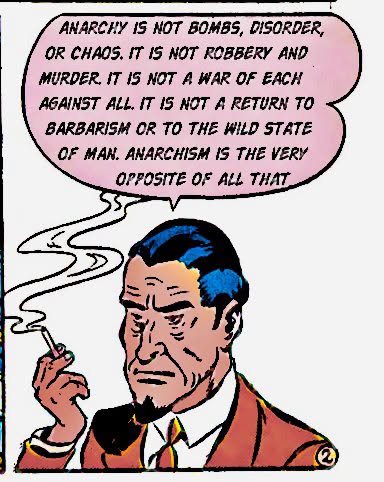
Anarchism: Rejects imposed authority, promotes mutual aid, horizontal structures, and often radical openness.

None of these are “right,” but understanding where you lean helps clarify why you walk, build or support certain tools. If you’re building tools for the #openweb, these questions matter:

Do you default to closed and secure, or open and messy?

Who do you trust with knowledge—individuals or communities?

Do you believe good things come from control, or emergence?

These are sociological questions, not just technical ones, maybe start here: https://en.wikipedia.org/wiki/Sociology and https://en.wikipedia.org/wiki/List_of_political_ideologies. Where do we go from here? Let’s bring this back to the openweb and the projects we’re trying to build, like:

#OMN (Open Media Network)

#MakingHistory

#indymediaback

#Fediverse

#P2P tools (DAT, Nostr, SSB, etc.)

All of these projects struggle with the tension between openness and privacy, between usability and purity, between federation and anarchy. But if we start with clear values, and an honest reflection on the world we want to create, we can avoid the worst traps. Let’s say it plainly:

Not everything should be open. But if we close everything, we lose what’s worth protecting.

Let’s talk: What do you think should be closed? What must be kept open at all costs? What’s your ideological instinct, and how does it shape your view of the #openweb?


Interesting look at a #4opens project notice “”Strict scrutiny” means that any measures instituted for security must address a compelling community interest, and must be narrowly tailored to achieve that objective and no other. ” We have come a long way from this with our #encryptionsist agenders.
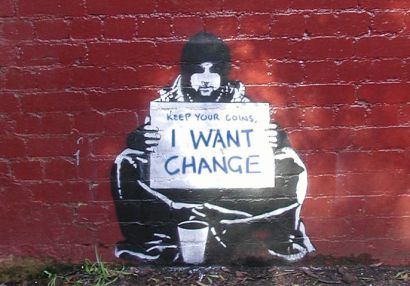
A world we see as normal

Can you smell it? Can you feel the unease, the hard shift to the right is feeding off? The dead ideology of Neo-liberalism is everywhere. It’s a rotten corpse in everything we look at, everything we touch. And yes while it might feel uncomfortable, we should actively feel distaste when we look at it and revulsion when we touch it, this is the reality of living under a #deathcult.

For the past 40 years, we’ve been immersed in a system that most people still worshipped as if there’s no alternative. But, where is the path out of this smell of this uneasy feeling? Where is the vision for something different, something rooted in solidarity and sustainability rather than profit and exploitation?

To find a different path, take a moment to look at this example of a #4opens project from a simpler time: Wikipedia revision history from 2011. Note the commitment to “strict scrutiny”, which required that any security measures serve a compelling community interest and be narrowly focused to achieve that and nothing else.

Compare that principle to the current state of tech, where the #encryptionsist agenda overshadows transparency and community accountability. The shift has been stark, away from openness, away from scrutiny, and towards the path where security becomes a shield for entrenched power and control.

This is what we need to confront, the #deathcult thrives on our passive acceptance of #neoliberal norms of #closed. Revulsion in this mess isn’t just justified; it’s necessary. The path we need to take is in rejecting this hard blocking to open spaces to build the #4opens alternatives we so desperately need.

OMN #indymediaback #openweb #makehistory #OGB

You need to think about this more? Let’s look at an example of this in our current lives, people have been living in the shadow of neoliberalism for so long that worshipping the #deathcult has become their nature. The values of exploitation, competition, and #stupidindividualism are baked into what’s considered “normal” behaviour. In contrast, embracing a #lifecult, based on collaboration, community, and sustainability – feels alien, even threatening, to many of these “normal” people.

This is one of the reasons the #Fediverse and alternative social media platforms have struggled to gain traction with the huge influx of #mainstreaming people fleeing the growth of tech fascism. The Fediverse embodies #lifecult principles: decentralisation, mutual aid, and the rejection of exploitative corporate models. While these are positive ideals, they feel too far removed from the familiar patterns of the #deathcult for most people to take the leap.

A cynical path we could take is to meet people halfway. Instead of demanding they abandon their comfort zone entirely, we could make the Fediverse appear less like a #lifecult at first glance by presenting it in ways that feel more approachable and less intimidating, more like the #deathcult they are used to. On this compromise path, yes, the Fediverse should stay true to its principles, but making it less of an overt #lifecult and more of a practical, attractive alternative, this could be the “common sense” step we need to bring people over. Once they’re in, the actually, very needed, hopefully still existing culture, the values of the Fediverse will begin to work their magic.

What do you think? Should we focus on shadowing the approach to reach more people, or would that risk diluting the values that make the #Fediverse what it is? How do we live this balance in our shared #openweb reboot.

Fuck off to the bitcoin bros and their cult of scarcity

Let me say it loud and clear, again, for the ones in the back: #P2P systems that tether their tech to #encryptionsist#/blockchain economy are a dead end, full stop. Tying “native” #openweb paths of distributed technology to the idea of selling “resources” doesn’t just miss the point, it’s engineering a system that’s designed to fail from the start. It’s self-sabotage, shooting yourself in the foot while you’re still lacing up your boots…

Why? Because these systems, heralded by the #Bitcoinbros and their ilk, are about enforcing artificial scarcity into spaces that could, and should, be models of abundance. Instead of embracing the revolutionary potential of #P2P networks to unlock and distribute resources equitably, they double down on the same tired “#deathcult” economics that brought us the current mess in the first place.

Coding scarcity into abundance, is a fatal flaw, the beauty of distributed systems lies in their ability to facilitate abundance, bypassing the bottlenecks and hoarding inherent in centralized paths. Yet, what do these “geniuses” do? They take this fertile ground for innovation and graft onto it the same broken logic of capitalism, instead of using resources efficiently and equitably, they introduce a transactional economy that prioritizes profit and competition over collaboration and sharing. Death by design paths choke out their own potential, What could be a fertile cooperative garden becomes a battlefield of extraction and exploitation.

The Bitcoin and crypto crew, with their get-rich-quick schemes, aren’t building the future, they’re pushing us back into the past, rehashing old hierarchies in a new digital wrapper. Their vision of the world isn’t radical or liberating; it’s just #techshit wearing a suit made of gold leaf and bad ideas.

Then we have the #encryptionistas and their “common sense” cult, with the mantra of 90% closed, 10% open might sound like “common sense” to those steeped in fear and control, but what they’re peddling is the same #deathcult ideology to stifle collaboration, and strangles the potential of the #openweb paths.

Both are enforcing scarcity as though it’s inevitable, despite all evidence to the contrary.
They frame their closed systems as “security,” but what they’re really doing is hoarding power and excluding voices. This isn’t progress, it’s regression, the equivalent of building a massive wall in the middle of the commons and selling tickets to access what was already there for everyone.

The radical alternative is abundance by design, where we don’t need scarcity baked into our systems, we need abundance. We need tools and networks designed to share resources, knowledge, and opportunities without the artificial barriers of token economies and closed ecosystems.

  • P2P systems should empower cooperation, not competition
  • Decentralization should facilitate access, not introduce new forms of gatekeeping.
  • Abundance is the point: The beauty of distributed networks lies in their ability to amplify sharing, not enforce scarcity.

This is where the Open Media Network (#OMN) comes in – a vision rooted in the values of the #4opens: Open Data, Open Source, Open Process, and Open Standards. This isn’t about creating a new “elitist” crew or another #dotcons “marketplace” policed by the #geekproblem.

What are we to do with the Bitcoin bros, the #encryptionistas, and their #deathcult economics? It’s simple, compost them, take their #techshit, strip it of its toxic scarcity mindset, and use it to fertilize better paths. Systems that prioritize people over profit, collaboration over competition, and abundance over fear.

To those still clinging to the Bitcoin fantasy: Grab a shovel – you’re going to need it – not to mine more tokens, but to bury the bloated corpse of your scarcity-driven ideology. It’s dead weight, holding you back. The future belongs to those who can imagine abundance, build it, and share it. Please let’s stop walking down the “common sense” dead-end paths and start digging our way out of this mess, composting matters, you likely need a shovel #OMN