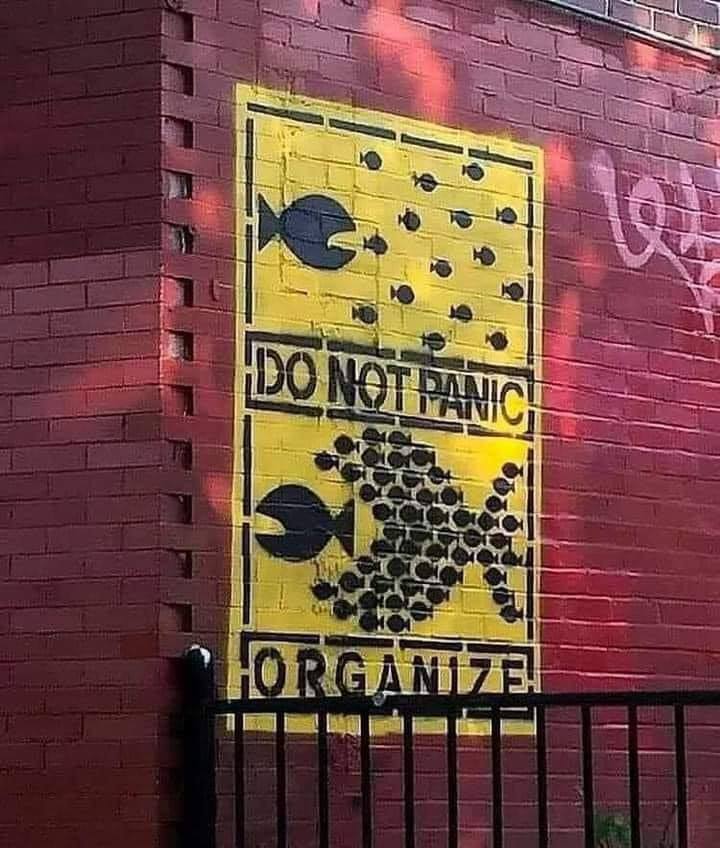
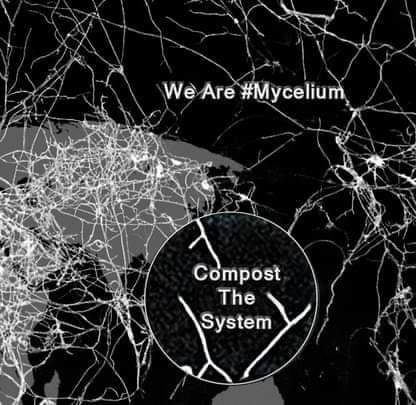
At #NOAW event I talked a lot about the digital commons so thought it might be useful to write a post grounding this. The digital commons are not a future vision, it’s something we already have. At its simplest, the digital commons are the widely used #4opens digital resources of software, knowledge, data, and culture created collectively, governed by communities, and made available for public (re)use. This is the native path of the #openweb it’s been around for a long time, it might be hard to see but just about all of our current #dotcons mess is built on top of this layer.
There is a long history of commons in wider society. But mostly today we focus on the licences that protect reuse and sharing. None of this is abstract theory, it’s making the practical, working infrastructure that underpins much of what people still find useful online. One of the roots of the current digital commons go back to the 1980s and the emergence of the free software movement, led by Richard Stallman and the Free Software Foundation. This was not just about code, it was a social and political project:
Software should be shared
Users should have control
Improvements should remain in the commons
The creation of the GNU General Public Licence was the first step, enforcing a simple rule that if you benefit from the commons, you give back to the commons. The commons isn’t one thing, it’s an ecosystem – Some #KISS examples include:
Wikis – collectively written and maintained knowledge (#Wikipedia)
Open source software – built in public, shared freely (#FOSS)
Public code repositories like GitHub used to be (name one)
Open licensing systems like Creative Commons
Federated social tools built on ActivityPub (#Mastodon)
The Path is governance by the people who use it. What makes the digital commons different from “just free stuff” is this the people building it can shape how it works, a key distinction it’s not just access – it’s agency. The commons are non-exclusive (available to others), oriented toward use and reuse and governed by its participants, this is why it matters politically.
Today, much of the internet still runs on the digital commons, but the visible layer is dominated by #dotcons platforms. This creates a split of Commons layers → open, slow, sustainable and Platform layers → closed, extractive, growth-driven. People still rely on the commons, but interact through closed systems, this contradiction is unstable.
Policy is our current-missed opportunity, as our institutions see only the surface value. The European Union’s European Commission has pushed open source strategies as part of digital sovereignty, particularly through programmes like Horizon Europe. The idea is native – Share code – Collaborate openly – Build public infrastructure. But in practice, most of this gets lost in #NGO process, bureaucracy, and capture. The money flows, but the commons don’t grow.
The “Tragedy” of the Digital Commons. Like any commons, in the mess we live in today commons can be degraded from overuse (infrastructure strain), pollution (spam, low-quality content, noise) and information overload. The result is a corrupted signal-to-noise ratio, it is a real issue – but it’s to often used as an excuse to centralise control. This is largely solved by horizontal vs virtical scaling, if people can take this real native path.
There are social gaps. The commons reflects the culture that builds it, yes gender imbalance persists, access is uneven, and geek culture is too often exclusionary (#geekproblem). But the bigger problem we face is capture and drift. We’ve already seen it happen once: Free software → “open source” (politics stripped out). Commons → #dotcons platform capture.
Now we see this happening in the #Fediverse and #openweb reboot spaces with the last few years of vertical agendas dominating to meany outreach spaces, #NGO mediation and thus diluten is pushing native grassroots agency out, this is an old cycle repeating – the cycle that we need to compost.
OK, despite all the #mainstreaming mess, the digital commons are still the most viable path we have, we need to see this path not as hypothetical – more as it just works, but is underresourced. From a #OMN perspective, the digital commons are not only infrastructure, it’s the soil. You don’t build movements on platforms, you grow them in commons, but this growth needs care:
Protection from capture
Active governance
Social grounding, not just technical process
And most importantly the commons only survives if people act as commoners. The challenge now isn’t only to explain the digital commons, it’s to defend, rebuild, and extend it. That means funding native projects, keeping governance in the hands of participants to bridge activism, development, and real-world use as a path to push back against the continuing #mainstreaming capture.
This is not about nostalgia, it’s about #KISS recognising that we already have the tools we need, then caring enough not to only exploit them. Please try and be better than the current #mainstreaming on this, thanks.
Hamish Campbell is a long-time #openweb activist and technologist working on grassroots media and digital commons. He was involved in the early development of #Indymedia and continues this work through projects like the Open Media Network (#OMN), which works on how federated tools and community publishing supports public-interest media infrastructure. His focus is balancing building native platforms and on growing the social culture that makes the #openweb work: transparency, decentralisation, and horizontal collaboration. Through writing, workshops, and practical projects, he argues that the future of the Fediverse depends as much on culture, governance, and shared infrastructure as it does on code.
Purpose is to open conversation that many people feel but rarely articulate: the tension between grassroots culture and institutional capture. Start with your simple distinction:
Bad #mainstreaming → corporate/NGO structures reshaping the Fediverse
Then ask: “Which direction are we currently moving?”
Discussion topics – funding and governance, foundations and institutional capture, developer vs user power, infrastructure vs platforms. How to avoid repeating Web 2.0
Activity is to ask participants to map layers: Grassroots – NGO / institutional – Corporate. To discuss where power currently sits and what healthy balance might look like.
Outcome is people leave with language to understand the tensions they are experiencing in the Fediverse.
Workshop 02
Maybe a second one on why #makeinghistory is needed? Translating #OMN from “activist infrastructure” into “missing public digital infrastructure.” That language is what this event is trying to figure out. The Open Media Network (#OMN) proposes a model where grassroots publishing, community moderation, and institutional participation are balanced. Participants can discuss how institutions support shared infrastructure rather than just deploying isolated platforms.
Many institutions are experimenting with the Fediverse as an alternative to #dotcons corporate social media. However, simply running institutional servers risks reproducing the same platform dynamics in a federated form. We need workshops that explore the broader ecosystem of public-interest media infrastructure.
“What happens after institutions join the Fediverse?” The #KISS answer is they need to support the commons infrastructure that makes it socially viable. Running Mastodon is not enough, institutions need to support the wider open media ecosystem.
Talking about #openweb culture in a constructive way is tricky because most #FOSS and Fediverse conversations default to technical framing: code quality, scalability, moderation tooling, and #UX. These things matter, but they are not the foundation that determines whether a network lives or dies.
Maybe a useful way to open the conversation is to shift the starting point. Instead of saying “culture is important too”, say something stronger but practical: The success or failure of open systems is primarily a cultural question, not a technical one. The code only expresses the culture behind it.
Start with a simple historical observation. Many technically strong systems failed because the social layer was weak, while some technically rough systems succeeded because the community culture worked.
Examples from the open web – early open source projects that thrived because communities shared norms of collaboration. Grassroots networks like Indymedia worked socially even when the software was messy. Corporate platforms that succeeded not because they were technically better, but because they built powerful social gravity.
The pattern is clear, that technology enables networks, but culture sustains them. This is the missing step in most Fediverse conversations. Right now to meany discussions focus on: scaling servers, moderation tools, interface design and onboarding. These are all necessary but insufficient.
What way to often goes missing is the deeper questions – What culture are we actually trying to grow? Without answering that, the system tends to drift toward the dominant internet culture, which today is shaped by the #dotcon platform model of engagement optimisation, algorithmic attention markets, influencer dynamics and centralised power. When that culture seeps into the Fediverse, the result is a federated copy of the same problems.
So why is culture harder than code? Code can be written by a few developers, culture requires shared understanding across thousands of people. To grow this we need native governance norms, trust networks, moderation values and expectations about ownership and participation to hold to native paths for how conflict is handled. These things cannot simply be implemented in software, they must be grown socially, fail to address this is why many technically strong projects fail, they assume the social layer will somehow emerge automatically. It rarely does.
To make this constructive, it helps to clearly describe what we mean by #openweb culture. Some core values historically included public-first communication rather than platform ownership, decentralised responsibility instead of central moderation authority, commons thinking rather than product thinking to nurture horizontal participation rather than audience/influencer hierarchies, this need clear #4opens processes rather than opaque decision-making.
These values were never perfect, but they created a different social environment from today’s corporate social media. If we do not actively cultivate these values, the surrounding internet culture will slowly overwrite them. If the Fediverse continues to grow without addressing culture as it currently is, the most likely outcome is large institutional instances dominate, smaller community spaces struggle leading to more moderation being centralised. This all shifts user expectations toward platform-style experiences.
At that point, the system may still be technically federated, but the culture will have drifted back toward Web 2.0. The code will be open, but the social dynamics will not be.
So the “extra step” is simply, we must talk about culture as deliberately as we talk about software architecture. That means asking questions like: What social norms should Fediverse communities encourage? What governance models support open participation? How do we keep the ecosystem diverse rather than dominated by large actors? What responsibilities come with running infrastructure in a commons network?
These conversations are sometimes uncomfortable, because they move beyond engineering into politics, sociology, and ethics. But avoiding them does not make them disappear, it simply means the culture will be shaped by default forces instead of conscious choices.
A simple way to frame this – A phrase that often works well in discussion is – “Code builds the network, but culture decides what the network becomes.” If we want the #openweb to remain something different from the #closedweb platform internet, we need to invest as much thought into the culture as we do into the code and #UX. Otherwise, the technology may succeed technically, but the social project behind it will quietly fail.
Public Money, Public Communication, Public Infrastructure
Public institutions are funded by taxpayers. Their role is to serve the public. So it should be obvious that their communication systems are open, accessible, and accountable to everyone -without requiring people to sign up to proprietary, for-profit platforms.
Yet this is not the world we live in. Today, much of public communication is effectively outsourced to the #dotcons. If you want to follow government updates, participate in consultations, or even access timely public information, you are often expected to create an account on a closed platform – designed for profit, data extraction, and behavioural manipulation. That alone should raise serious questions.
This contradiction is especially stark in Europe as they regularly speak about digital sovereignty, data protection and public accountability. And yet, at the same time, they rely on U.S.-based corporate platforms to communicate with their own citizens. It’s a strange situation:
Public institutions, funded by European taxpayers, using foreign, proprietary infrastructure to mediate public communication.
Not only does this create dependency, it also places public discourse inside systems that are not governed by public interest.
It’s not just ironic. It’s structurally broken, we should think about prosicuting the people who have made this happen.
The access problem, useing closed platforms to access public communication creates real barriers: Not everyone wants to create or maintain dotcons social media accounts. Some people are excluded for ethical, political, or practical reasons. Algorithms decide what is seen and what is not. Public information becomes entangled with advertising and engagement metrics. This undermines a basic democratic principle that public communication should be universally accessible, without conditions.
We already have an alternative to this curupt mess, the #DIY#OpenWeb comes from europe, it offers a different path. Instead of #closedweb platform dependency, it builds on open standards, interoperable systems with multiple access points, no user lock-in. This is not a new path, it is how the web was originally created to work in the EU.
An example project that contines this native mission and supports this is the #OMN whitch creates spaces where public institutions and public communities can meet on equal terms, without one dominating the other, and without relying on closed corporate systems. If institutions instead invest in and support the wider #OMN ecosystem, they help build something fundamentally different, a public communication infrastructure that is open by default, accessible to all, resilient and distributed and aligned with democratic values.
A simple principle, if it is funded by the public, it should be accessible to the public – without restriction. No accounts required, no platform dependency and no hidden gatekeepers.
We need to organise a call to act. Public institutions need to move beyond simply using the #Fediverse. They need to help build and sustain the commons that makes open communication possible. That means, supporting open infrastructure projects, funding shared ecosystems like the #OMN and building real, not facke PR commitment to public-first communication practices.
This is not just a technical shift, it is a political and cultural choice.
A simple #KISS way forward is to shift public social communication onto the #Fediverse. This is already a significant improvement on current platform dependency. However, I want to raise a point that may sound controversial at first, but is actually quite practical: public institutions should not rely exclusively on the existing codebases.
Most current Fediverse platforms have done vital groundwork – particularly in establishing shared protocols, interoperability, and a working culture of federation. That contribution is important and should be recognised. However, many of these tools evolved shaped by the same assumptions as #dotcons and constrained by #NGO project models. As a result, they can be complex, difficult to maintain, and not always well aligned with the long-term needs of public institutions or commons-based infrastructure.
A constructive path forward would be to fund the development of a small number of new, purpose-built codebases focused on commons publishing. Not one, but three parallel implementations.
Why three? Because diversity reduces risk. In practice, not every project will succeed – this is normal and expected. Funding multiple approaches ensures resilience, encourages innovation, and avoids over-reliance on a single solution. The cost of doing this would be minimal relative to existing public digital budgets, yet the potential long-term value is significant.
Importantly, this is not about replacing the existing ecosystem. Because the Fediverse is built on shared protocols, any new tools would remain fully interoperable with current platforms. This means users of existing services can still interact seamlessly, while the overall ecosystem becomes stronger, more diverse, and better aligned with public service values.
In short: build on what exists, but don’t be constrained by it. By investing modestly in new, commons-oriented infrastructure alongside the current tools, public institutions can shape a more robust, sustainable, and genuinely public digital communication space.
Outreach to @newsmast interesting to see the #NGO view of the real alt path we need to take https://hamishcampbell.com/thinking-of-workshops-to-run-at-nodes-on-a-web-noaw-unconference/ you guys might be interested in working on the 3ed workshop outline. The 3 codebase need to be 1) mainstreaming, 2) radical #NGO and 3) native messy grassroots. You guys could be the second codebase. We do need diversity, best not to keep blindly messing up this path in the current globe mess.
Stopped going to in-person general tech conferences around 15 years ago – they’d become beyond pointless. Since then, I’ve stuck to more focused online events.
Now heading back to an in-person one. Curious what I’ll actually find.
I have a feeling it’ll be about 75% pointless, 20% narrow geek, academic and #NGO-focused (slightly useful), and maybe 5% – probably less – actually useful.
Let’s see how that shifts after the event.
UPDATE: The event was posative, people were looking for change.