By working together and finding working solutions, we can build a more sustainable, inclusive, and equitable #openweb for all

The #SocialHub and the #fediverse do not have to conform to traditional hierarchies and power structures. Instead, they have the potential to create new models of governance and organization that empower communities and promote social change. To achieve this, it is important to resist the urge to impose liberal “common sense” solutions that align with existing power structures, and instead use social code to build a new kind of society that is native to the #fediverse and #openweb

#OGB project involves developing a more decentralized and autonomous model of governance, where control is distributed among community members rather than being centralized in the hands of a few individuals and organizations. This can be achieved by leveraging existing open-source technologies and building on existing #fediverse infrastructure.

It is important to find a balance between structure and flexibility in an organization. A rigid, inflexible structure stifles creativity and innovation, while too much chaos can lead to confusion and inefficiency. By building in a level of messiness and embracing change and unpredictability, organizations can become more adaptive and resilient. Additionally, involving community members in decision-making and allowing them to shape their digital spaces creates a sense of belonging and empowerment, leading to more effective and sustainable outcomes.

By working together and finding working solutions, we can build a more sustainable, inclusive, and equitable #openweb for all.

The #OGB has 3 subjects to talk about. 1) tradition of working activist grassroots organizing 2) the use of technological federation, ActivityPub and the Fediverse traditions to scale. 3) original thinking, bringing these together for grassroots #openweb producer governance, this part needs lots of input.

Then is the #offtopic threads from #mainstreming dogmas and “common sense”. I try to keep this separate, as it’s mostly not relevant, and always quickly turns to trolling, sadly.

Working on outreach text for the #OGB I would have much of the process and text defined by the template, only the functions hardcoded as sliding open/closed. IE. the code is a tool, the template a culture.

All bound by the #4opens and #PGA of course.

This good path is partly why our text is a mess… Not a bad thing if we have “good will” a real source of pain if we do not. We do not.

Project link https://unite.openworlds.info/Open-Media-Network/openwebgovernancebody
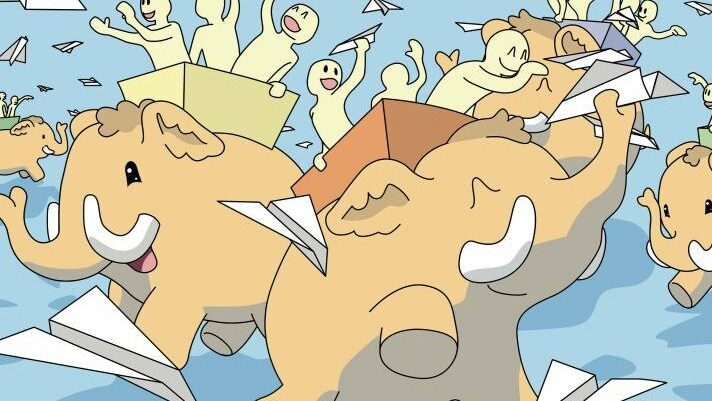
Shifting power in #openweb projects

Before diving into the whole open/closed misunderstanding and conflict, it helps to step back and look at the different roles inside a project, and who has the power to say yes or no at each level. A healthy project usually has something like this structure:

admin
mod
producer
user
reader

The real difference between “closed” and “open” systems is mostly about where power sits inside this stack. In a “closed” system, power is concentrated at the top – admins control everything, moderation is restricted, producers have little autonomy, users are mostly passive consumers, and readers have no meaningful agency at all.

This is the standard #dotcons model, centralised control with limited participation. In a more “open” system, power shifts downward toward the producers and community.

  • The reader still has little direct power because they have no real buy-in yet. They are consuming information, not helping shape the space.
  • The “user” gains a small amount of power through posting, commenting, tagging, reacting, and participating from their own account.
  • The “producer” is where things start becoming socially valuable. Producers create content, organise discussions, document knowledge, and help sustain the commons. Once producers become trusted through practice and participation, they should naturally begin moving toward moderation roles.
  • The “mod” should hold as much practical power as possible without endangering the stability of the instance or project. Moderation works best when it is close to the lived reality of the community rather than imposed from above.
  • The “admin” still needs strong technical power because someone has to maintain infrastructure, security, backups, federation, and legal responsibility. But socially, there should be a very strong cultural rule against using that power casually or politically.

In a healthy #openweb project, the day-to-day running of the space should mostly sit with the mod/producer layer, not with the admin layer. That distinction matters, admins maintain infrastructure, mods and producers maintain community.

When admins dominate community decisions, projects tend to slide toward enclosure, control, fear, and eventually stagnation. A recent example, this is what happened with #socialhub in the Fediverse. The path to making this work is social mediation through the #4opens, combined with transparent audit logs and visible decision-making, this creates accountability without needing rigid top-down control.

The goal is not “no power.” That is fantasy, the goal is to distribute power socially, visibly, and responsibly, so communities can self-organise without constantly collapsing into either chaos or authoritarian control. That balance is the real challenge of the #openweb path.