The #OMN Framework: The Five Functions (#5F)
The #OMN is simple flows, not platforms, it’s a way of thinking about media as flows of objects moving through a network. If people can’t picture how the system works, they can’t govern it. Think: pipes, flows, and holding tanks. Content flows. People shape the flow.
A human-scale, federated media infrastructure built on #FOSS practices and the #4opens:
- open data
- open source
- open process
- open standards
It doesn’t start with features, apps, or ideology, it starts with flows. Imagine the network as:
pipes and holding tanks
Content (objects) flows through them, communities decide how that flow is shaped. Nothing magical, nothing hidden. This matters because:
If people can’t picture how a system works, they can’t govern it.
And when systems become opaque, power centralises.
So #OMN reduces everything to five simple functions:
1. Publish
(Add a drop to the flow)
Publishing is simply adding an object:
- a story
- a post
- media
- data
to a stream.
- No automatic amplification
- No built-in authority
- No algorithmic boost
Publication is contribution, not domination.
2. Subscribe
(Connect the pipes)
Subscription is how flows connect:
- people
- groups
- topics
- instances
This replaces:
- platform logic → “you are inside us”
with - network logic → “this connects to that”
No opaque ranking, you decide which pipes you connect.
3. Moderate
(Filter and route the flow)
Moderation is not censorship. It’s sieving.
Flows can:
- pass through
- be filtered
- be slowed or prioritised
- be contextualised
Trust is:
- local
- visible
- reversible
Different communities can apply different filters to the same flow.
This is a feature, not a bug.
4. Rollback
(Drain and reset the flow)
Rollback is how systems recover:
- remove past content from your stream
- undo aggregation decisions
- correct mistakes
- respond to abuse
Without rollback:
- errors become power struggles
With rollback:
Accountability becomes procedural, not punitive.
5. Edit Metadata
(Shape meaning downstream)
Content is not rewritten – it is contextualised.
Metadata can include:
- tags
- summaries
- trust signals
- warnings
- translations
- relationships
This is where meaning is created.
Not by algorithms, but by people.
The Holding Tank
Underneath it all is:
a simple storage layer
- a database
- stored objects
- moving through flows
No “AI brain” or hidden feed logic, just data shaped by social processes.
Why This Matters
Most current systems bundle everything together:
- identity
- publishing
- distribution
- moderation
- monetisation
This creates centralised control, even when systems claim to be “open”.
OMN does the opposite:
It separates the core functions.
This makes the system:
- understandable
- auditable
- forkable
- governable
#NothingNew by Design
This model isn’t new, it mirrors systems we already understand:
- plumbing
- electrical grids
- packet-switched networks
- version control
That’s intentional.
Systems people understand are systems people can govern.
From Platforms to Commons
The #5F is the smallest possible set of actions needed to run a media network:
- Publish
- Subscribe
- Moderate
- Rollback
- Edit
Everything else:
- feeds
- timelines
- notifications
- UI/UX
…is just interface, nice to have but not essential.
The Point Is – The OMN is not about building a better platform.
It’s about building:
infrastructure for a democratic digital commons
Simple flows.
Social mediation.
Human control.
Not control systems, but trust systems.
In One Line
#OMN is plumbing for the #openweb. #KISS
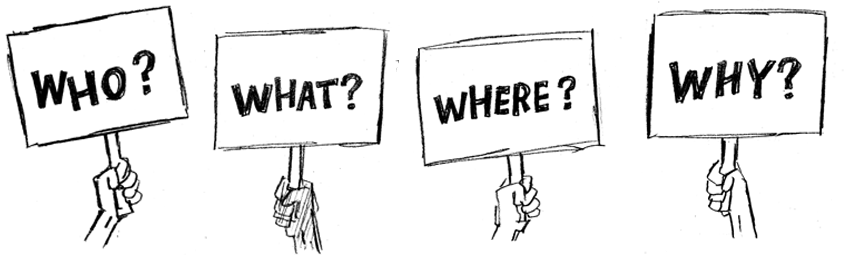
To simplify the Open Media Network (#OMN), we focus on its core goal: creating a human-scale, community-governed media infrastructure that isn’t controlled by big corporate platforms. As we outline to understand and “simplify” the #OMN is a simple workflow:
- Write: Creating the content.
- Tag: Categorizing it, so others can find it.
- Publish: Making it available on the web.
- Federate: Sharing it across different trusted networks.
- Archive: Ensuring it remains accessible over time.
The “#4opens” Framework is built on four principles designed to keep power in the hands of communities and users rather than central authorities:
- Open Data: Information belongs to the community.
- Open Source: The code is free to see and change.
- Open Process: Decisions are made transparently.
- Open Standards: Systems can “talk” to each other without gatekeepers.
Key Concepts for Simplification
- Keep It Simple (KISS): The system should be so simple that anyone can mentally model how it works. If it’s too complex to understand, it’s too complex to govern.
- Social over Technical: Prioritise how people use the tools over how “elegant” the code is, to mediate the #geekproblem (tech that’s too hard for normal people to use).
- Composting the Past: Instead of starting from scratch or repeating old mistakes, the #OMN is about taking the “wreckage” of previous projects and turning them into “fertile soil” for new, federated networks.
- Trust-Based Networking: It moves away from global algorithms and toward small, connected “nodes” of people who trust each other (or not).
You can build any application from this foundation – that’s the point of keeping the core this simple. On top of the basic #OMN #5F, we’re developing a set of seed projects:
- #makinghistory – tools to keep grassroots and mainstream history alive, linked, and evolving across the #openweb
- #indymediaback – a reboot of grassroots news, open publishing with modern federated infrastructure
- #OGB (Open Governance Body) – lightweight, federated governance for coordinating people, decisions, and trust
- #digitaldetox – a horizontal tool to step away from addictive, manipulative platform dynamics
Interoperability is default, not an afterthought, nothing is locked in, instead of building another isolated platform, we plug into the existing ecosystem, extend it to compost what doesn’t work. This is how we grow the #openweb by building better flows inside what already exists, not by replacing everything.
These aren’t separate silos, they’re expressions of the same underlying flows. The system is native to the Fediverse, built on ActivityPub. That means content flows in from existing platforms and codebases and flows out to existing networks and apps.
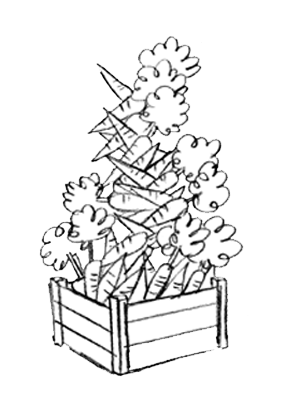
Compost metaphor – is memorable and political, not just technical. The focus on process over platform is clear and important. The move to simple steps works as onboarding and the insistence on #KISS + #nothingnew is the right first step.
#OMN is not an app, it’s a process + tools to move from isolation to commons.