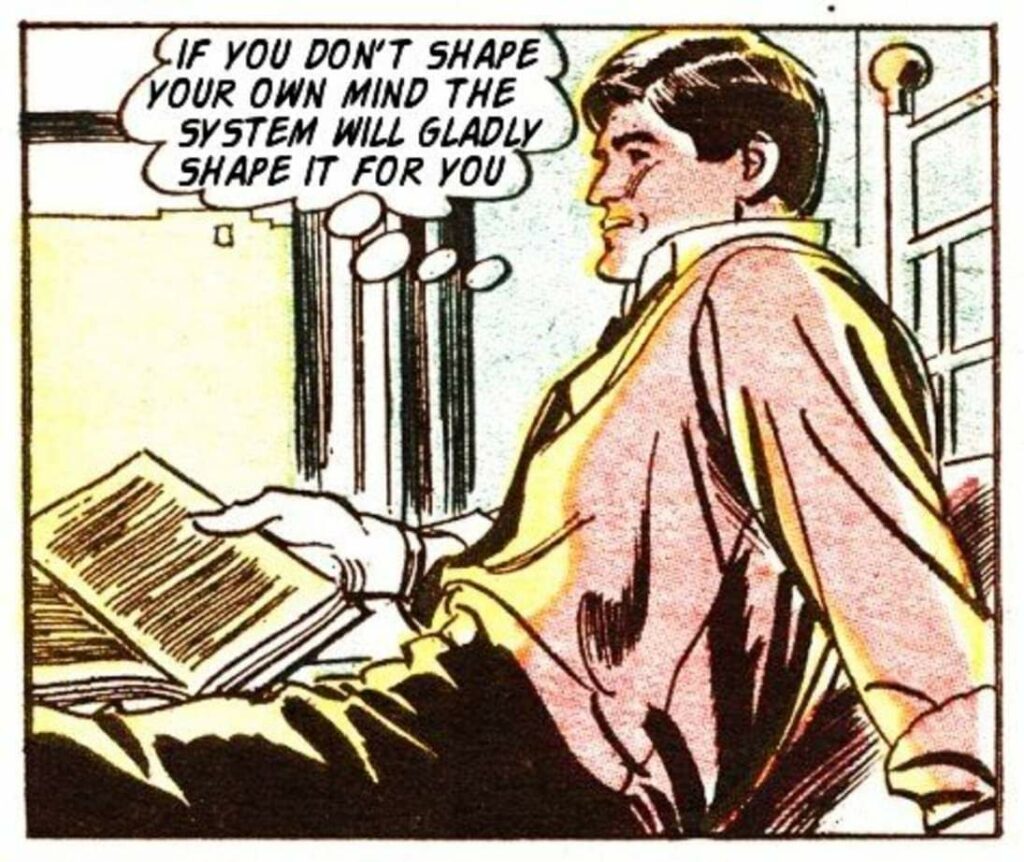
You would have to be an #asshole to unthinkingly disagree with what we are doing and pretty wise to thinkingly disagree with the path. Which one are you? So why are we in such a mess? Because people are acting from fear. Not always consciously, not always honestly – but fear is the driver.
- Fear of losing control.
- Fear of losing status.
- Fear of uncertainty.
- Fear of each other.
And when fear leads, people grasp for control. They close things down, centralise, gatekeep, and default to the safe, known paths of the #closedweb and institutional power. That’s how we get the current mess – top-down structures trying to manage what was meant to be lived, messy, and shared.
In #OMN terms, this isn’t a technical failure, it’s a cultural one. A failure to hold open processes in the face of discomfort. So how do we mediate this fear?
Not by pretending it isn’t there. And not by fighting it head-on – that just feeds it. We mediate fear by building trust through practice:
- Keep things open (#4opens): transparency reduces fear of hidden agendas. When people can see what’s happening, they relax.
- Lower the stakes: small, reversible steps instead of big, risky commitments. Let people edge in rather than jump.
- Normalise mess: show that not everything has to be controlled to work. Messy, lived processes are not failure, they’re how real communities function.
- Create shared doing: fear shrinks when people work together on tangible tasks. Composting, media, infrastructure – doing builds trust faster than talking.
- Hold both fluffy and spiky: the fluffy path makes space for people to come in; the spiky path protects that space from being captured or hollowed out. You need both, visibly and honestly.
- Refuse false clarity: the #dotcons sell certainty and simplicity. The #openweb is different, it’s about holding complexity without collapsing into control.
And maybe most importantly, stay present. Fear thrives in abstraction, it weakens in lived, grounded relationships. In the end, mediating fear isn’t about convincing people with arguments. It’s about creating environments where fear has less reason to exist.
This is the same dynamic you can see with Oxford boaters. The river culture is native, messy, negotiated, based on lived practice and mutual understanding. People want the freedom to move, to live lightly, and not be bound by rigid landlord rules. But when outside structures push in – formal control, ownership models, enforcement – they reshape that culture into something else. The tension isn’t really about rules or functions; it’s about which culture gets to define the space.
That’s the real work of #OMN: not only building tools, but growing the social soil where people feel able to act without retreating into control.