Europe’s digital sovereignty needs challenges

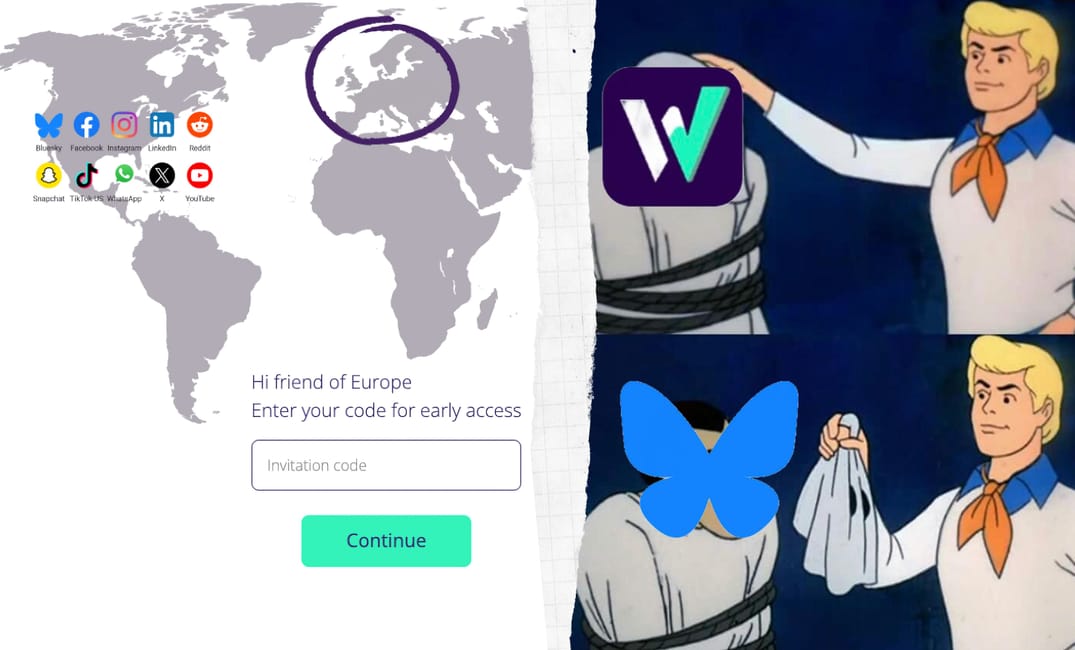
The #WSocial mess is about more than one failed platform, it exposes a deeper problem with the EU’s approach to digital sovereignty. If Europe is serious about sovereignty, it needs to stop confusing European ownership with digital freedom. A platform hosted in Europe built as a proprietary, venture-capital project recreates the same #dotcons model under a European flag. Changing the server location doesn’t change the underlying power relationships.

This matters because the European Commission has spent years promoting open standards, interoperability, user choice and open source through its own policy. Yet when it came to practice, it publicly embraced a platform moving in the opposite direction: closed development, identity verification, restricted participation and a business model built around enclosure rather than the commons.

This contradiction should not simply be criticised on social media. It needs to be challenged within the EU’s own institutions. The issue isn’t whether #WSocial succeeds or fails. The issue is whether public institutions are reinforcing closed corporate platforms while claiming to champion openness. That contradiction deserves formal scrutiny and, where appropriate, legal challenge.

The broader problem is cultural as much as legal. Too much European digital policy remains trapped in #mainstreaming thinking:

  • Replace American monopolies with European monopolies.
  • Replace Silicon Valley venture capital with European venture capital.
  • Replace one gatekeeper with another.

That isn’t digital sovereignty.

Real sovereignty (what every that means) comes from building digital commons that nobody owns and everybody can use. That’s why the matter: open data, open source, open standards and open process. These aren’t ideological preferences; they’re practical safeguards against the next generation of vendor lock-in.

The #Fediverse already demonstrates the path we need to be on. It’s messy, imperfect and decentralised, and those are strengths, not weaknesses. The challenge is to improve these commons rather than abandon it for the latest corporate platform wrapped in European branding.

Europe needs courage to defend the digital commons it already has. And perhaps the hardest truth is, successful European alternatives are unlikely to come from institutions alone. They will come from communities, public-interest developers, grassroots organisations and #FOSS projects building native #openweb infrastructure from the ground up, institutions should be supporting that commons.

When they don’t (and they won’t) then a three-pronged prodding attack to help balance this mess they make.

  1. #FOSS alternatives, outreach and implementation.
  2. Social activism both fluffy and spiky.
  3. Legal challenge, to bring the threat of prosecution.

#OMN #Fediverse #OpenWeb #DigitalSovereignty #FOSS #EU #WSocial #TechPolicy

A fluff view of current tech we need to compost

You know, when people are heading over a cliff, I’m more than happy to be “left behind“.

This story is #openwashing, not innovation. “New European social network” is actually a fork of #Bluesky wrapped in sovereignty language, as Elena Rossini says with the same #dotcons logic – PR-first launch (Davos), reality comes later (or never). This tech mess illustrates, if people start with branding, funding, and media narrative instead of community and process, it’s not #openweb – it’s #closedweb in a mask, when people ignore existing commons is easy to see the red flag.

Why is this a mess? Existing working systems: #Fediverse (e.g. Mastodon), RSS, open standards, were ignored or dismissed as “non-scalable” or “non-monetizable” so there plan is reinventing the wheel → badly. With “scaling” used as an excuse for control with claims that the #fediverse “can’t scale” and “needs monetization”. The simple reality is scaling here is an old story of centralising control + extracting value.

Let’s look at this from a native view of grassroots scale = trust, diversity, human limits vs corporate scale vs control, extraction, surveillance. They are different processes → different outcomes with ID verification = anti-commons architecture. What this creates is exclusion, surveillance, and power asymmetry. This shallowly hidden #dotcons path flips the #openweb model from permissionless participation to controlled access and tracking. It’s not a public space – it’s “smiling” infrastructure for governance and policing.

How the media fails as it’s a part of the problem, journalists repeated press releases with no technical or cultural literacy, leading to the #mainstreaming mythology of “first European network” unchallenged, this cultural memory hole is a recurring mess we need to compost. The outcome is every shallow reboot looks “new”.

This feeds the real divide in tech vs culture. You see the same split again on the dev side: forks protocols, builds platforms → ignores social process. And on the activist side: understands community → stuck in Facebook/Slack. Without combining both you either get silos or you get capture. One useful way of seeing this is to follow the money, to see the outcome of investor-driven, marketing-heavy teams with “Monetization” as a core requirement. Funding-first projects don’t build commons, they build exits, leverage and control systems.

It should be obviously – nobody should be surprised that this liberal pushing of “Sovereignty” is being hijacked, using #EU branding as legitimacy. This is the #eurowashing of #dotcons models we touched on at the start. Real “sovereignty”, what ever it means, lives in open protocols, distributed governance and local autonomy. Not in a branded platform, or the nation state any more – thus the danger is confusion. People will still join because “it’s European”, “it’s new” and “it sounds ethical”. Thus, the problem isn’t only evil actors – it’s signal-to-noise collapse.

What this means for projects like the #OMN (the actionable bit). This whole story reinforces the core path – that we focus on stopping building “new platforms” to start composting what already exists. A common’s strategy using existing protocols (#ActivityPub, RSS), rooted in grassroots trust networks. Keep processes open (#4opens) to accept human-scale limits then scale by federate for reach, not control.

The #WSocial mess shows what happens when you strip the #openweb of its culture and replace it with PR, funding, and control. Our native path is the opposite, growth from the commons. Its #KISS or you just recreate the problem.

The Smile

By William Blake

There is a Smile of Love 

And there is a Smile of Deceit 

And there is a Smile of Smiles

In which these two Smiles meet 

And there is a Frown of Hate 

And there is a Frown of disdain 

And there is a Frown of Frowns

Which you strive to forget in vain 

For it sticks in the Hearts deep Core 

And it sticks in the deep Back bone 

And no Smile that ever was smild 

But only one Smile alone

That betwixt the Cradle & Grave

It only once Smild can be 

But when it once is Smild 

Theres an end to all Misery